
Water Heater Capacity for Dubai Homes Explained
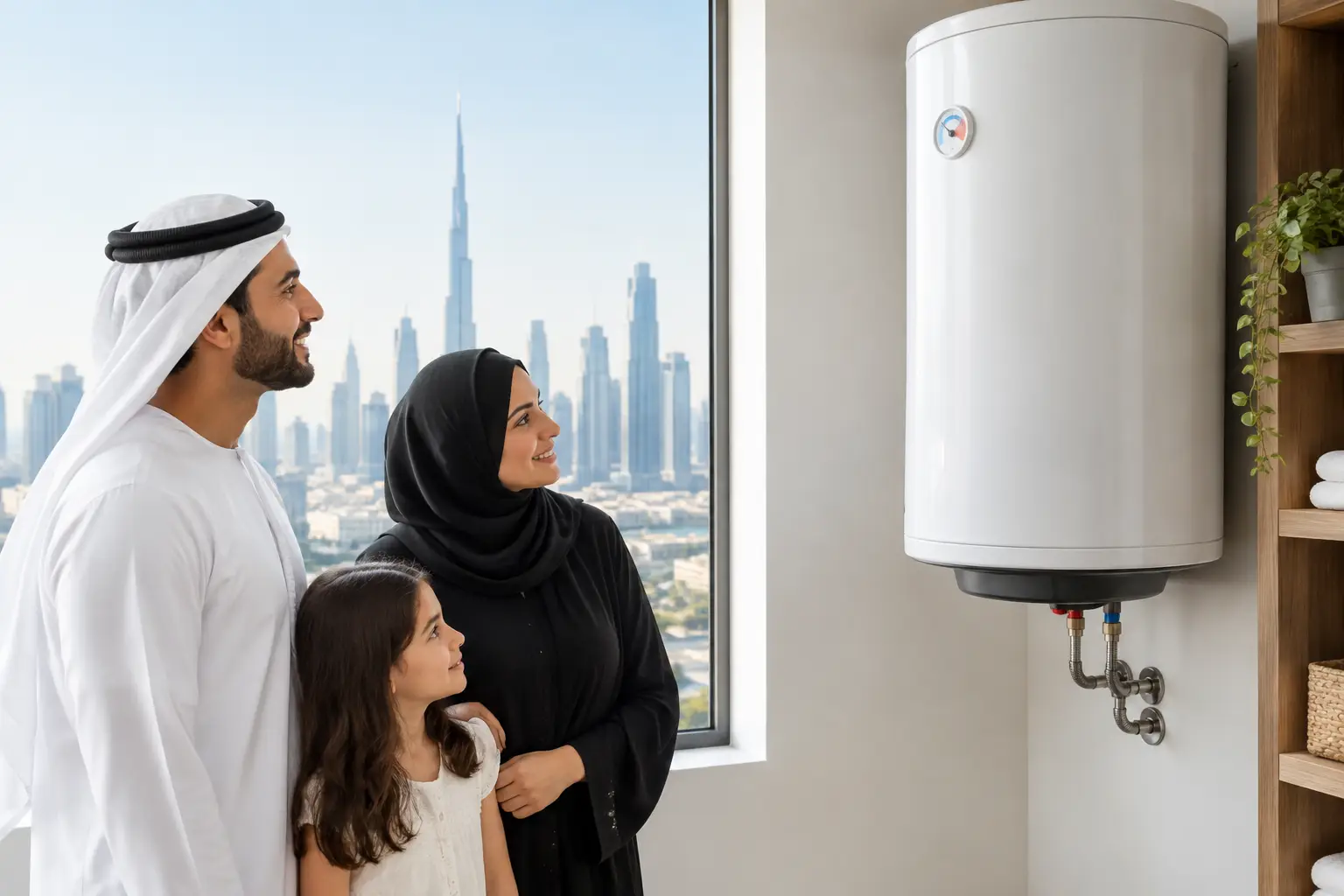
A water heater that runs cold halfway through the morning routine is rarely a repair issue. More often, the water heater capacity is too small for the way the property is actually used. In Dubai apartments and villas, the right size depends on more than the number of bedrooms. The number of bathrooms in use, shower habits, household size, heater location, and recovery time all affect whether hot water is available when needed.
Choosing a larger tank is not automatically the best answer. An oversized electric storage heater costs more to buy and keeps more water heated throughout the day. A correctly sized system provides dependable hot water without unnecessary energy use, pressure on the electrical circuit, or wasted installation space.
What Water Heater Capacity Actually Means
Water heater capacity usually refers to the volume of hot water a storage tank holds, measured in liters. Common electric water heater sizes in Dubai include 30, 50, 80, and 100 liters, with larger units used for villas, multiple bathrooms, staff accommodations, and commercial washrooms.
That figure is useful, but it is not the entire hot-water supply. Cold water entering the tank mixes with hot water leaving it, so a tank can typically provide more usable shower water than its stated volume. The exact result depends on the thermostat setting, incoming water temperature, shower flow rate, and the desired water temperature at the fixture.
A storage heater also begins reheating once water is drawn from the tank. This is called recovery. A unit with an appropriate heating element can recover between uses, but it cannot fully replace a large amount of hot water during a short, high-demand period. This is why a household may have adequate hot water when showers are spaced out but experience cold water when several people shower back-to-back.
How to Estimate the Right Water Heater Capacity
Start with peak demand, not average daily use. A couple may use very little hot water across a full day, but if both take consecutive showers before work, the heater must meet that concentrated demand.
For a typical apartment with one bathroom, a 30- to 50-liter storage water heater may suit one or two residents with reasonable shower duration and moderate-flow fixtures. A 50-liter unit is often a practical choice for a single bathroom used by two people, especially where showers are not unusually long.
An 80-liter water heater is commonly suitable for a household of three to four people using one main bathroom, or for a master bathroom where shower demand is higher. It can also be the better option when a bathroom includes a larger rain shower, as these fixtures may use hot water more quickly than standard showerheads.
A 100-liter tank is often considered for larger families, two bathrooms with overlapping use, or properties where one heater serves both a bathroom and a kitchen. In villas, the correct solution is frequently not one very large central tank. Separate heaters near individual bathrooms may reduce waiting time, limit heat loss through long pipe runs, and make maintenance easier.
These are starting points, not fixed rules. A family of four that takes quick showers at different times may be comfortable with an 80-liter unit. Two residents using high-flow rain showers consecutively may find a 50-liter unit inadequate.
A practical way to assess demand
Consider who uses hot water during the busiest hour. Count the showers likely to happen one after another, then consider whether hot water is also needed for kitchen washing, hand basins, or a bathtub. A bathtub can change the calculation significantly because it draws a large volume in one session.
Also check the shower fittings. A water-saving showerhead may use around 6 to 9 liters per minute, while a high-flow fixture can use considerably more. Long showers, multiple body jets, and rain-shower systems create a higher demand profile even in a one-bedroom apartment.
Tank Size Is Only One Part of Performance
A correctly sized tank can still underperform if another issue is present. Sediment buildup, a failing heating element, thermostat faults, poor electrical connections, or a pressure problem can reduce the available hot water. In hard-water conditions, scale can build up on the heating element and inside the tank, affecting heating efficiency and increasing energy use.
Installation quality also matters. The heater should have suitable electrical protection, correct earthing, a functioning temperature and pressure relief valve, secure mounting, and properly insulated pipework where required. These details affect safety as well as hot-water performance.
If the tank is installed far from the bathroom, water in the pipe cools between uses. Residents may wait longer for hot water and waste water while clearing the line. In a large villa, this may justify separate water heaters or a recirculation solution rather than simply increasing tank volume.
Capacity Choices for Apartments and Villas
Apartments often have limited service space and may be designed for a specific heater size. Replacing a 50-liter heater with an 80-liter model is only sensible if the mounting wall, access space, electrical circuit, and plumbing connections can safely accommodate it. A larger unit may also require adjustments to the bracket position or pipework.
For tenants, it is worth confirming responsibility with the landlord or property manager before changing heater capacity. A replacement should match the building requirements and be installed safely, rather than selected solely because it is available quickly.
Villas need a broader review. A property may have separate heaters serving guest bathrooms, en-suite bathrooms, kitchens, and maid's rooms. If one area repeatedly runs cold, the root cause may be an undersized local heater, but it could also be a failed element or a crossover in the plumbing system. Replacing equipment without proper diagnosis can leave the original problem unresolved.
For landlords and property managers, standardizing suitable tank sizes across similar units can simplify maintenance and spare-parts planning. However, avoid treating every unit as identical. Occupancy, fixture types, and tenant expectations can differ significantly.
When a Larger Water Heater Is Not the Answer
If hot water was previously sufficient and has recently become limited, capacity is probably not the first concern. A technician should inspect the heater before recommending an upgrade. Common causes include one failed element in a dual-element system, a thermostat set too low, excessive scale, or a faulty mixing valve.
Similarly, if only one shower has poor hot-water performance while other fixtures are normal, the issue may be local to that shower mixer or its plumbing. A capacity upgrade would add cost without fixing the root cause.
There is also an efficiency trade-off. Larger storage tanks have greater standing heat loss because more water is kept warm. A well-insulated quality unit reduces this loss, but it does not remove it. For properties with low occupancy or infrequent use, a smaller correctly selected tank may be the more economical choice.
Protecting Your Water Heater After Installation
Water heater maintenance is particularly valuable where hard water contributes to scale. Periodic inspection can identify corroded connections, weakened safety valves, thermostat issues, and early signs of tank leakage before they become an emergency.
Do not ignore a dripping relief valve, discolored water, unusual noises during heating, repeated breaker trips, or moisture around the heater. Switch off the electrical supply if there is a suspected fault or leak, and arrange a professional inspection. Water heaters combine electricity, pressurized water, and high temperatures, so temporary DIY repairs can create serious safety risks.
For a replacement or new installation, a qualified technician can review the household's real usage, check the available electrical load and mounting location, and explain the appropriate tank size before work begins. DHRS Dubai approaches water heater sizing this way: assess demand, inspect the existing setup, and recommend replacement only when it is genuinely required.
The best capacity is the one that covers your busiest hour comfortably, fits the property safely, and does not waste energy every other hour. If your hot water supply is inconsistent, start with an inspection and usage review rather than assuming the largest tank is the right fix.
Need Home Maintenance in Dubai?
Contact the experts at DHRS Dubai for fast, reliable service.
Get a Quote