
Electrical Inspection in Dubai: What It Checks
A circuit breaker that trips only when the AC starts, a wall socket that feels warm, or lights that dim when appliances run are not small inconveniences. They are reasons to arrange an electrical inspection before a minor fault becomes equipment damage, a disruptive outage, or a safety risk.
For homes, offices, rental properties, and villas in Dubai, a proper inspection is not simply a quick look at the electrical panel. It is a structured check of the parts of the system that carry, control, and protect electrical power. The goal is to identify the root cause, explain what needs attention, and recommend repairs only where they are genuinely required.
What an electrical inspection checks
The scope depends on the age and type of property, recent renovation work, reported symptoms, and the systems installed. A studio apartment with a recurring socket issue needs a different approach from a villa with outdoor lighting, pool equipment, multiple AC units, smart-home controls, and a separate distribution board.
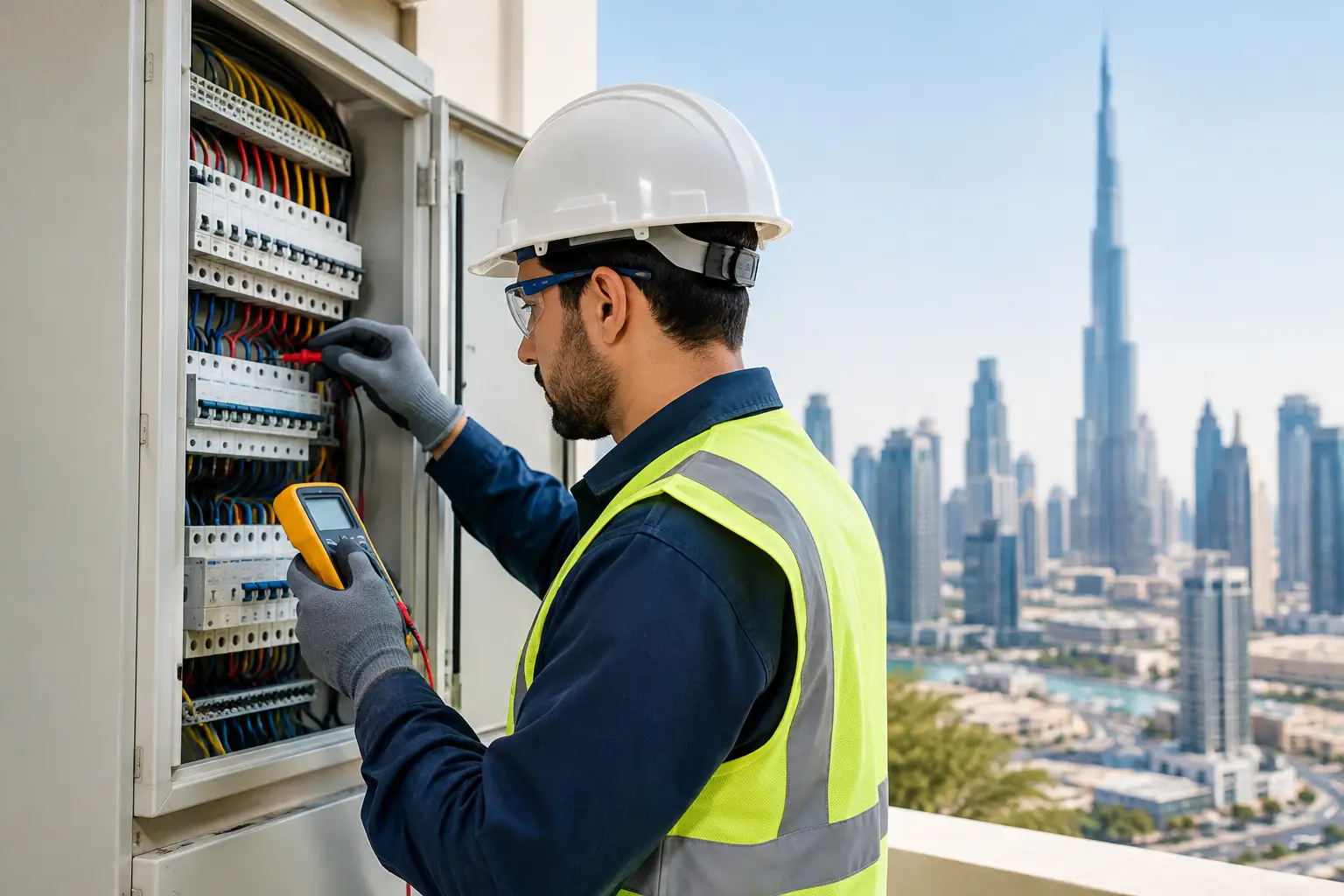
A technician will normally begin with the main electrical panel or distribution board. This includes checking breaker condition, circuit labeling, signs of overheating, loose connections, damaged components, and whether protective devices appear appropriate for the circuits they serve. Clear labeling matters more than many owners realize. During a fault or emergency, knowing which breaker controls the water heater, kitchen outlets, AC, or exterior lighting allows the circuit to be isolated quickly.
The inspection should also cover accessible outlets, switches, light fittings, junction points, and wiring connections where relevant. Technicians look for heat marks, cracking, loose faceplates, incorrect fittings, water exposure, overloaded outlets, and signs that previous repair work was not completed to a safe standard.
Where conditions and access permit, electrical testing helps verify issues that cannot be seen from the outside. This may include checks for supply voltage, continuity, grounding, insulation condition, polarity, and operation of residual-current protection devices. The exact tests should be selected based on the property and the suspected issue, not performed as a generic exercise.
High-load equipment deserves extra attention
Dubai properties often place significant demand on electrical systems. Central and split AC equipment, electric water heaters, ovens, pumps, washing machines, dryers, and EV charging equipment can all expose weaknesses in a circuit that appears fine under light use.
An inspection may assess whether dedicated circuits, breakers, cable sizing, isolation points, and connections appear suitable for the connected load. This does not mean every older installation needs a complete replacement. It means the technician should identify whether a particular circuit is overloaded, poorly connected, or showing evidence of heat stress.
In villas, exterior circuits also need careful review. Garden lighting, gate motors, irrigation controls, outdoor sockets, and pool-related equipment operate in areas exposed to moisture, heat, dust, and landscaping work. A damaged exterior fitting or unprotected connection should not be ignored simply because it still works.
When to schedule an electrical inspection
Some inspections are planned as part of preventive property maintenance. Others are prompted by a clear warning sign. In either case, acting early is usually less disruptive than waiting for a complete failure.
Arrange an inspection if you notice recurring breaker trips, burning smells, buzzing from a panel or outlet, flickering lights, shocks or tingling from an appliance, warm switches or plugs, discolored sockets, or a sudden rise in electrical faults after renovation. Water leaks near a panel, outlet, ceiling light, or water-heater connection also require prompt attention.
Property owners should also consider an inspection before moving into a previously occupied home, after major renovation, before installing high-load equipment, or when taking over management of a commercial unit. This creates a clearer picture of the existing electrical condition before new equipment is added or tenants begin using the space.
For landlords and property managers, documented inspection findings can help prioritize repairs between tenancies. It is often easier to replace a damaged outlet, correct a loose connection, or organize circuit labeling while a unit is vacant than during an urgent tenant callout.
Do not wait if there is an immediate hazard
If there is smoke, visible sparking, a burning smell, water entering electrical equipment, or repeated breaker trips that will not stop, switch off the affected circuit if it is safe to do so. Keep people away from the area and arrange qualified assistance. Do not repeatedly reset a breaker to keep an appliance running. A breaker that trips is responding to a fault or abnormal condition, and bypassing that warning can make the situation worse.
Why electrical faults are often misdiagnosed
Electrical problems are not always located where the symptom appears. A dead outlet may be caused by a loose upstream connection. Flickering lights may relate to a fitting, a switch, a circuit connection, or an issue with a load starting elsewhere in the property. A water heater that seems faulty may have a separate electrical supply or isolation issue.
This is why replacing the visible item first is not always the right repair. A new socket will not solve overheating caused by a loose cable behind it. Replacing a breaker without investigating why it trips can hide the real problem temporarily while leaving the circuit unsafe.
A professional inspection follows the evidence. The technician should ask when the issue occurs, what equipment is operating at the time, whether work was recently carried out, and whether there has been water damage or a power interruption. These details help narrow the diagnosis and avoid unnecessary parts replacement.
Electrical inspection for apartments, villas, and offices
The property type changes both the scope and the likely risks.
Apartments commonly require attention to internal outlets, lighting circuits, water-heater connections, kitchen loads, AC isolators, and the apartment distribution board. In a tower, certain supply-side elements may fall under building management responsibility, so a clear diagnosis helps establish whether the fault is inside the unit or needs coordination with facilities management.
Villas often have more circuits, more outdoor equipment, and more modifications carried out over time. Extensions, landscape lighting, maid's rooms, garage areas, pumps, and added appliances can result in circuits that are difficult to trace or poorly labeled. A detailed inspection is especially useful before adding smart-home controls, CCTV, smart locks, or new HVAC equipment.
Offices and commercial units may have heavier continuous loads from IT equipment, pantry appliances, signage, lighting, and air conditioning. Downtime has a direct operational cost, so inspection planning should focus on minimizing disruption. In some cases, work may need to be scheduled around business hours or coordinated with building management for access and isolation requirements.
What you should expect from the visit
A useful inspection should leave you with more than a verbal statement that everything is fine. You should understand what was checked, what was found, which issues need urgent action, and which items can be planned as routine maintenance.
The technician should explain the difference between a safety concern, a reliability issue, and an optional improvement. For example, a heat-damaged outlet may require prompt replacement, while better circuit labeling may be a practical improvement that can be completed during the same visit or planned later. If replacement parts or additional work are needed, the recommendation should be clear before work proceeds.
Access affects the depth of an inspection. Fixed cabinetry, concealed wiring, tenant belongings, ceiling voids, and building rules can limit what can be visually examined. A responsible technician will be transparent about those limits rather than claiming to certify areas that were not accessible.
Preventive care after the inspection
Many electrical issues return because the underlying habits remain unchanged. Avoid connecting multiple high-load appliances through extension leads or overloaded adapters. Keep electrical panels accessible and dry. Do not cover outlets with furniture where plugs can become bent or cables strained. If a breaker trips repeatedly, treat it as a service issue rather than an inconvenience.
For landlords, villas with outdoor equipment, and properties with substantial AC and water-heating loads, preventive checks are particularly valuable before the busiest periods of use. They can also be coordinated with AC maintenance, plumbing inspections, and general property upkeep so small defects are handled before they interrupt daily life.
DHRS Dubai has supported residential and commercial properties since 2005 with practical fault finding and transparent maintenance recommendations. Whether the concern is a single warm outlet or an electrical system that has not been checked since a renovation, an informed inspection gives you a safer basis for the next decision.
Need Home Maintenance in Dubai?
Contact the experts at DHRS Dubai for fast, reliable service.
Get a Quote