
Tankless Versus Storage Water Heaters in Dubai
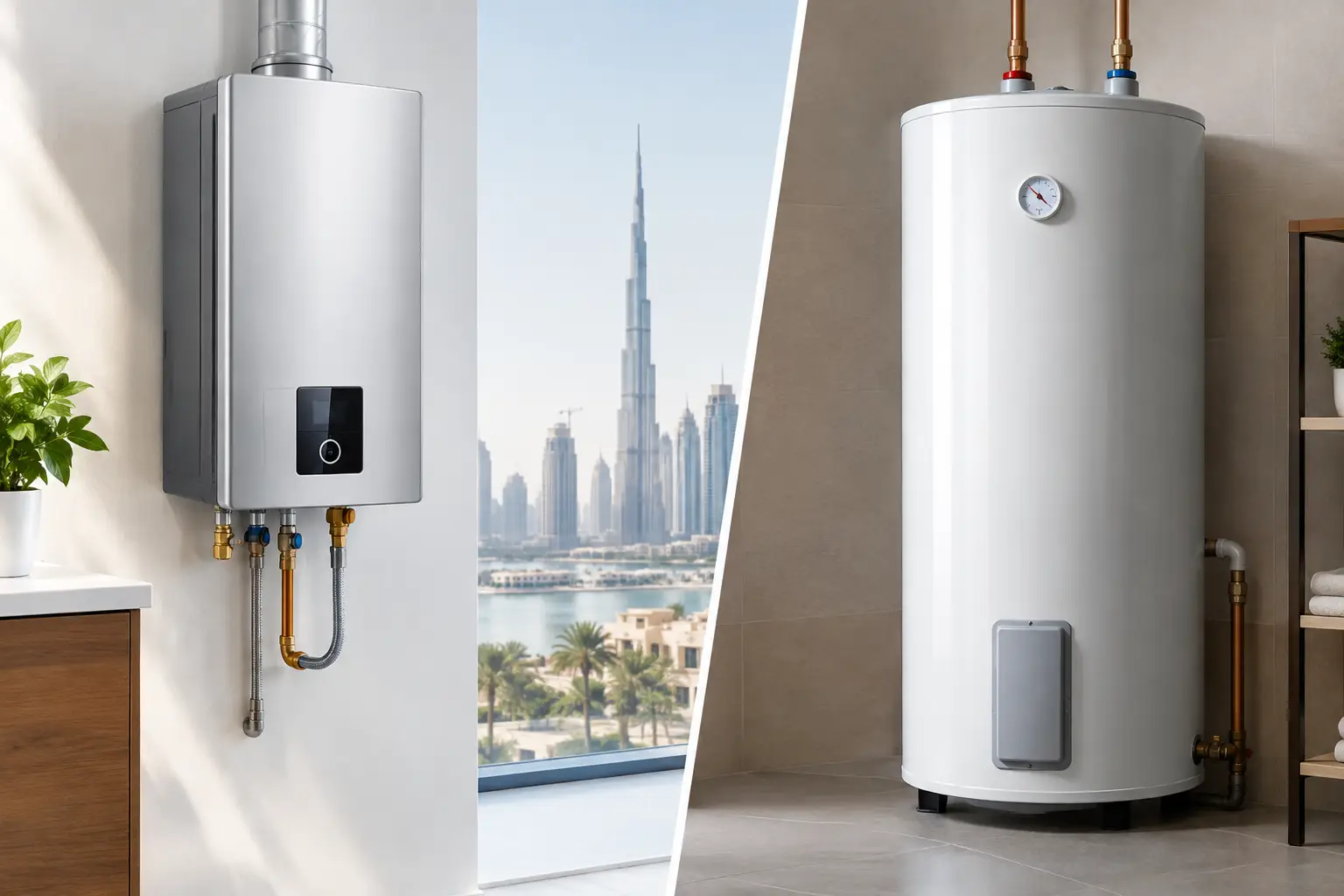
A water heater rarely gets much attention until a morning shower runs cold, a ceiling starts showing signs of a leak, or the electrical breaker trips. When replacement is due, the choice between tankless versus storage water heaters affects daily comfort, electrical requirements, available space, and long-term maintenance. The best option is not automatically the newest or smallest unit. It depends on your property, hot-water demand, and the condition of the existing plumbing and electrical system.
For many Dubai apartments and villas, a properly sized storage water heater remains the most practical and reliable solution. Tankless units can be a good fit in specific situations, but they need careful load calculations and professional installation to perform as expected.
How the Two Water Heater Types Work
A storage water heater holds a set volume of heated water in an insulated tank, commonly 30, 50, 80, or 100 liters for residential use. A thermostat maintains the selected temperature. When someone opens a hot-water tap, heated water leaves the tank and cold water enters to be heated in its place.
A tankless water heater, also called an instant or on-demand water heater, heats water only while it flows through the unit. There is no stored supply waiting in a tank. It can reduce standby heat loss, but its ability to serve a shower, kitchen tap, and multiple bathrooms at the same time is limited by its heating capacity and the incoming water temperature.
Tankless Versus Storage Water Heaters: The Practical Differences
The comparison below reflects the issues that matter most when choosing a unit for a home, apartment, villa, or managed property.
| Factor | Tankless water heater | Storage water heater | |---|---|---| | Hot-water supply | Continuous while flow stays within unit capacity | Limited by tank volume, followed by recovery time | | Electrical demand | Often high, particularly for whole-home electric units | Usually lower and more predictable | | Space required | Compact wall-mounted format | Requires room for the tank and service access | | Multiple outlets | Can struggle if several fixtures operate together | Works well when correctly sized for household demand | | Energy use | Avoids standby heating losses | Uses energy to maintain stored water temperature | | Installation | May require major electrical and plumbing changes | Often a straightforward replacement for an existing tank | | Maintenance | Requires periodic descaling and flow checks | Requires inspection for corrosion, sediment, valves, and leakage |
A tankless unit may look like the clear winner on paper because it is compact and heats on demand. In practice, its performance depends on flow rate. A small unit may work well for one hand basin or a single kitchen sink but deliver disappointing temperatures at a shower. A whole-property electric tankless system can require a substantial electrical supply, dedicated breakers, correctly sized cables, and a distribution board with enough spare capacity.
That electrical work should never be treated as an afterthought. If a unit is undersized or connected to unsuitable wiring, the result can be frequent breaker trips, poor water temperature, damaged components, or an avoidable safety risk.
Which Water Heater Is Better for Dubai Apartments?
For a typical apartment with one or two bathrooms, a storage water heater is often the most sensible replacement, especially when the property already has a tank installed in a utility area, false ceiling, or bathroom service space. Reusing the established pipework and electrical provision can control installation costs and reduce disruption.
Capacity matters more than choosing the largest available tank. A 30-liter unit may be suitable for limited use or a single occupant, while a 50- to 80-liter unit is more common where one bathroom shower needs dependable performance. Larger households, homes with multiple showers, or properties where back-to-back showers are normal may need 80 liters or more, depending on usage habits and the heater's recovery rate.
Tankless units can suit compact apartments where a small point-of-use heater is needed at a remote sink, pantry, or bathroom. They may also be useful where space is extremely limited. However, replacing a central storage heater with one electric tankless unit should only follow an electrical and plumbing inspection. The compact unit itself may be small, but the supporting electrical upgrade may not be.
What Works Best in Villas and Larger Homes?
Villa owners should focus on simultaneous demand. If two family members shower while someone uses hot water in the kitchen, the system must meet that combined requirement without pressure or temperature fluctuations.
A properly selected large storage heater, or separate storage heaters serving different zones, often provides stable performance in villas. Zoned systems can be practical where bathrooms are far apart or located on different floors. They also reduce the impact of a single unit failure and can make maintenance easier to schedule.
A high-capacity tankless system may serve a villa successfully, but it requires more design work. The installer must assess incoming water flow, pipe sizing, fixture demand, electrical capacity, and the routing of dedicated cables. For gas-fired tankless systems, ventilation, safe installation conditions, and applicable building requirements also need professional review. It is not a direct swap for an electric tank in most properties.
Energy Savings: Look Beyond the Product Label
Tankless heaters can use less energy because they do not keep a tank of water hot all day. That advantage is strongest in homes with low or irregular hot-water use. A vacant property, guest bathroom, or small studio may see a meaningful reduction in standby energy consumption.
For a busy family home, the calculation is less straightforward. A storage heater with good insulation, a sensible thermostat setting, and healthy pipework can be efficient enough for regular use. If occupants take several showers close together, stored hot water can also provide a more consistent experience than an undersized instant heater operating at its limit.
Water quality and maintenance affect efficiency over time. Mineral deposits can collect on heating elements and inside tanks, reducing heat transfer and increasing electricity use. Tankless units are also vulnerable to scaling in their internal heat exchangers, where narrow water passages can lose performance if descaling is neglected. Neither type is maintenance-free.
Installation Cost and Replacement Planning
The unit price is only one part of the decision. Storage heater replacement costs usually include removing the old unit, installing the new heater, renewing flexible connectors or valves where required, checking electrical connections, and testing for leaks and proper thermostat operation.
Tankless installation can cost more when it requires upgraded cables, a new breaker, electrical panel modifications, new plumbing routes, or wall alterations. A low-priced instant heater can become an expensive project if the existing infrastructure is not suitable.
Before approving a replacement, ask for an inspection that covers the root cause of the old unit's failure. A leaking tank usually requires replacement, while a failed heating element, thermostat, pressure-relief valve, or electrical connection may be repairable. Honest diagnostics help avoid replacing a water heater before it is genuinely necessary.
Maintenance That Protects Either Choice
Storage heaters should be checked for leakage, corrosion, pressure-relief valve operation, thermostat performance, and signs of sediment buildup. Any staining around connections, rust-colored water, repeated loss of heat, or breaker tripping deserves prompt attention. A small leak above a ceiling or inside a cabinet can become costly property damage.
Tankless heaters need their filters, flow sensors, water connections, and heat exchanger assessed periodically. Reduced flow, inconsistent temperature, error codes, or a unit that activates and stops repeatedly can point to scale, restricted flow, or an electrical fault.
For landlords and property managers, preventive checks before a new tenancy or during scheduled property maintenance are particularly useful. Water heaters are often hidden from view until they fail, and a planned inspection is easier to manage than an urgent leak affecting a tenant or neighboring unit.
Make the Choice Around Real Usage
Choose a storage water heater when you want reliable hot water for regular household use, have existing tank-based connections, or need to serve more than one outlet at a time without major electrical alterations. Choose a tankless unit when space is limited, demand is modest or localized, and the property's electrical system has been confirmed as suitable.
If you are unsure, start with a professional assessment of your current heater, hot-water usage, plumbing layout, and electrical load. Since 2005, DHRS Dubai has helped property owners make practical repair and replacement decisions based on the condition of the system, not a one-size-fits-all recommendation. The right water heater is the one that delivers safe, steady hot water without creating unnecessary installation costs or future maintenance problems.
Need Home Maintenance in Dubai?
Contact the experts at DHRS Dubai for fast, reliable service.
Get a Quote