
Why Water Heaters Leak and What to Do Next
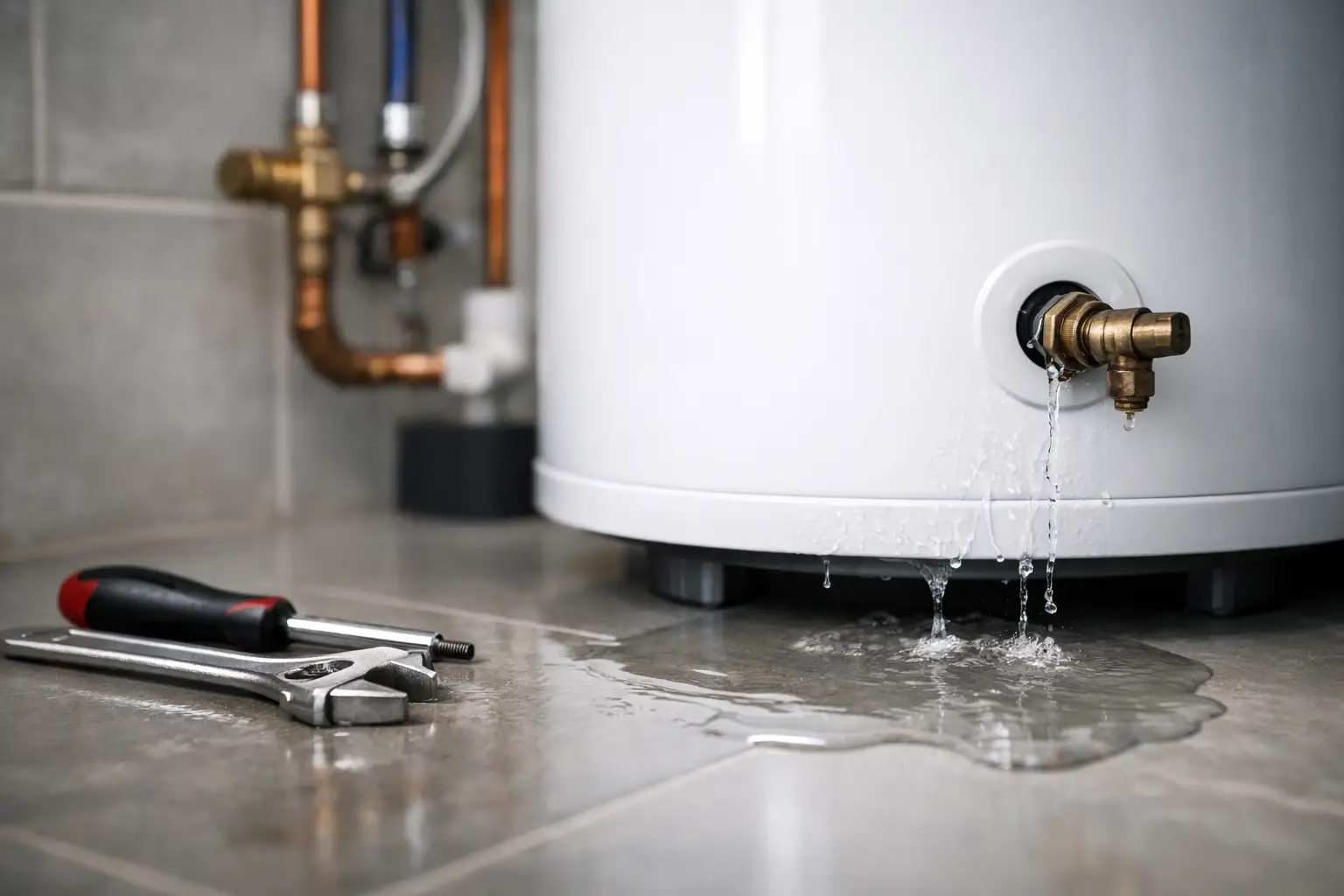
A few drops beneath a water heater can become a damaged cabinet, stained ceiling, or electrical safety issue surprisingly quickly. Understanding why water heaters leak helps you act before a minor fitting problem turns into property damage. The key is to identify where the water is coming from, isolate the unit safely, and avoid assuming that every leak means the entire heater needs replacement.
For apartments and villas in Dubai, water heaters are often installed in tight utility cupboards, false ceilings, bathrooms, or outdoor service areas. That can make the true source difficult to see. Water may travel along a pipe, collect under the tank, and appear to come from a completely different component. A proper inspection starts at the top of the unit and works downward.
Why Water Heaters Leak: The Most Common Causes
A water heater can leak from its connections, valves, heating elements, internal tank, or nearby plumbing. Each cause has a different repair path and level of urgency.
Loose or worn pipe connections
The cold-water inlet and hot-water outlet are at the top of most storage water heaters. Over time, normal expansion and contraction, vibration, aging seals, or poor original installation can loosen a fitting. You may see moisture around the pipes, greenish corrosion on metal connections, or slow droplets running down the tank body.
This is often one of the more straightforward repairs. A technician can inspect the threaded fittings, flexible hoses, isolation valves, and sealing materials, then correct the fault without replacing the heater. However, overtightening a corroded connection can make the problem worse, so it is better not to force it yourself.
A leaking temperature and pressure relief valve
The temperature and pressure relief valve, often called the TPR valve, is a safety component. It releases water if pressure or temperature inside the tank rises beyond a safe level. A small discharge from its pipe may mean the valve itself is worn, but it can also indicate a larger issue with water pressure, overheating, or thermal expansion.
Do not cap, plug, or disable this valve to stop the dripping. Doing so removes a critical safety protection. The correct solution is to test the valve and diagnose why it opened. Depending on the finding, the repair may involve replacing the valve, adjusting an unsuitable pressure condition, or addressing thermostat and heating-control faults.
Drain valve seepage
The drain valve is usually located near the bottom of the tank. It is used when servicing or emptying the heater. With age, sediment, a worn washer, or a valve that was not fully closed after maintenance can cause it to drip.
If the leak is clearly from this valve and the tank body is dry, a valve repair or replacement may be enough. Water at the base of the heater does not automatically mean the tank has failed, which is why identifying the exact source matters.
Heating element gasket failure
Electric storage water heaters use one or more heating elements sealed into the tank with gaskets. These seals can deteriorate from heat, mineral buildup, age, or inconsistent water quality. The result is usually a leak from the side panel or an area behind an access cover.
Because electricity and water are involved, switch off power at the circuit breaker before anyone opens the heater panel. If water is close to electrical wiring or the breaker cannot be safely accessed, keep clear and arrange professional support. Replacing an element gasket can be cost-effective when the tank itself remains in good condition.
Internal tank corrosion
A leak from the tank body, welded seam, or bottom of a storage heater is more serious. Steel tanks are protected internally, but that protection eventually wears down. Once corrosion creates a hole in the tank, the practical and safe solution is generally replacement.
Rust-colored water, recurring dampness around the base, flaking metal, or a leak that persists after all external fittings have been checked are warning signs. The damage may be hidden under insulation, so water collecting underneath the unit deserves an inspection even when the outside looks normal.
In Dubai, mineral content in water and long service intervals can accelerate scale buildup inside a heater. Scale does not always cause a visible leak on its own, but it can reduce efficiency, stress heating elements, and contribute to overheating or premature component wear.
How to Find the Source Without Taking Risks
First, look for active dripping at the pipe connections, relief valve discharge pipe, drain valve, and around the heater's lower edge. Use a dry tissue to check suspected areas rather than placing your hands near electrical covers. If the outside of the tank is wet from top to bottom, dry it carefully after isolating power, then check which point becomes wet first.
Condensation can sometimes be mistaken for a leak. In a humid service area, cold inlet piping may sweat, especially when water temperature changes. Condensation is usually light and spread across a surface rather than forming a steady drip from a single joint. Still, a technician should confirm the difference if water is accumulating.
Also check whether the water is actually from the heater. A nearby AC drain, concealed plumbing line, bathroom fixture, or washing machine connection can send water into the same cupboard or ceiling void. Treating the visible puddle without tracing the route can lead to an unnecessary water heater replacement.
What to Do When Your Water Heater Is Leaking
A slow leak is not something to monitor for weeks. The safest response depends on its location and severity.
If water is near electrical wiring, sockets, or the heater's control cover, turn off power to the water heater at the breaker if it is safe to do so. Do not stand in water while operating electrical switches. For a significant leak, close the cold-water isolation valve feeding the heater. If you cannot identify that valve, the main water supply may need to be isolated temporarily.
Place towels or a container beneath a minor external drip only as a short-term measure. Do not attempt to seal a pressurized tank with tape, epoxy, or improvised clamps. These temporary fixes can fail without warning and may conceal corrosion that requires replacement.
Take photos of the source, any rust, and the surrounding damage before the area is dried. This is useful for landlords, property managers, and maintenance teams, particularly when a leak has affected ceilings, cabinets, or another unit.
Repair or Replace: Making the Right Call
The decision is based on the source of the leak, the heater's condition, its capacity, and the availability of suitable parts. External connections, drain valves, relief valves, thermostats, and heating-element gaskets are often repairable. An internal tank leak usually is not.
Age also matters, but it should not be the only factor. A relatively new heater with a failed valve may be worth repairing, while an older unit with repeated element faults, heavy corrosion, poor heating performance, and rising energy use may be a better candidate for replacement. A correctly sized replacement can also improve hot-water recovery for a larger household or busy commercial washroom.
An honest diagnosis should separate the cost of immediate repair from the likely remaining service life of the heater. At DHRS Dubai, technicians inspect the root cause, explain whether a repair is dependable, and recommend replacement only when it is genuinely required.
Preventing Future Water Heater Leaks
Preventive maintenance is less disruptive than dealing with a flooded utility area. A periodic inspection can identify corrosion at connections, aging flexible hoses, relief-valve discharge, thermostat problems, and early seepage around elements. Where the model and installation allow, controlled flushing can help reduce sediment, although the method should be appropriate for the unit's condition.
It is also worth checking that the heater is securely mounted, accessible for service, and protected from persistent moisture. In villas, outdoor or rooftop service locations may need additional attention because heat exposure and weather can affect insulation, valves, and pipework. In apartments, keeping the cupboard clear makes it easier to spot a leak before water reaches flooring or ceilings.
A water heater leak rarely improves on its own. Isolate the unit safely, protect the surrounding area, and arrange an inspection while the repair is still likely to be smaller, simpler, and less expensive.
Need Home Maintenance in Dubai?
Contact the experts at DHRS Dubai for fast, reliable service.
Get a Quote