
Why Does AC Smell Musty? Causes and Fixes
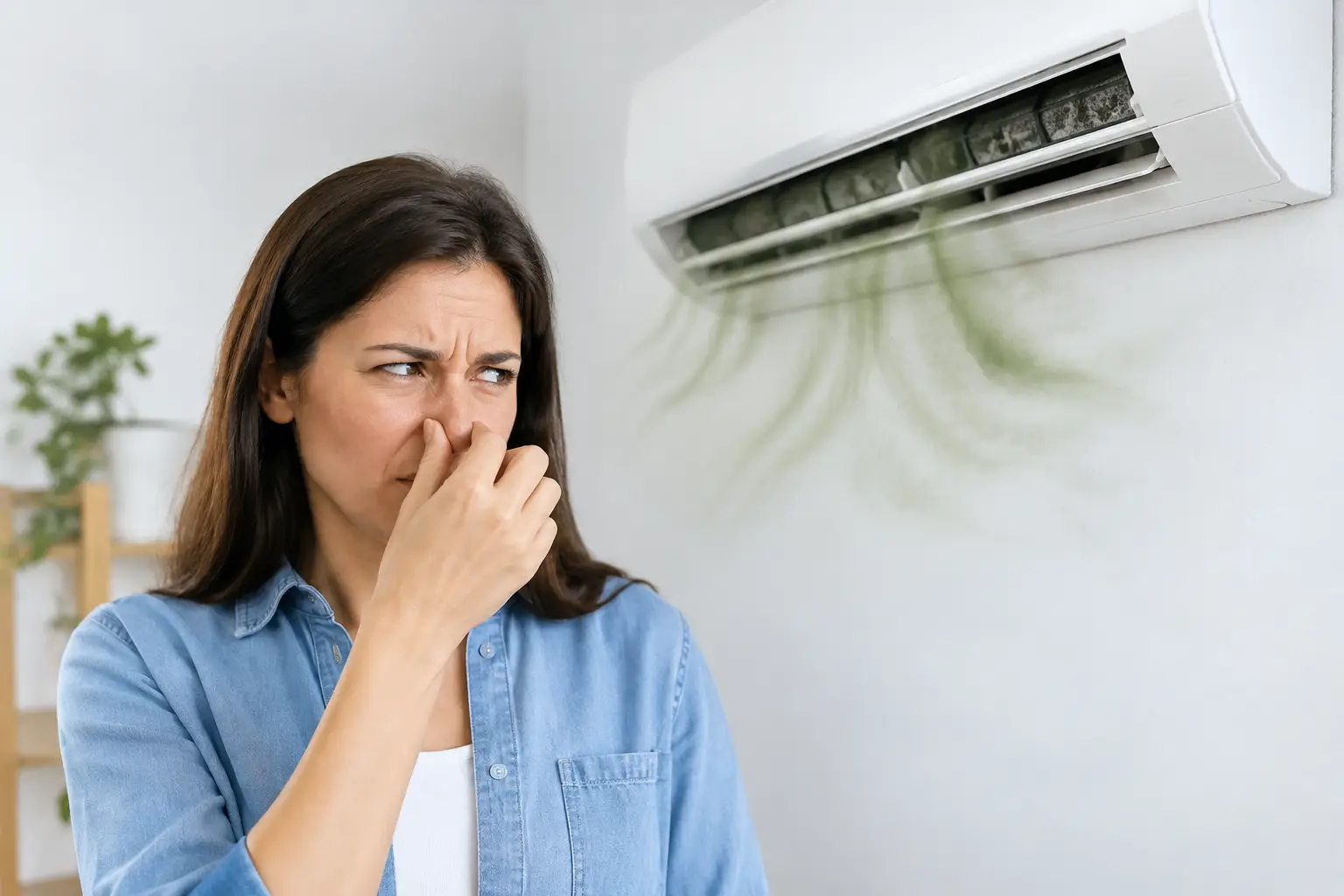
A musty smell from an AC often appears the moment the system starts after several hours of being off. If you are asking, “why does AC smell musty,” the usual answer is moisture sitting where it should not - often on the evaporator coil, inside the drain system, or in dirty filters and ductwork. In Dubai, long cooling seasons and high outdoor humidity can make these issues more noticeable, particularly when an AC has not received regular cleaning.
The smell is not something to cover with air freshener. It is a useful warning that your AC needs attention. A proper inspection identifies the source of moisture, removes contamination safely, and checks whether the system is draining and cooling as it should.
Why Does AC Smell Musty When It Turns On?
Your AC removes heat and humidity from indoor air. Warm air passes across a cold evaporator coil, and water vapor condenses into liquid. That water should collect in the drain pan and leave through the condensate drain line.
When the coil, drain pan, filter, or drain line remains damp and dirty, mold and mildew can develop. The blower then carries that stale odor into rooms whenever the unit operates. The smell may be strongest during the first few minutes of cooling, but it can linger if the underlying buildup is significant.
A musty odor does not always mean there is visible mold in the room. It does mean the AC system has conditions that allow microbial growth or trapped organic debris. Addressing it early is generally simpler than waiting for poor cooling, water leakage, or a blocked drain to follow.
The Most Common Causes of a Musty AC Smell
A dirty evaporator coil
The evaporator coil stays wet during normal operation. Dust, pet hair, cooking residue, and fine particles can settle on it over time. Once this layer combines with condensation, it becomes a place where mildew can grow.
A coil may look only lightly dusty from the outside while dirt is packed deeper between its fins. This is why a quick surface wipe or a heavily perfumed spray rarely solves the problem. The coil needs suitable cleaning without bending fins or allowing chemicals to damage nearby electrical parts.
Clogged condensate drain or drain pan
A blocked drain line prevents condensation from leaving the AC correctly. Water may stand in the drain pan, produce an odor, or eventually overflow and stain a ceiling or wall. Slime, dust, and biological buildup are common causes of drain restrictions.
If you notice a musty smell together with dripping water, a wet patch near the indoor unit, or a recurring float-switch shutdown, arrange an inspection promptly. Continuing to operate a unit with poor drainage can lead to water damage as well as odor issues.
Dirty or overdue air filters
Filters capture dust before it reaches the coil and blower. When they are clogged, airflow drops and dust can retain moisture. The resulting smell may be musty, stale, or similar to a damp storage room.
Some washable filters can be cleaned and dried completely before reinstalling. Disposable filters should be replaced with the correct size and type. A filter that is put back while damp can create the same problem you are trying to prevent.
Contamination in ducts or around vents
In central AC systems, the source may be beyond the indoor fan coil unit. Dust, insulation particles, construction debris, or moisture inside ductwork can affect indoor air quality. This is more likely after renovation work, a previous water leak, or long periods with low airflow.
Duct cleaning is not automatically the answer to every musty odor. If the coil or drain pan is contaminated, cleaning ducts alone will not fix the root cause. A technician should inspect the complete air path and recommend only the work that is genuinely required.
A unit that is oversized or short-cycling
An AC that cools a room too quickly may switch off before removing enough humidity. This is known as short-cycling. The space can feel cool but clammy, and the system may have more opportunity for odors to develop.
This cause is less common than a dirty coil or blocked drain, but it matters in homes with recently replaced AC equipment, altered room layouts, or thermostat problems. Correct diagnosis may involve checking capacity, thermostat settings, airflow, and run times rather than simply cleaning the unit.
What You Can Check Safely Before Booking Service
Start with the air filter if it is accessible and you know how to remove it safely. Look for visible dust, discoloration, or dampness. Clean or replace it according to the manufacturer’s guidance, then allow the system to run and see whether the odor improves.
Next, look around the indoor unit and nearby ceiling or wall for signs of water. Do not open electrical panels, pour chemicals into hidden drain piping, or spray cleaners directly onto coils and wiring. These shortcuts can damage the unit, create leaks, or mask the cause without removing it.
It also helps to notice when the smell occurs. An odor only at startup can point to moisture on the coil. A smell that continues throughout operation, appears from several vents, or returns soon after cleaning may suggest a larger issue with drainage, ducting, or indoor humidity.
When a Musty AC Smell Needs Professional Attention
Book AC maintenance if the smell persists after a clean filter, returns repeatedly, or comes with weak cooling. Professional service is also the sensible choice if there is leaking water, visible mold-like growth, frequent AC shutdowns, or anyone in the property who is especially sensitive to poor air quality.
A thorough visit should include an inspection of the filter, evaporator coil, blower area, drain pan, drain line, and condensate pump where fitted. The technician should confirm that water flows correctly through the drain and assess whether ductwork needs separate attention. Ask for the findings and recommended work before proceeding, especially if parts or extensive cleaning are proposed.
For villas, apartments, offices, and managed properties in Dubai, DHRS Dubai provides AC inspection, cleaning, repair, and preventive maintenance with a focus on finding the root cause rather than treating the smell alone. Regular service can also catch early drainage issues before they become ceiling leaks or emergency callouts.
How to Help Prevent Musty AC Odors
Prevention comes down to keeping the system clean, dry where it should be dry, and able to drain freely. Replace or clean filters on schedule, particularly during periods of heavy use. Keep supply and return vents unobstructed so air can circulate correctly.
Schedule routine AC maintenance before the hottest months, and do not wait for a complete cooling failure. Coil cleaning, drain-line flushing, and airflow checks are small maintenance tasks compared with repairing water damage or replacing an overworked component.
If a home is vacant for part of the year, avoid leaving the AC completely neglected. A planned check before occupancy can confirm the drains are clear and prevent the first switch-on from filling the property with a stale smell.
A Musty Smell Is a Maintenance Signal
A musty AC smell is usually fixable, but the right fix depends on where moisture and dirt have collected. Replacing a filter may resolve a minor issue; a persistent odor may require coil cleaning, drain repair, or a broader HVAC inspection. Taking action when the smell first appears helps keep the air fresher, protects the property, and gives your AC a better chance of performing reliably through the cooling season.
Need Home Maintenance in Dubai?
Contact the experts at DHRS Dubai for fast, reliable service.
Get a Quote