
How to Clean AC Filters Without Damaging Them
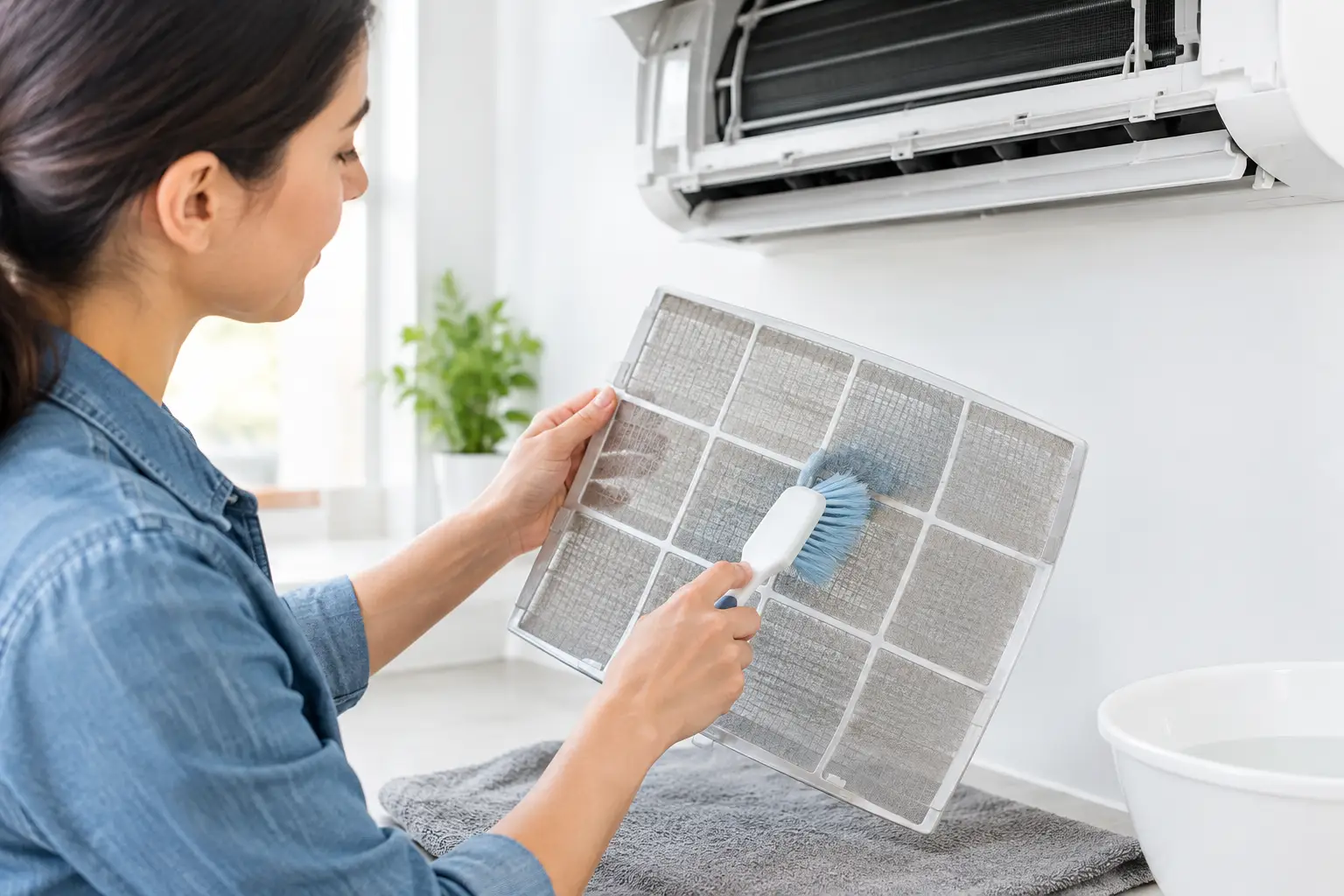
A wall-mounted split AC can look clean while its filters are packed with fine dust. In Dubai, that buildup can happen quickly, especially near construction, open balconies, pets, or frequently used rooms. Knowing how to clean AC filters properly helps the unit move air more freely, cool more consistently, and avoid unnecessary strain on the indoor blower.
This is a simple maintenance task for many residents, but the details matter. Washing a reusable mesh filter is not the same as cleaning a disposable central AC filter, and putting either one back while damp can create a different problem. Use the right method for your system, and call for an inspection when cleaning the filter does not restore normal performance.
Why AC filter cleaning matters in Dubai
Your AC filter catches airborne dust, lint, hair, and other particles before they reach the indoor coil and fan. As debris builds up, airflow drops. You may notice that a room takes longer to cool, the AC runs for extended periods, or air coming from the grille feels weaker than usual.
A dirty filter can also increase energy use because the system must work harder to circulate the same amount of air. In villas and apartments where AC operates for much of the year, regular filter care is one of the most practical ways to support efficient operation.
Cleaning a filter will not fix every cooling issue. Low refrigerant, a dirty evaporator coil, blocked condensate drainage, a faulty thermostat, or an outdoor-unit fault can cause similar symptoms. The difference is that filters are accessible and should be checked first.
Identify the type of AC filter before cleaning
Most wall-mounted split AC units in Dubai use reusable plastic mesh filters. These sit directly behind the front panel of the indoor unit and are designed to be removed, washed, dried, and refitted.
Ducted systems, package units, and some central AC fan-coil units may use disposable pleated filters instead. These are commonly located behind a return-air grille in a ceiling, wall, or utility area. Do not wash a pleated paper or fabric filter. Water can damage the filter material and reduce its ability to hold its shape. It should be replaced with the correct size and filter rating.
Some systems also have small deodorizing, carbon, or fine-particle inserts attached to the main mesh filter. These are not always washable. Check the unit manual or markings on the filter frame before rinsing them. If there is no clear guidance, gently vacuum the insert rather than soaking it.
How to clean AC filters in a split AC unit
Start by switching the AC off using the remote, then isolate power at the local isolator switch or circuit breaker if it is safely accessible. This prevents the indoor fan from starting while the panel is open.
Stand on a stable step stool if needed. Avoid pulling on the front cover of a high-mounted unit while overreaching. Open the indoor unit’s front panel slowly from the lower edge. Most covers lift upward and stay open on hinges, but forcing it can crack the plastic clips.
The mesh filters usually slide upward or outward. Handle them by the frame, not the mesh. Take note of their orientation so they go back in correctly.
First, remove loose dust with a vacuum cleaner using a soft brush attachment. Vacuuming outside or over a protected surface is preferable, as tapping a dusty filter indoors can spread fine particles through the room. If the filter only has a light coating of dust, vacuuming may be enough.
For a more thorough clean, rinse the filter under lukewarm running water. Direct the water from the cleaner side toward the dirtier side where possible, so debris is pushed out rather than driven deeper into the mesh. A small amount of mild dish soap can help with greasy buildup, particularly in kitchens or areas exposed to smoke.
Do not use bleach, strong detergents, hot water, stiff brushes, or high-pressure water. These can weaken the mesh, warp the plastic frame, or leave chemical residue that will circulate when the AC runs.
Shake off excess water and leave the filters to air-dry completely in a clean, shaded, ventilated area. Direct intense sunlight can distort thin plastic filters, particularly during Dubai summers. Never reinstall a wet or damp filter. Moisture inside the unit can encourage odors and microbial growth.
Before refitting the filters, use a dry microfiber cloth to wipe accessible dust from the front panel and air outlet louvers. Do not spray water or cleaning products into the indoor unit, and do not touch the aluminum coil fins behind the filters. Those fins bend easily and require careful professional cleaning when heavily soiled.
Slide the dry filters back into their original tracks, close the panel gently, restore power, and run the unit for several minutes. Check that there is no unusual noise and that airflow feels even.
Cleaning or replacing filters in ducted and central AC systems
For ducted AC, locate the return-air grille or filter access panel. In apartments, it may be in a hallway ceiling, laundry area, or utility closet. In villas, the filter may be at a return grille, fan-coil unit, or air handler.
Turn the system off before opening the grille. Remove the filter carefully and check for an airflow arrow printed on the frame. That arrow must point in the direction of air movement when the new filter is installed.
If it is a reusable mesh filter, vacuum it first and rinse it gently as described above. If it is a disposable pleated filter, replace it rather than washing it. Match the length, width, thickness, and filter type. An incorrect size allows unfiltered air to bypass the filter, while an overly restrictive filter can reduce airflow in a system not designed for it.
If the grille, filter area, or ceiling around it shows water staining, stop and arrange an AC inspection. This can indicate a condensate drain issue, insulation problem, or a leaking fan-coil unit. A clean filter alone will not address the root cause.
How often should you clean AC filters?
For a frequently used split AC in Dubai, inspect filters every two weeks and clean them about every two to four weeks when dust is visible. Homes with pets, smokers, renovation work, open windows, or occupants with dust sensitivities may need more frequent cleaning.
For central or ducted systems, a monthly inspection is a practical starting point, but replacement intervals depend on the filter type and operating conditions. A lightly used guest room may need less attention than a busy living area or office.
Do not rely only on a calendar. Check sooner if airflow becomes weak, rooms feel unevenly cooled, the unit sounds louder than normal, or dust is collecting rapidly around supply vents.
When a clean filter is not enough
A clean filter should improve airflow if blockage was the main issue. If your AC is still not cooling properly after the filters are cleaned and fully dried, the fault may be elsewhere. Common signs that need professional diagnosis include water dripping from the indoor unit, ice on refrigerant pipes, musty odors, repeated tripping, unusual rattling, or an AC that runs but never reaches the set temperature.
Filter cleaning also does not replace preventive AC maintenance. Over time, indoor coils, blower wheels, drain trays, pumps, electrical connections, and outdoor condenser coils require inspection and cleaning. In a ducted system, technicians should assess the fan-coil condition and drainage before recommending duct cleaning, since not every airflow complaint is caused by the ducts.
DHRS Dubai provides practical AC maintenance and repair for homes, villas, apartments, and commercial properties. The right approach is to start with the visible condition of the filters, then diagnose the actual cause if performance does not improve - not recommend parts or major work without a clear reason.
A clean, fully dry filter is a small job with a worthwhile return: better airflow, less dust reaching the system, and an earlier warning when your AC needs more than routine attention.
Need Home Maintenance in Dubai?
Contact the experts at DHRS Dubai for fast, reliable service.
Get a Quote