
Why AC Drains Overflow and What to Do Next
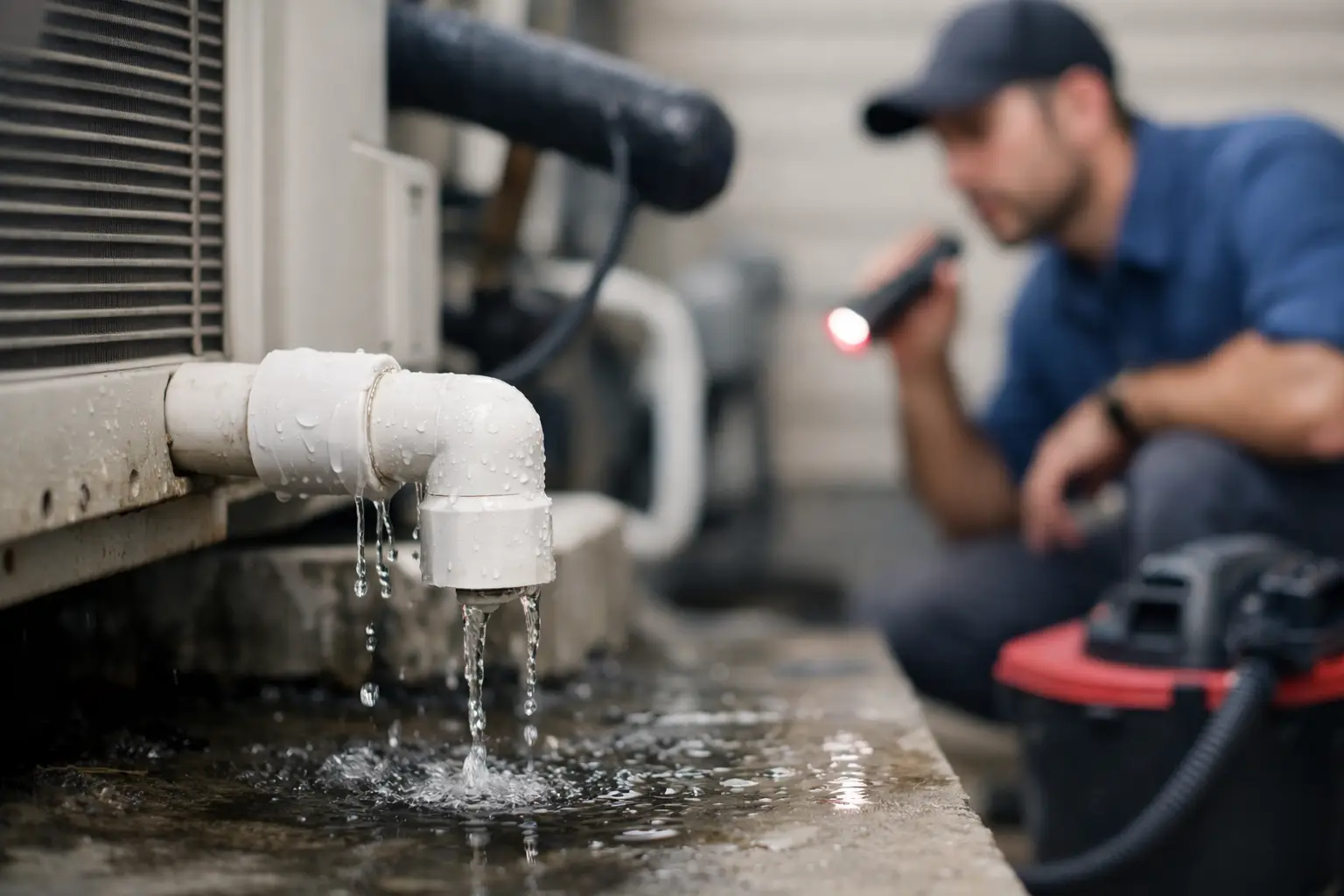
A water stain below an AC vent, dripping from a ceiling cassette, or water pooling near an indoor unit is not just an inconvenience. In Dubai, where AC systems run for long periods through much of the year, a small drainage fault can quickly damage ceilings, walls, flooring, furniture, and electrical components. Understanding why AC drains overflow helps you act early and avoid a more costly repair.
Your air conditioner does not normally produce water because of a plumbing leak. It removes humidity from indoor air as it cools. That moisture collects on the cold evaporator coil, falls into a drain pan, and exits through a condensate drain line. An overflow occurs when that water cannot leave the system fast enough or when the system is producing more condensation than it should.
Why AC Drains Overflow in Homes and Offices
The most common cause is a blocked condensate drain line. Dust, fine sand, algae, mold, and biological buildup can collect inside the pipe over time. Dubai's dusty environment can make this worse, particularly when AC filters and coils are not cleaned regularly. Once the drain line narrows or blocks completely, water backs up into the drain pan and eventually spills from the indoor unit.
A blocked line is usually a maintenance issue, but it should not be dismissed as a simple cosmetic problem. Water can travel inside false ceilings and wall cavities before it becomes visible. By the time you see a stain or drip, insulation, gypsum board, or electrical connections may already have been exposed to moisture.
A dirty evaporator coil can create excess water
A clean evaporator coil transfers heat efficiently and allows condensation to drain in a controlled way. When the coil is coated with dust, it cannot operate as designed. Airflow drops, cooling performance suffers, and the coil may become cold enough to freeze.
When that ice melts, it can release a large volume of water into the drain pan at once. Even a partly restricted drain line may then overflow. This is why cleaning only the visible drain outlet does not always solve the root cause.
Clogged filters restrict airflow
A heavily clogged AC filter is another common contributor. Reduced airflow across the evaporator coil can cause the coil to ice up. You may notice weaker cooling, unusual humidity indoors, a musty smell, or water leakage after the unit has been running for several hours.
Replacing or cleaning a filter may help in some cases, but it will not remove a drain blockage or correct refrigerant issues. If the unit has already leaked, it is sensible to have the pan, coil, drain line, and surrounding ceiling area inspected.
Low refrigerant may lead to coil freezing
Low refrigerant does not directly fill a drain pipe, but it can lower coil temperatures enough to cause freezing. As the ice thaws, the drain system receives more water than usual. This can look like a drainage problem when the underlying issue is a refrigerant leak or an incorrectly charged system.
Refrigerant work requires trained HVAC technicians and the correct tools. Adding refrigerant without locating the cause of a leak is not a proper repair. The system may cool temporarily, then repeat the same problem.
A damaged drain pan or poor installation can cause leaks
Indoor AC units have drain pans that collect condensate before it enters the pipe. Older pans can crack, rust, sag, or become misaligned. In ducted systems, an inaccessible secondary pan may also overflow without being noticed immediately.
Installation details matter as well. A condensate line needs the correct slope so gravity can carry water away. Poor pipe routing, a sagging drain line, an incorrect trap, or an inadequate connection can allow water to sit in the pipe and back up. In some apartments and villas, renovations around ceilings or AC units can accidentally disturb the drain pipe alignment.
A faulty condensate pump may be the cause
Some systems cannot drain by gravity and use a condensate pump to lift water to a suitable discharge point. If the pump loses power, becomes blocked, or has a failed float switch, water remains in the reservoir until it overflows.
This issue is common in certain ceiling cassette, fan coil, and commercial AC installations. A technician should check both the pump operation and the safety cutoff, which should switch the AC off before water damages the property.
Warning Signs to Act On Before Water Appears
An AC drain problem often gives notice before it reaches the ceiling or floor. A persistent musty odor can indicate standing water or microbial growth in the drain system. Gurgling near the indoor unit, inconsistent cooling, ice on refrigerant pipes, or unusually high indoor humidity are also reasons to arrange an inspection.
Other signs include a full or wet drain pan, discoloration around a supply vent, peeling paint near the unit, and water that appears when the AC is switched off. That last symptom can happen because ice formed during operation and is melting afterward.
Do not assume every AC-related water leak is condensation. Water from a plumbing line, roof penetration, or external source can enter a ceiling near the AC and create a similar pattern. Accurate diagnosis matters before repairs begin.
What to Do When an AC Drain Overflows
First, switch the AC off at the thermostat or controller. If water is close to electrical fittings, lights, sockets, or the unit's power connection, isolate power safely at the breaker if you can do so without standing in water. Do not operate a leaking AC simply because it is still cooling.
Place towels or a container under an active drip where practical, then move electronics, rugs, and furniture away from the affected area. Take photos of the leak and water marks, especially if you are a tenant reporting the issue to a landlord or building management team.
You can check the accessible air filter and replace it if it is clearly dirty. You may also be able to see whether the external drain outlet is dripping while the system runs. However, avoid pushing wires, rods, or sharp objects into a drain pipe. That can damage concealed piping, dislodge a connection, or compact debris deeper in the line.
If there is visible ice on the indoor coil or refrigerant piping, leave the unit off and allow it to thaw. Turning the AC back on before the cause is identified can create another overflow. A technician can then assess airflow, coil condition, refrigerant pressures, drain slope, and pump performance rather than treating only the symptom.
How a Professional AC Drain Inspection Should Work
A proper visit starts with identifying where the water originated. The technician should inspect the indoor unit, primary drain pan, drain piping, filter condition, evaporator coil, insulation, and any condensate pump. For ducted AC, this may include checking accessible ceiling areas for water migration and confirming the secondary drain arrangement.
The drain line should be cleared using an appropriate method, then flushed and tested to confirm free flow from the unit to the discharge point. If there is slime or heavy contamination, cleaning may need to include the pan and relevant components rather than only clearing the outlet.
If the coil is frozen, diagnosis should continue beyond the drain. Airflow problems, blower faults, dirty coils, incorrect thermostat operation, and refrigerant loss can all be involved. DHRS Dubai focuses on identifying the root cause and explaining required work upfront, so owners and tenants can make an informed decision before repairs proceed.
Preventing Future AC Drain Overflows
Preventive AC maintenance is the most reliable way to reduce drain overflows. The right frequency depends on your system type, how often it operates, whether the property is occupied year-round, and the level of dust exposure. Villas with multiple fan coil units and properties near active construction may need more attention than a lightly used apartment unit.
Regular servicing should include filter cleaning or replacement, evaporator coil inspection, drain pan cleaning, drain-line flushing, and a check for proper drainage. Where pumps are installed, their float switches and discharge operation should also be tested. These are small tasks compared with repairing a damaged ceiling or replacing wet insulation.
A water leak from an AC unit deserves prompt attention, even if the dripping stops. Schedule an inspection before the next long cooling cycle, keep the unit off if water is near electrical equipment, and make sure the repair addresses the reason the drain overflowed rather than only the water you can see.
Need Home Maintenance in Dubai?
Contact the experts at DHRS Dubai for fast, reliable service.
Get a Quote