
When Water Tanks Need Cleaning in Dubai Homes
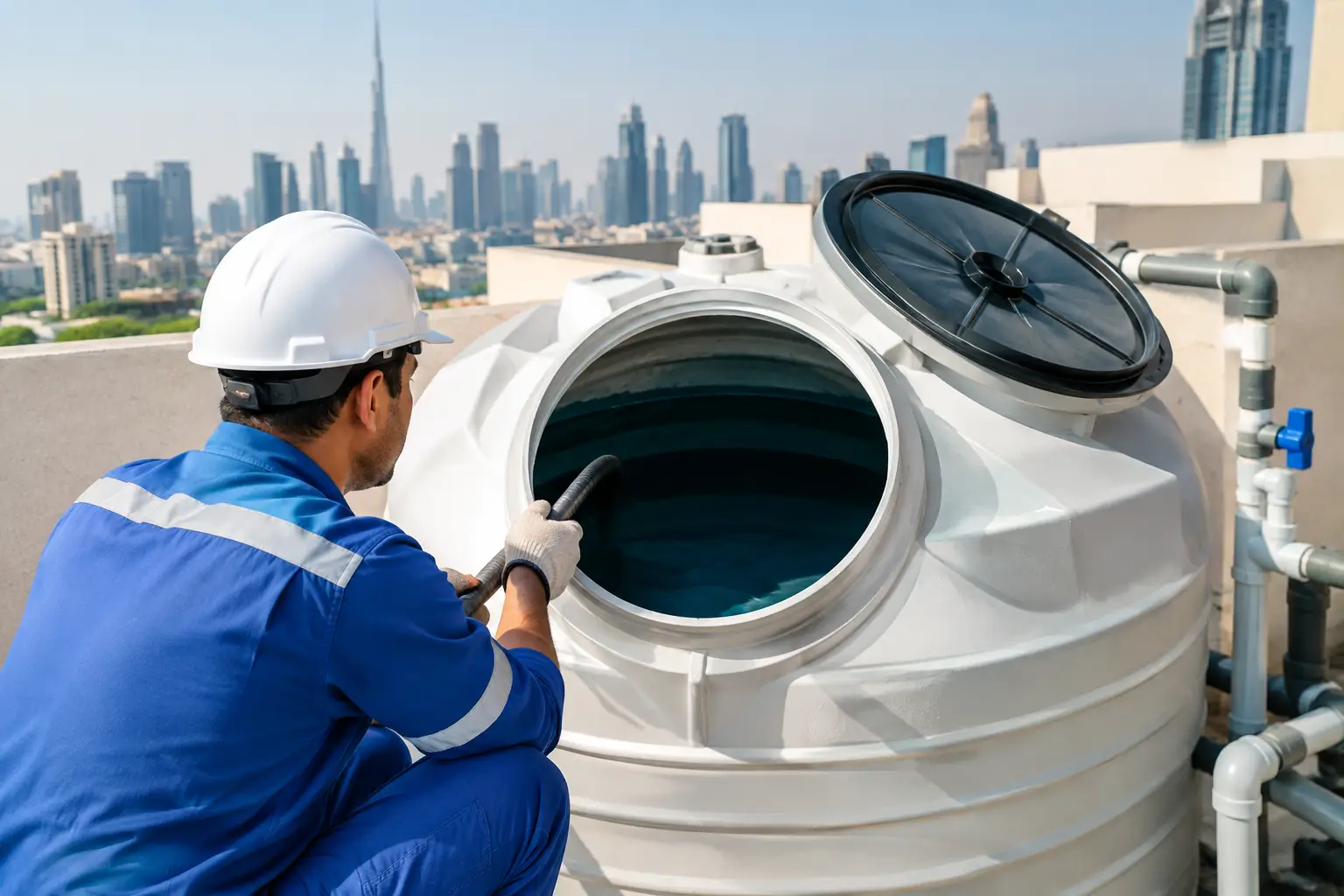
A water tank can look fine from the outside while sediment, scale, and organic buildup collect inside it. Knowing when water tanks need cleaning helps Dubai homeowners, tenants, and property managers protect water quality before an unpleasant smell, discolored water, or plumbing problem forces an urgent callout.
In a villa, the tank may serve every tap, shower, water heater, and irrigation point. In an apartment, tank maintenance may be managed by the building, but residents should still know the warning signs and report them promptly. The right cleaning interval depends on tank type, water use, building condition, and what an inspection reveals.
When Water Tanks Need Cleaning: The Usual Schedule
For many residential properties, a professional tank cleaning schedule of around once a year is a sensible preventive starting point. However, that is not a fixed rule for every property. A busy villa with several occupants, frequent guests, garden use, and multiple bathrooms may need more regular attention than a lightly used apartment.
Dubai's heat, airborne dust, and hard-water minerals can make preventive care particularly worthwhile. Fine dust can enter poorly sealed tanks or collect around access covers. Mineral content in the water can leave scale on tank surfaces and connected plumbing components. Neither issue always causes an immediate failure, but both can gradually affect cleanliness and system performance.
A tank should be cleaned sooner than its planned date if there is visible contamination, a change in water appearance or odor, recent construction work nearby, flooding around the tank area, pest activity, or a long period when the property has been vacant. If a villa has been unoccupied through the summer, for example, arranging an inspection before residents return is a practical precaution.
For apartments, ask the building management team when the common water tanks were last cleaned and whether the work included disinfection and inspection. Individual residents generally should not access or attempt to clean shared building tanks themselves.
Warning Signs That Should Not Wait
A routine cleaning date is useful, but condition matters more than a calendar. Some signs call for a prompt inspection because they may indicate tank contamination, sediment buildup, or an issue in the plumbing system.
Water that looks cloudy, yellow, or rusty
Cloudy water can come from sediment, scale, or disturbances in the pipework. Yellow or brown water may point to rust in pipes, a water heater issue, or sediment in the tank. If the color appears only from the hot-water tap, the water heater may be the more likely source. If it appears across several cold-water fixtures, the tank and incoming supply should be checked.
Run a tap briefly after a period of nonuse to see whether the issue clears. If discoloration persists, do not assume it is harmless or try to solve it with a filter alone. A technician should identify the root cause before recommending cleaning, repair, filtration, or pipework work.
Unusual smell or taste
Water should not have a musty, earthy, metallic, or sulfur-like smell. An odor can result from organic matter in the tank, bacterial growth, stagnant water, deteriorating components, or an issue with the water heater. Taste changes can have similar causes.
Do not mask the problem by adding chemicals to a domestic tank without professional advice. Using the wrong product or concentration can create a separate water-quality and equipment problem. Proper cleaning includes controlled draining, removal of debris, surface cleaning, disinfection where required, and thorough rinsing before the system returns to service.
Sediment from taps, showerheads, or filters
Gritty particles in tap aerators, showerheads, washing machine inlet screens, or water filters are a useful clue. Some sediment is a normal result of mineral-rich water over time, but a sudden increase deserves attention. It can reduce water flow, block fixtures, strain pumps, and shorten the service life of valves and appliances.
Cleaning the tank may be part of the solution, but it is not automatically the only one. A professional inspection can distinguish between tank sediment, pipe corrosion, water-heater scale, and a failing filter cartridge.
Reduced water pressure in more than one area
Low pressure has many possible causes, including pump problems, closed valves, leaks, clogged filters, pressure-control faults, or blocked pipework. Tank sediment can contribute when it reaches outlets, filters, or pump components.
If pressure drops across multiple bathrooms or affects both hot and cold water, book a diagnosis rather than guessing. Cleaning a tank without checking the pump, filters, and valves can leave the actual fault unresolved.
A damaged cover, leaks, or signs of pests
A cracked lid, loose access panel, broken vent screen, or water pooling around the tank should be dealt with quickly. These problems can allow dirt, insects, or other contaminants to enter. They can also lead to water loss, structural damage around a roof tank, or avoidable pump cycling.
During cleaning, the technician should check the tank body, cover, connections, overflow arrangement, and accessible seals. Cleaning is an opportunity to spot small maintenance issues before they become a leak or supply interruption.
Why Dubai Properties Benefit From Preventive Tank Care
A water tank is not an isolated item. It supports the plumbing network throughout the property, including mixers, flush valves, water heaters, pumps, filters, and appliances. When sediment is allowed to build up, it can circulate through that network and create repeated minor issues that are easy to dismiss individually.
In villas, roof tanks can be exposed to strong heat and dust. Underground tanks may be less exposed to sunlight but still require access-cover integrity, periodic inspection, and cleaning. The cleaning approach should suit the tank's location, material, size, and connection layout. A one-size-fits-all method is not good maintenance practice.
There is also a practical property-management reason to keep records. Landlords, property managers, and villa owners benefit from knowing when cleaning was completed, what condition the tank was in, and whether repairs were identified. This helps plan future maintenance and provides useful information during tenant handovers or property inspections.
What Professional Water Tank Cleaning Should Include
Proper tank cleaning is more than draining water and spraying the inside. The system must be handled carefully to avoid cross-contamination, damage to fittings, or leaving cleaning residue behind.
A professional visit should begin with an assessment of the tank, its access, the water supply arrangement, and any reported symptoms. The team can then isolate the relevant system, drain the tank safely, remove settled debris, and clean accessible internal surfaces using suitable equipment and approved procedures.
If disinfection is needed, it should be performed in a controlled way, followed by sufficient rinsing and refilling. The technician should also inspect accessible covers, valves, float mechanisms, pumps, and connected filtration equipment. If a part needs replacement, you should be informed upfront about the reason, material, and expected cost.
For occupied homes and offices, minimizing disruption matters. A well-planned service considers water-use needs, access restrictions, and the time required for draining, cleaning, refilling, and restoring normal operation. For larger properties, coordinating the work around low-demand periods can make the process easier for residents and staff.
Can You Clean a Water Tank Yourself?
Small, accessible tanks may seem straightforward, but DIY cleaning carries real risks. Working in or around a tank can involve confined access, electrical equipment such as pumps, slippery surfaces, stored water, and chemical handling. There is also the risk of damaging a float valve, contaminating the supply, or failing to remove the material that caused the problem.
For a shared apartment tank, DIY work is generally inappropriate because the system serves multiple residents and is managed as part of the building infrastructure. For villas, professional cleaning is usually the safer option, particularly when the tank is on a roof, underground, difficult to access, or connected to a pump and filtration system.
Residents can still help between services by keeping tank access areas clear, reporting leaks promptly, replacing filters on schedule, and avoiding storage around tank lids or pump rooms. If a cover looks loose or damaged, do not wait for the next annual visit.
Book Cleaning Before a Water Problem Spreads
Water quality concerns are easier to address while they are limited to a tank, filter, valve, or pump component. Once sediment or contamination affects fixtures throughout the property, the investigation and repair can become more disruptive.
DHRS Dubai provides practical water tank inspections and cleaning for homes and commercial properties, with clear findings and recommendations based on the condition of the system. If you notice discoloration, odor, debris, reduced flow, or a damaged tank cover, arrange an inspection rather than relying on guesswork.
A clean tank is quiet preventive maintenance: it protects the water system you use every day and gives you one less property problem to discover at the worst possible time.
Need Home Maintenance in Dubai?
Contact the experts at DHRS Dubai for fast, reliable service.
Get a Quote