
How to Reset Tripped Breakers Safely at Home
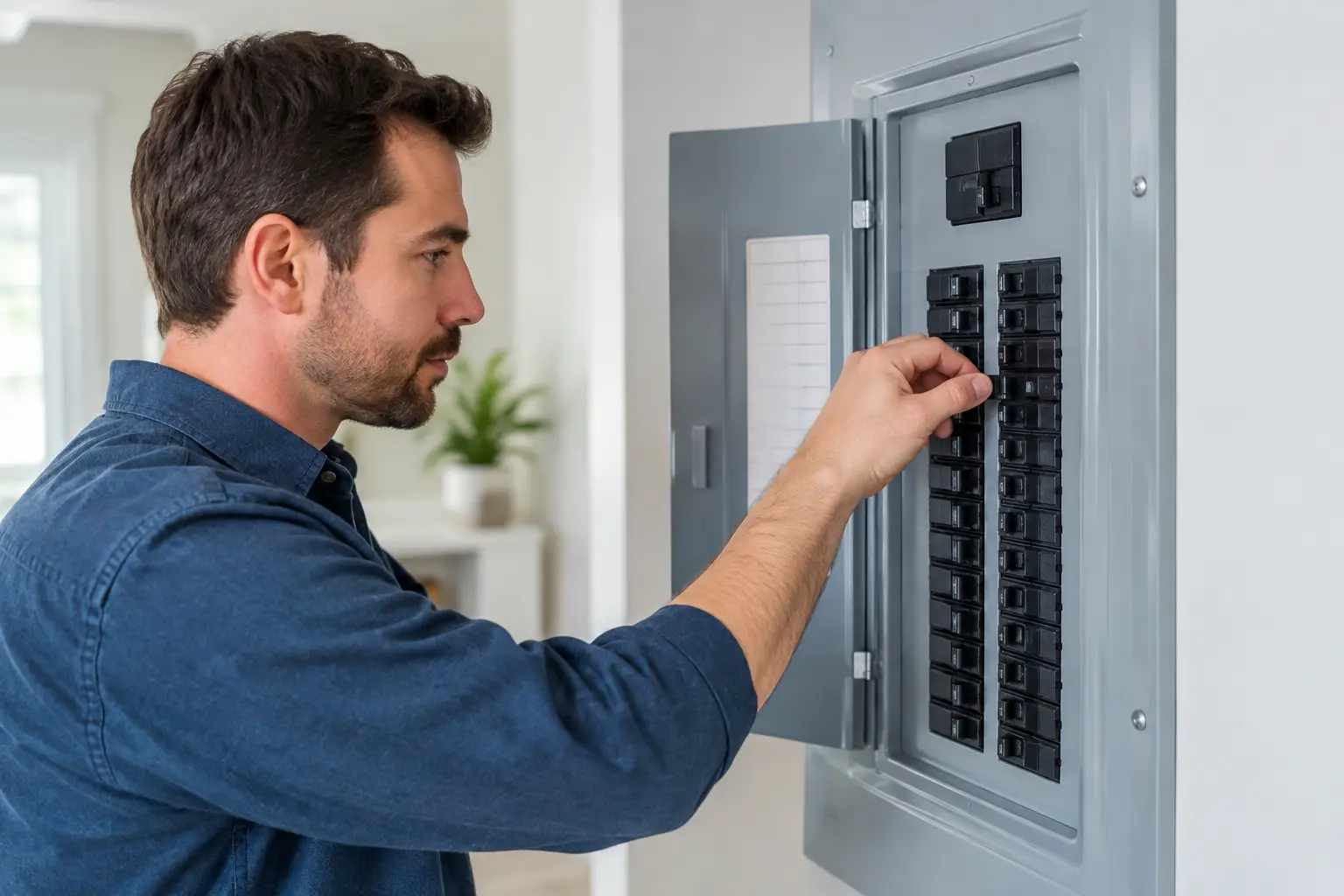
A breaker that trips once can be inconvenient. A breaker that trips again immediately after you reset it is a warning that should not be ignored. Knowing how to reset tripped breakers correctly can restore power after a simple overload, but it also helps you recognize when an electrical fault needs professional attention.
In Dubai homes, breakers commonly trip when high-demand equipment operates on the same circuit - such as an AC unit, water heater, kettle, microwave, iron, or washing machine. The heat, heavy appliance use, and electrical loads in villas and apartments make safe troubleshooting especially important.
What a Tripped Breaker Means
A circuit breaker is designed to cut power when it detects an unsafe condition. It protects the wiring inside walls, electrical outlets, connected appliances, and people using the system. Unlike a blown fuse, a modern breaker can usually be reset after the underlying cause has been removed.
Most tripped breakers result from one of three issues. An overload occurs when too many devices draw power from one circuit. A short circuit occurs when damaged wiring or a faulty appliance creates an unintended electrical path. A ground fault occurs when electricity escapes to ground, often through damaged insulation, moisture, or a defective device.
An overload may be manageable if you reduce the load. A short circuit or ground fault is different. Repeatedly resetting the breaker without investigating can create a fire or shock risk.
How to Reset Tripped Breakers Step by Step
Before touching the electrical panel, make sure your hands are dry and the floor beneath you is dry. Do not stand in water, and do not reset a breaker if there is a burning smell, visible smoke, buzzing, scorch marks, or heat coming from the panel. Turn off the main supply only if it is safe to do so, move away from the panel, and arrange an urgent electrical inspection.
1. Turn Off Equipment on the Affected Circuit
First, switch off and unplug appliances that may be connected to the affected area. If the kitchen outlets have lost power, unplug portable appliances such as kettles, toasters, coffee machines, and air fryers. If a bedroom circuit has tripped, turn off lamps, chargers, extension leads, and any portable AC equipment.
This step matters because resetting a breaker while the overload is still connected can cause it to trip again at once. It also makes it easier to identify the problematic appliance afterward.
2. Find the Breaker in the Tripped Position
Open the electrical distribution board carefully and look for a breaker handle that is not aligned with the others. A tripped breaker often sits midway between ON and OFF, though the position varies by panel brand and installation.
Panel labels can be useful, but do not rely on them completely. In older properties or after renovations, labels may be missing or inaccurate. Avoid touching exposed wires, metal terminals, or anything other than the insulated breaker handle.
3. Move the Breaker Fully to OFF
A breaker usually will not reset if you simply push it from the middle position to ON. Move it firmly all the way to the OFF position first. You may feel a click.
Then pause for a moment. This gives you time to confirm that appliances are unplugged and there are no signs of an active electrical emergency.
4. Switch It Back to ON
Move the breaker handle to ON. If it stays in position, power should return to the circuit. Check one light or outlet first, rather than reconnecting every device immediately.
If the breaker trips immediately, leave it OFF. Do not force it, hold it in place, or keep trying to reset it. The fault may be in the circuit wiring, an outlet, a light fitting, or equipment that remains connected.
5. Reconnect Appliances One at a Time
When the breaker stays on, reconnect appliances individually. Allow a short pause between each one. If the breaker trips when a particular item is plugged in or switched on, unplug that item and stop using it until it has been checked or repaired.
This simple test often separates an appliance fault from a circuit issue. For example, a water heater, washing machine, dishwasher, or AC unit that trips the breaker during operation may have an internal electrical fault rather than an overloaded circuit.
When a Breaker Trip Is Likely an Overload
An overload is more likely when the breaker trips after several high-power appliances are used at the same time, then remains on after you unplug or redistribute those appliances. Kitchens and utility areas are common examples because many heating appliances draw substantial current.
In a villa, one circuit may serve several outlets in a room or outdoor area. In an apartment, tenants may find that a single breaker serves more outlets than expected. Extension leads and multi-plug adapters can make the problem worse, particularly when they supply heaters, irons, cooking equipment, or multiple chargers and electronics.
The practical solution is to reduce demand on that circuit. Use high-load appliances at different times, plug them into appropriate outlets on separate circuits where available, and avoid overloading extension leads. If normal everyday use regularly trips a breaker, the property may need a qualified electrician to assess circuit capacity and load distribution.
Signs You Need an Electrician Instead of Another Reset
Some electrical faults cannot be safely diagnosed from the panel. Arrange a professional inspection if the breaker trips repeatedly, trips with nothing plugged in, or will not stay on after all connected equipment has been disconnected.
You should also stop using the circuit and seek help if outlets feel warm, switches spark, lights flicker significantly, or you notice a burning odor. Moisture around outlets, electrical panels, water heaters, or outdoor equipment requires prompt attention. Water and electricity are a dangerous combination, even when the visible leak seems minor.
A breaker that trips when the AC starts may point to an issue with the AC isolator, compressor, capacitor, wiring, or the unit's electrical load. Likewise, a water heater breaker that trips can indicate an element, thermostat, wiring, or moisture-related problem. Resetting the breaker may restore power temporarily, but it does not correct the root cause.
For landlords and property managers, repeated breaker trips should be recorded with the affected area, time of day, and equipment in use. This gives the electrician useful diagnostic information and can reduce time spent tracing an intermittent fault.
Do Not Reset These Devices Blindly
Not every switch in the electrical panel is a standard circuit breaker. Your panel may include an RCD, RCCB, RCBO, or other residual-current protection device. These safety devices are designed to trip when they detect leakage current that could indicate a shock hazard.
If a residual-current device trips once after a known appliance fault and resets after that appliance is unplugged, the appliance may be the cause. If it trips again with all circuits or appliances disconnected, do not continue testing on your own. A qualified electrician should inspect the installation, especially in bathrooms, kitchens, outdoor areas, and utility rooms where moisture exposure is more likely.
Do not remove the panel cover, replace a breaker with a larger rating, tape a breaker in the ON position, or attempt to bypass a tripping device. These actions defeat the protection built into the system and can damage wiring that was never designed for the increased load.
Preventing Future Breaker Trips
Electrical maintenance is often less disruptive than emergency repair. Have loose outlets, damaged switches, cracked faceplates, and aging extension leads repaired promptly. Use appliances with sound plugs and undamaged cables, and do not run cables under rugs or through doors where insulation can be crushed.
For homes with frequent AC use, water heaters, outdoor lighting, pumps, smart-home equipment, or added appliances, an electrical load assessment can be worthwhile. This is especially relevant after a renovation or when converting a room into an office, adding EV-related equipment, or installing new high-load appliances.
DHRS Dubai can inspect recurring electrical trips, test affected circuits and appliances, and explain the findings before recommending repair or replacement. The aim is not just to get the power back on, but to identify why the protection operated in the first place.
A breaker is doing its job when it trips. Treat one reset as careful troubleshooting, not a reason to override the warning. If the circuit does not behave normally after a single safe reset and basic checks, leave it off and have the fault diagnosed properly.
Need Home Maintenance in Dubai?
Contact the experts at DHRS Dubai for fast, reliable service.
Get a Quote