
Electrical Fault Finding Dubai for Safer Homes
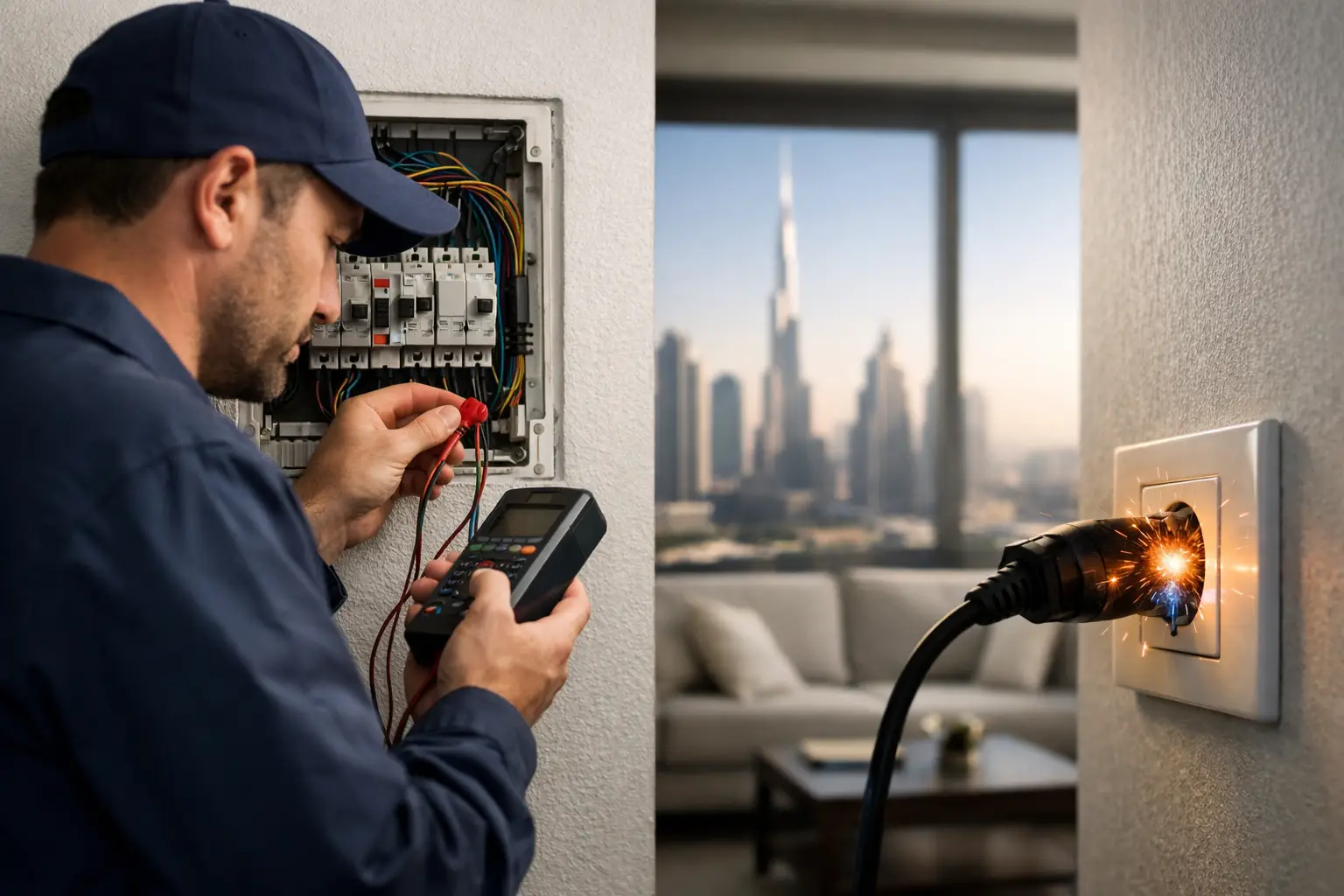
A breaker that trips once may be protecting your property from a temporary overload. A breaker that trips repeatedly, a burning smell near an outlet, or lights that flicker when an appliance starts require a closer look. Professional electrical fault finding Dubai services focus on the root cause, not simply restoring power and hoping the problem does not return.
Dubai homes and workplaces place high demands on electrical systems. Air conditioners, water heaters, kitchen appliances, pumps, EV chargers, smart-home devices, and office equipment can all share circuits that were not designed for their current load. Whether you manage a villa in Dubai Hills Estate, rent an apartment in Dubai Marina, or oversee an office in Business Bay, a safe diagnosis protects people, equipment, and the property itself.
What Electrical Fault Finding Actually Involves
Electrical fault finding is a structured inspection process. A qualified technician does not begin by replacing a breaker or outlet at random. They first identify the affected circuit, review what happens before the fault appears, inspect accessible components, and test the circuit using suitable electrical instruments.
The goal is to establish whether the issue comes from overload, a short circuit, earth leakage, a loose connection, a damaged cable, a failed appliance, or a faulty protective device. These faults can produce similar symptoms, but they need different repairs. Replacing a breaker when a damaged appliance is causing earth leakage, for example, may only delay the next trip.
A proper inspection may include checking the distribution board, circuit breakers or RCDs, outlets, switches, light fittings, junction points, isolators, and connected equipment. In larger villas or commercial premises, the technician may also assess load distribution and dedicated circuits for high-demand equipment.
Signs You Should Arrange an Electrical Inspection
Some electrical problems are obvious. Others begin as minor interruptions that are easy to ignore. Booking an inspection is sensible when a circuit breaker trips repeatedly, an RCD will not reset, or one part of the property loses power while nearby rooms remain unaffected.
Flickering or dimming lights deserve attention too, particularly when they occur with normal appliance use rather than only during a building-wide power fluctuation. Loose connections, an overloaded circuit, or a failing fitting can all be involved. Warm switch plates, discolored outlets, buzzing sounds, sparks, and a burning-plastic smell are more urgent warning signs. Turn off power to the affected area if it can be done safely and arrange professional help promptly.
There are also less dramatic signs. An outlet that no longer holds a plug securely, a light switch that works intermittently, a water heater that trips its breaker, or an AC isolator that becomes hot can indicate a developing fault. In rental properties, tenants should report these issues early rather than repeatedly resetting a breaker.
The Most Common Faults in Dubai Properties
Overloaded Circuits
Overload occurs when a circuit supplies more current than it is designed to carry. It is common where portable heaters, kettles, microwave ovens, washing machines, and other appliances are used from the same circuit. In villas, additions such as outdoor kitchens, garden lighting, pumps, or converted rooms can create extra demand if the electrical supply was not upgraded correctly.
An overload does not automatically mean the breaker is faulty. The right solution could be changing how equipment is used, adding a dedicated circuit, improving load distribution, or upgrading the circuit after a professional assessment. Installing a larger breaker without confirming cable capacity is unsafe and should never be treated as a shortcut.
Earth Leakage and RCD Tripping
An RCD is designed to disconnect power when it detects leakage current that may create an electric-shock risk. Moisture, damaged appliance wiring, deteriorated insulation, faulty water-heater elements, outdoor equipment, and AC-related electrical components can all trigger it.
This type of fault often appears after cleaning, rainfall, plumbing leaks, or when a particular appliance is switched on. The technician will isolate circuits and equipment methodically to determine whether the cause is fixed wiring or a connected appliance. That distinction matters because a household appliance repair and a circuit repair are not the same job.
Loose or Damaged Connections
Connections can loosen over time due to heat cycles, vibration, previous poor workmanship, or wear at frequently used outlets and switches. A loose connection creates resistance, and resistance creates heat. This is why discoloration, crackling, or a warm faceplate should not be ignored.
Fault finding can identify the affected point, but the repair must also address why it occurred. Where a connection has overheated, surrounding components and cable condition may need inspection before the circuit is returned to normal use.
Faulty Outlets, Switches, and Light Fittings
A dead outlet may have a simple cause, such as a tripped breaker or a failed outlet mechanism. It may also be part of a larger circuit issue. Likewise, a flickering light may be caused by a failed LED driver, a loose neutral connection, incompatible dimming equipment, or a defect in the fitting itself.
Smart switches, dimmers, and automation devices add another consideration. Compatibility, neutral-wire availability, and correct configuration all affect performance. A technician should distinguish between a device issue and a wiring fault before recommending replacement.
Why Repeated Resetting Is Not a Fix
A circuit breaker is a protective device, not an inconvenience to override. Resetting it once after identifying a clear temporary overload may be reasonable. Resetting it several times without understanding why it has tripped can expose the circuit to repeated stress and hide an active problem.
Do not hold a breaker in position, replace it with a higher-rated unit, bypass an RCD, or attempt work inside a distribution board. These actions can increase the risk of electric shock, overheating, and fire. They can also complicate the eventual repair by damaging components that would otherwise have remained protected.
If there is smoke, visible sparking, significant heat, or an electric-shock incident, keep people away from the area and isolate the supply only if it is safe to do so. Treat this as an urgent electrical issue rather than a routine maintenance request.
What to Expect From a Professional Visit
Clear information helps the diagnostic process move faster. Before the technician arrives, note which rooms or devices are affected, whether the breaker or RCD trips immediately or after a delay, and what was operating at the time. Photos of the breaker position or a short record of the fault pattern can also be useful.
During the visit, a professional technician should explain the likely cause in plain language and separate confirmed findings from possibilities that still require testing. If parts or additional work are needed, you should be informed before the repair proceeds. The best solution is not always the cheapest immediate option, but it should be proportionate to the condition of the system and clearly explained.
At DHRS Dubai, the approach is based on honest diagnostics: identify the fault, make the affected area safe, explain repair options, and recommend replacement only when it is genuinely required. This is particularly valuable for landlords and property managers who need a clear record of what was found and what work was completed.
Electrical Fault Finding Dubai for Villas, Apartments, and Offices
The property type affects how a fault is investigated. Apartment electrical issues may involve a local distribution board, shared building infrastructure, landlord responsibilities, or an appliance inside the unit. A technician can identify whether the issue appears to be within the apartment circuit or requires building management coordination.
Villa systems are usually more complex. They may include indoor and outdoor distribution boards, gate motors, landscape lights, pool equipment, water pumps, staff accommodation, and separate AC or water-heater isolators. A fault may be isolated to one system, but the wider load arrangement still needs consideration.
In offices and commercial properties, continuity matters as much as safety. A recurring trip can interrupt IT equipment, lighting, access control, refrigeration, or customer operations. Testing should be planned carefully so the fault can be traced while minimizing unnecessary downtime.
Preventing Future Electrical Problems
Electrical maintenance is most effective before a fault becomes an emergency. Periodic checks are especially useful in older properties, recently renovated homes, rental units between tenancies, and villas with added equipment. Any time an AC system, water heater, kitchen appliance, pump, CCTV system, or smart-home device is installed, the electrical supply should be assessed as part of the work.
Avoid relying on extension leads and multi-plug adapters for permanent high-load use. Keep outdoor outlets and electrical equipment protected from water, and arrange prompt repair of plumbing leaks near electrical points. If lights flicker, breakers trip, or outlets feel warm, act early while the fault is still limited and easier to resolve.
A dependable electrical repair starts with finding the real cause. When an electrical symptom appears, give it the attention it deserves, choose qualified help, and expect a clear explanation before any repair decision is made.
Need Home Maintenance in Dubai?
Contact the experts at DHRS Dubai for fast, reliable service.
Get a Quote