
Villa Water Tank Cleaning Guide for Dubai Homes
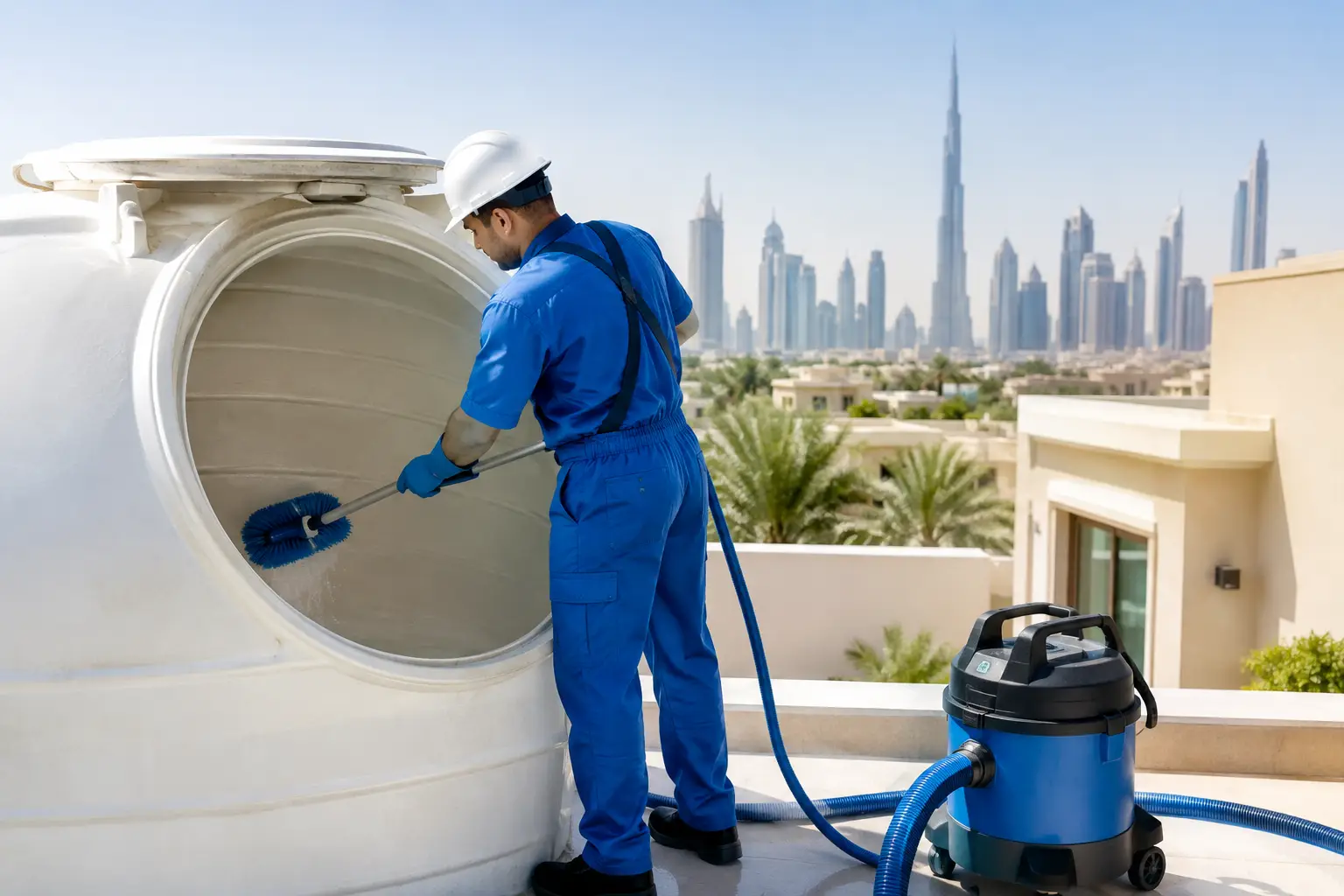
A villa water tank cleaning guide matters because the water entering your home may be clean, while the water stored above or below it can still collect sediment over time. In Dubai villas, rooftop heat, dust, long periods of vacancy, and aging fittings can all affect tank hygiene. A clean tank supports better water quality at every tap, shower, water heater, and filtration point.
Why Villa Water Tanks Need Regular Attention
Most villas use one or more storage tanks to maintain water availability and pressure. These may be located on the roof, in a service area, or underground. Water sits in these tanks before moving through the property plumbing, which means fine dust, scale, pipe debris, and sediment can settle on the base over time.
The issue is not always visible from a bathroom faucet. Water can look clear while sediment is building inside the tank. When demand increases, a pump cycles, or maintenance disturbs the settled material, that debris may move through the system. This can contribute to cloudy water, blocked aerators, reduced fixture flow, and unpleasant odors.
Dubai’s climate adds another consideration. High outdoor temperatures can accelerate hygiene concerns when a tank is poorly sealed, has damaged insulation, or has an unsecured cover. A properly maintained tank should be closed, structurally sound, and cleaned using a controlled process that does not introduce new contaminants into the water supply.
Signs Your Villa Tank May Need Cleaning
A fixed cleaning schedule is useful, but the condition of the system should guide the decision. A villa that has been vacant for several months, recently completed renovation work, or has a known plumbing issue may need attention earlier than expected.
Common warning signs include water that looks discolored after a period of non-use, a musty or unusual odor, visible particles in tap water, or sediment repeatedly collecting in faucet aerators and showerheads. Low flow can also be a clue, although it may be caused by a pressure pump, valve, filter, or internal pipe issue rather than the tank itself.
Look at the tank exterior as well. Cracked lids, gaps around access covers, damaged overflow screens, leaking joints, and evidence of pests near the tank should be addressed promptly. These conditions can compromise the tank even when the water inside appears normal.
If only one fixture has a problem, start with that fixture. If the issue occurs throughout the villa, the tank and main plumbing system deserve a professional inspection. Good diagnostics prevent spending money on cleaning when the root cause is a failed filter, corroded fitting, or plumbing fault.
What Professional Water Tank Cleaning Should Include
Tank cleaning is more than draining water and rinsing the interior. A proper service follows a sequence designed to protect the home’s water system and confirm the tank is safe to return to use.
First, the technician identifies the tank layout, capacity, isolation valves, pumps, and connected supply lines. In villas with multiple tanks, each tank may need to be isolated and serviced in a planned order so the household is not left without water longer than necessary. The tank is then drained in a controlled manner, with attention to safe discharge and access.
Once empty, the interior should be inspected for sediment, scaling, biofilm, cracks, failed joints, or damaged fittings. The cleaning team removes accumulated debris and scrubs accessible internal surfaces using suitable equipment. Cleaning materials must be appropriate for potable-water storage and carefully rinsed afterward. Chemical use is not a substitute for physical removal of settled sediment.
Disinfection may be required after cleaning, particularly where there are hygiene concerns or visible contamination. It must be measured, applied for an appropriate contact period, and fully flushed before the tank is returned to service. Overuse of chemicals can leave odors or affect water quality, while too little may not achieve the intended result.
The final stage is just as important: refilling, flushing relevant lines where needed, checking for leaks, confirming float valve operation, and ensuring lids and screens are secure. A professional should explain any defects found and recommend repairs only where genuinely required.
Why Draining Alone Is Not Enough
A quick drain can remove standing water but leave sediment attached to the floor, corners, and sidewalls. It also does not reveal whether the float valve, overflow pipe, or access cover is allowing contamination into the system. For this reason, an inspection and manual cleaning process are more meaningful than a basic empty-and-refill visit.
How Often Should You Clean a Villa Water Tank?
For many occupied Dubai villas, professional tank cleaning at least once a year is a sensible preventive-maintenance baseline. The right interval can be shorter depending on tank condition, household use, nearby construction dust, water quality concerns, or a long vacant period.
Properties with rooftop tanks exposed to heat and dust may need closer monitoring than tanks in protected service rooms. Larger villas with several tanks can benefit from a maintenance record showing cleaning dates, findings, repairs, and any changes in water pressure or quality. This is particularly useful for landlords, property managers, and owners who do not live in the property full-time.
If your building management, community rules, or local authority requirements specify a cleaning schedule, follow those requirements. When in doubt, arrange an inspection rather than waiting for a visible water-quality problem.
Preparing Your Villa for a Tank Cleaning Visit
A little preparation helps the work move faster and reduces disruption. Confirm the location of every tank, including rooftop and underground units. Clear access to hatches, pump rooms, and service corridors, and let the cleaning team know about any known issues, such as leaks, low pressure, or recently replaced filters.
Expect a temporary interruption to water supply while the tank is isolated and cleaned. The duration depends on tank size, number of tanks, access conditions, the amount of sediment, and whether repairs are needed. Avoid scheduling the work immediately before a large gathering or when the property needs continuous water use.
If your villa uses a water heater, filtration unit, booster pump, irrigation system, or smart leak detector, tell the technician. These connected systems may need to be isolated or checked once supply is restored. This is especially relevant after a tank service because trapped air and disturbed sediment can affect filters and low-flow fixtures.
Common Mistakes to Avoid
The most common mistake is waiting until water smells bad or turns visibly cloudy. By that point, sediment may already have reached fixtures or filters. Routine service is usually simpler and less disruptive than responding to a water-quality complaint.
Another mistake is using household cleaners or unmeasured disinfectants inside a potable-water tank. Products not intended for drinking-water systems can leave residues, create strong odors, or damage tank materials. Tank entry also presents confined-space and safety risks. A homeowner should not enter a tank or attempt deep internal cleaning without the right training, equipment, and safeguards.
It is also easy to overlook the parts around the tank. A clean interior will not stay clean if the lid is loose, the overflow opening is unprotected, or the float valve is malfunctioning. Cleaning should be paired with practical repairs that keep the storage system protected between visits.
Keep Water Quality Part of Your Maintenance Plan
Tank care works best when it is coordinated with the rest of the villa’s plumbing maintenance. Check faucet aerators and showerheads for recurring debris, replace or service filters as recommended by their manufacturer, and investigate unexplained pressure changes before they become larger problems. A plumbing inspection can distinguish between tank sediment, a clogged filter, pump performance issues, and internal pipe restrictions.
For villas in communities such as Dubai Hills Estate, Arabian Ranches, Palm Jumeirah, DAMAC Hills, and Jumeirah Park, access and tank configurations vary widely. The best approach is a technician who inspects the actual setup, explains the work before it begins, and provides clear advice on any repairs found. DHRS Dubai has supported property maintenance across Dubai since 2005, with practical diagnostics and transparent recommendations for villa water tank cleaning and connected plumbing systems.
Clean storage is not a one-time project. Treat it as part of routine property care, and your villa will be better prepared to deliver cleaner water, protect plumbing components, and avoid preventable disruption.
Need Home Maintenance in Dubai?
Contact the experts at DHRS Dubai for fast, reliable service.
Get a Quote