
Water Leak Detection Dubai: Find the Real Source
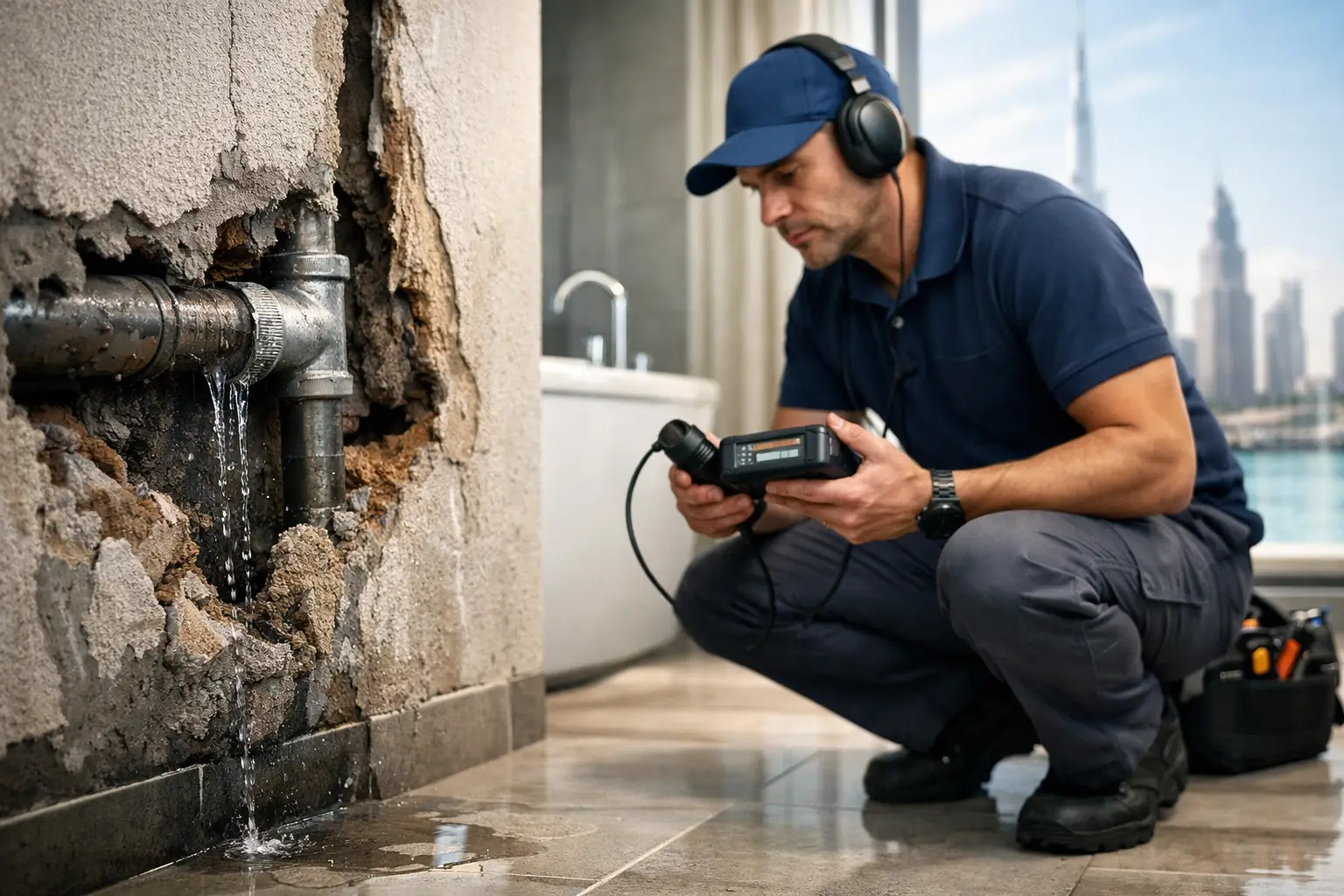
A water mark spreading beneath a bathroom ceiling, an unexplained jump in the water bill, or a persistent damp smell can point to a leak that is already affecting the property behind the scenes. Professional water leak detection Dubai services help identify the actual source before unnecessary wall breaking, repeated patch repairs, or wider water damage turns a manageable issue into a costly one.
For Dubai apartments, villas, offices, and rental properties, the right response is not simply to repair the visible stain. Water travels through slabs, wall cavities, pipe chases, and floor finishes. The point where it appears may be several meters away from the failed pipe, drain connection, waterproofing layer, AC drain line, or water heater fitting. Accurate diagnosis protects the property and gives owners, tenants, and managers a clear basis for the next repair.
When a Water Leak Needs Expert Detection
Some leaks are obvious: a pipe under the sink is dripping or a flexible hose has split. These should be isolated and repaired promptly. Hidden leaks are different. They often show up through secondary signs, and the original fault can be difficult to confirm without a structured inspection.
A professional inspection is especially useful when damp patches keep returning after painting, ceiling paint starts bubbling, tiles feel unusually loose, or mold develops around a wall corner. It is also worth arranging detection if the water meter continues moving when all taps and appliances are off, or if your bill rises with no change in household use.
In apartments, a downstairs neighbor may report water staining while the source is within the unit above. In villas, the problem may involve buried external pipework, irrigation lines, a roof connection, or a bathroom on an upper floor. In commercial spaces, a leak can disrupt operations, damage finishes, and create slip or electrical risks. Each setting needs a different inspection approach.
Common Sources of Hidden Leaks in Dubai Properties
Most hidden water leaks come from a relatively small number of systems. Plumbing supply pipes and their joints can develop pinhole leaks, loose connections, or failures around valves and fittings. Drainage pipes may leak only when a shower, washing machine, dishwasher, or basin is used, making the issue appear intermittent.
Bathrooms are a frequent concern because water can pass through failed silicone seals, damaged grout, cracked tiles, or compromised waterproofing. In this situation, replacing a visible seal may help, but it will not solve a deeper waterproofing failure. Testing is needed before deciding whether localized repairs are appropriate or whether tile removal is genuinely required.
AC condensate drain lines are another common source of water damage, particularly during periods of heavy cooling use. A blocked or disconnected drain can cause ceiling leaks that are mistaken for plumbing failures. Water heaters, pressure relief valves, concealed cisterns, balcony drains, and roof drainage points also deserve attention during diagnosis.
This is why honest diagnostics matter. A ceiling stain alone does not prove that a bathroom pipe has failed. The technician should consider recent shower use, AC operation, rain exposure, plumbing pressure, drainage patterns, and the location of wet areas above or beside the damage.
How Water Leak Detection Works
A proper inspection begins with questions, not demolition. A technician should establish when the problem was first noticed, whether it occurs continuously or only after certain fixtures are used, and whether recent maintenance, renovations, or water-heater work took place. This background helps narrow the testing process.
The next step is a visual check of accessible plumbing, fixtures, drains, ceilings, service shafts, and outdoor areas. Moisture readings can help map the extent of dampness in walls or ceilings. Thermal imaging may identify unusual temperature patterns caused by moisture, although it is an investigative tool rather than proof by itself. Material type, room temperature, and AC use can all influence thermal readings.
Where needed, pressure testing can check whether a supply line is losing pressure. Drainage testing may involve running individual fixtures in a controlled order to identify the system connected to the leak. Acoustic equipment can sometimes help locate pressurized pipe leaks behind finishes or below floors. In some cases, a small targeted opening is still necessary to verify the fault and complete a lasting repair.
Non-invasive methods can significantly reduce unnecessary damage, but they do not eliminate every opening. The goal is to make any access work informed and minimal, rather than breaking tiles or ceilings based on guesswork.
Why the Cause Can Be Different From the Visible Damage
Water follows gravity, gaps in concrete, pipe routes, and structural joints. A leak from a bathroom mixer connection can emerge at a hallway ceiling. A roof drainage issue can appear as a wall stain several floors below its entry point. Condensation from an uninsulated pipe can mimic a plumbing leak in humid conditions.
That is why a technician should avoid declaring the cause based only on where the stain is visible. Confirming the source protects you from paying for a repair that looks logical but fails to stop the problem.
What to Do Before the Technician Arrives
If water is actively flowing, switch off the local isolation valve or the main water supply if it is safe to do so. For a water heater leak, turn off its water supply and electrical power at the appropriate breaker. Keep water away from sockets, extension cords, and electrical panels, and do not touch electrical equipment while standing on a wet floor.
For an active ceiling leak, move furniture and valuables away from the area. Place a container beneath drips where possible, but do not puncture, cut, or force a bulging ceiling without professional advice. A water-filled ceiling can be unstable, and the source may still be feeding it.
It also helps to take clear photos and short videos before drying or cleaning the area. Note the time, the rooms affected, and whether the leak worsens after showering, flushing, running the AC, or using a particular appliance. This information can speed up diagnosis and may be useful for landlord, building management, or insurance discussions.
Repair Decisions After Leak Detection
Once the source is confirmed, the repair should match the failure. A loose valve fitting or leaking flexible hose may require a straightforward replacement. A failed drain connection may need localized access and resealing. A damaged section of concealed pipe might require a controlled opening, pipe replacement, pressure testing, and reinstatement of the affected surface.
Waterproofing failures need particularly careful judgment. If testing confirms that the shower area is leaking through the floor or wall system, a superficial grout repair may provide only temporary relief. The appropriate scope depends on the condition of the tiles, substrate, shower enclosure, and existing waterproofing. A reputable maintenance provider should explain the options, the likely durability of each approach, and any limitations before work begins.
After the leak is repaired, moisture does not disappear immediately. Walls, ceilings, screed, insulation, and cabinetry may need time to dry. Painting too early can trap moisture and lead to peeling or staining again. If mold is present, it should be addressed safely after the water source has been eliminated.
Who Is Responsible in a Rental or Managed Property?
Responsibility depends on the tenancy agreement, the source of the leak, and building rules. A tenant should report water damage quickly, especially when it may affect neighboring units or shared building systems. Waiting can increase damage and create avoidable disputes.
Landlords and property managers should focus on documenting the condition, arranging qualified diagnosis, and communicating the findings clearly. If the issue involves common plumbing risers, façade drainage, or a neighboring apartment, building management may need to coordinate access and repairs. A concise detection report with observations, test results, photos, and recommended repair scope makes these conversations far easier.
Preventing Repeat Water Leaks
Preventive maintenance is usually less disruptive than emergency repairs. Check under sinks and behind toilets periodically, replace aging flexible hoses before they fail, and watch for corrosion around water heaters and valves. Keep AC drainage maintained, especially before high-use cooling periods, and make sure balcony and roof drains are clear.
For villas and investment properties that sit vacant for periods, periodic inspections are valuable. A small leak can continue unnoticed for weeks, affecting cabinetry, gypsum ceilings, flooring, and adjacent rooms. Property managers can also benefit from scheduled checks of water heaters, pump rooms, washrooms, pantries, and high-use plumbing areas.
Since 2005, DHRS Dubai has approached leaks with practical inspection, clear communication, and repairs based on the confirmed root cause rather than assumptions. When dampness appears, acting early gives you more repair options, less disruption, and a better chance of protecting the parts of your property you cannot see.
Need Home Maintenance in Dubai?
Contact the experts at DHRS Dubai for fast, reliable service.
Get a Quote