
Swimming Pool Maintenance Dubai for Villas
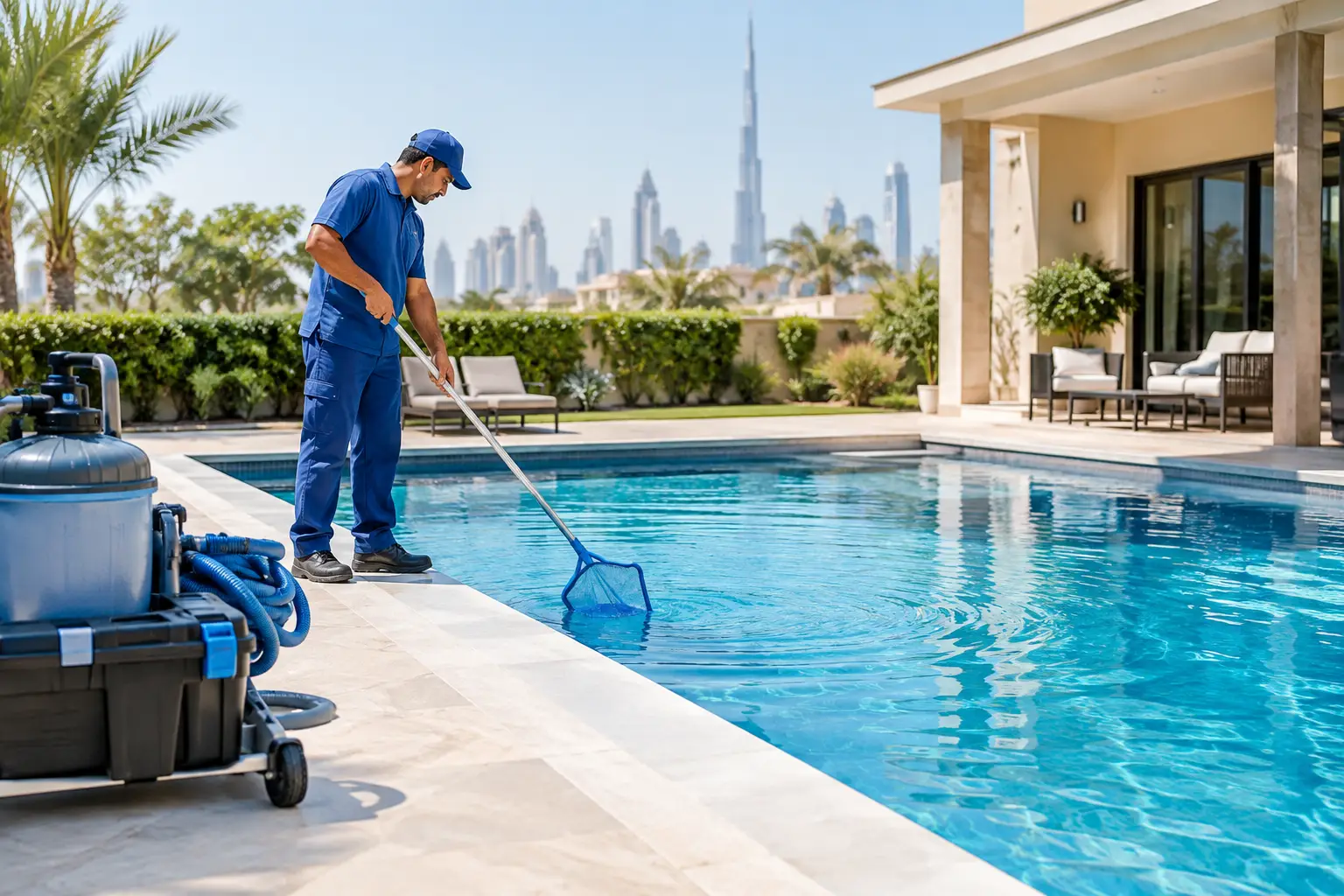
A Dubai pool can look perfectly clear in the morning and develop a water-quality or circulation problem within days. High temperatures, windblown sand, heavy bather use, and long equipment run times place constant pressure on the pool system. Reliable swimming pool maintenance Dubai is not simply about removing leaves. It is a routine of water testing, cleaning, equipment inspection, and early repair that keeps the pool safe, attractive, and ready to use.
For villa owners, landlords, and property managers, a maintained pool also protects a major property asset. Small issues such as a noisy pump, a weak return jet, or a falling water level can become expensive when they are ignored through the hotter months.
What professional pool maintenance should cover
A proper service visit starts with the water, but it should not end there. A technician should check sanitizer levels, pH balance, and the overall condition of the water before making measured chemical adjustments. Adding chemicals without testing can create a different problem, including irritated skin, cloudy water, scale, or damage to finishes and equipment.
The physical cleaning work matters just as much. This normally includes skimming surface debris, brushing walls and steps, vacuuming the pool floor, emptying skimmer and pump baskets, and cleaning the waterline. In Dubai, fine sand can settle quickly at the bottom of a pool, while sunscreen and airborne dust often leave a visible line around the tile edge.
The equipment room needs close attention. Pumps, filters, valves, pipes, heater connections, lights, and control timers should be inspected for leaks, unusual noise, weak pressure, overheating, or signs of corrosion. A pool may stay blue while its pump is working harder than it should. Catching that condition early can prevent a pump failure during peak summer use.
Why Dubai pools need a different maintenance schedule
Pool care depends on the pool size, water volume, finish, landscaping, usage, and equipment type. However, Dubai's climate usually calls for more frequent attention than a cooler, seasonal market.
During summer, high water temperatures encourage faster chemical consumption and algae growth. Evaporation also increases, so water levels can fall quickly. A lower water level may cause the skimmer to pull in air instead of water, reducing circulation and potentially affecting the pump. Topping up the pool is simple, but repeated or excessive loss should be investigated for a leak rather than treated as normal evaporation.
Wind and dust are another practical factor. Pools near open plots, construction areas, desert-facing gardens, or busy landscaped communities can collect more debris than sheltered pools. Palm Jumeirah, Arabian Ranches, Dubai Hills Estate, DAMAC Hills, and Jumeirah Golf Estates properties may have very different cleaning requirements even when their pools are similar in size.
For many residential pools, weekly professional maintenance is appropriate. Pools with frequent use, children, high guest turnover, or significant debris may need two visits per week during demanding periods. Less frequent service can work for a lightly used pool with dependable automation, but only if water tests and equipment checks continue between visits.
Water chemistry is a balance, not a single chemical
Chlorine or another sanitizer controls bacteria and algae, but it is only one part of healthy pool water. pH affects sanitizer performance and swimmer comfort. Total alkalinity helps stabilize pH. Calcium hardness and dissolved solids influence scaling, corrosion, and water clarity.
A technician should adjust these levels based on test results and the pool's condition, not follow a one-size-fits-all dosing routine. For example, cloudy water may result from poor filtration, unbalanced chemistry, fine dust, early algae growth, or a combination of these factors. Adding more sanitizer alone may not solve the root cause.
The equipment checks that prevent avoidable breakdowns
Pool equipment is often hidden in a utility area and forgotten until the water turns green or the pump stops. Preventive checks are less disruptive and usually more cost-effective than emergency repairs.
The circulation pump should run smoothly, without loud grinding, rattling, or leaks around the housing. Air bubbles in the pump basket or weak flow from return inlets can point to a blocked basket, low water level, suction leak, valve issue, or filter restriction. The correct diagnosis matters because replacing a pump when the actual issue is a blocked or leaking line creates unnecessary cost.
Filter care is equally important. Sand filters may need backwashing when pressure rises, while cartridge filters require removal and careful cleaning at suitable intervals. Over-cleaning or backwashing too often can waste water and reduce filtration efficiency. Waiting too long restricts circulation and makes the pump work harder.
Pool lights, heaters, salt chlorinators, timers, and automated control systems should also be checked as part of planned maintenance. Electrical work around water requires proper isolation and qualified handling. If a light trips a breaker, a pump loses power, or equipment shows damaged wiring, stop using it until the fault has been inspected.
Warning signs that need prompt attention
Some pool problems are obvious. Green water, visible algae, strong chemical odors, and a pump that will not start all need attention. Others are easier to overlook but can be just as significant.
Arrange an inspection if the water level keeps dropping faster than expected, the pool surface develops stains, tiles show scale buildup, the pump becomes noticeably louder, or the filter pressure changes suddenly. Cloudy water that returns soon after cleaning is another reason to investigate circulation and filtration rather than repeatedly treating the symptom.
A persistent chemical smell is not proof that the pool has too much chlorine. It can indicate chloramines - compounds formed when sanitizer reacts with contaminants. Correcting this may require testing, cleaning, circulation adjustments, and a targeted treatment plan.
For rental villas and managed properties, document service visits, water-test results, repairs, and replaced parts. Clear records help owners plan costs, support handovers, and show that the pool has been maintained responsibly.
Practical care between scheduled visits
Regular service does not mean residents need to manage chemistry themselves, but a few simple habits make a real difference. Keep the water level around the middle of the skimmer opening, remove large debris after windy days, and do not leave pool toys or organic material in the water for extended periods. Encourage swimmers to rinse off sunscreen, oils, and cosmetics when possible.
Check the equipment area visually once in a while. You do not need to open electrical panels or adjust valves, but you can look for puddles, dripping pipes, warning lights, abnormal noise, or a pump that is not running during its scheduled time. Reporting these details early helps a technician diagnose the issue faster.
If the pool will be unused for a period, do not simply switch everything off. Water still needs circulation and treatment. The right reduced schedule depends on the pool system, cover, weather, and expected vacancy period.
Choosing a pool maintenance provider in Dubai
The right provider should explain what is included in each visit, how water testing is performed, and what additional work requires approval. Ask whether chemical supplies, filter cleaning, emergency callouts, minor repairs, and replacement parts are included or billed separately. Clear scope and upfront communication prevent misunderstandings later.
Look for technicians who inspect the full system rather than treating every issue with extra chemicals or recommending replacement equipment immediately. Honest diagnostics are particularly valuable when a pool problem may involve plumbing, electrical supply, filtration, or automated controls.
DHRS Dubai supports practical property maintenance with inspections that focus on the root cause, clear findings, and repairs recommended only when genuinely required. For pool-related electrical, plumbing, or equipment concerns, coordinated maintenance can reduce the inconvenience of arranging multiple contractors.
A well-maintained pool should feel simple to own: clear water, quiet equipment, safe operation, and no surprise failures when the weather makes the pool most valuable. If something looks different, sounds different, or needs repeated chemical correction, schedule an inspection before a small warning becomes a closed pool.
Need Home Maintenance in Dubai?
Contact the experts at DHRS Dubai for fast, reliable service.
Get a Quote