
Office HVAC Maintenance Guide for Dubai Teams
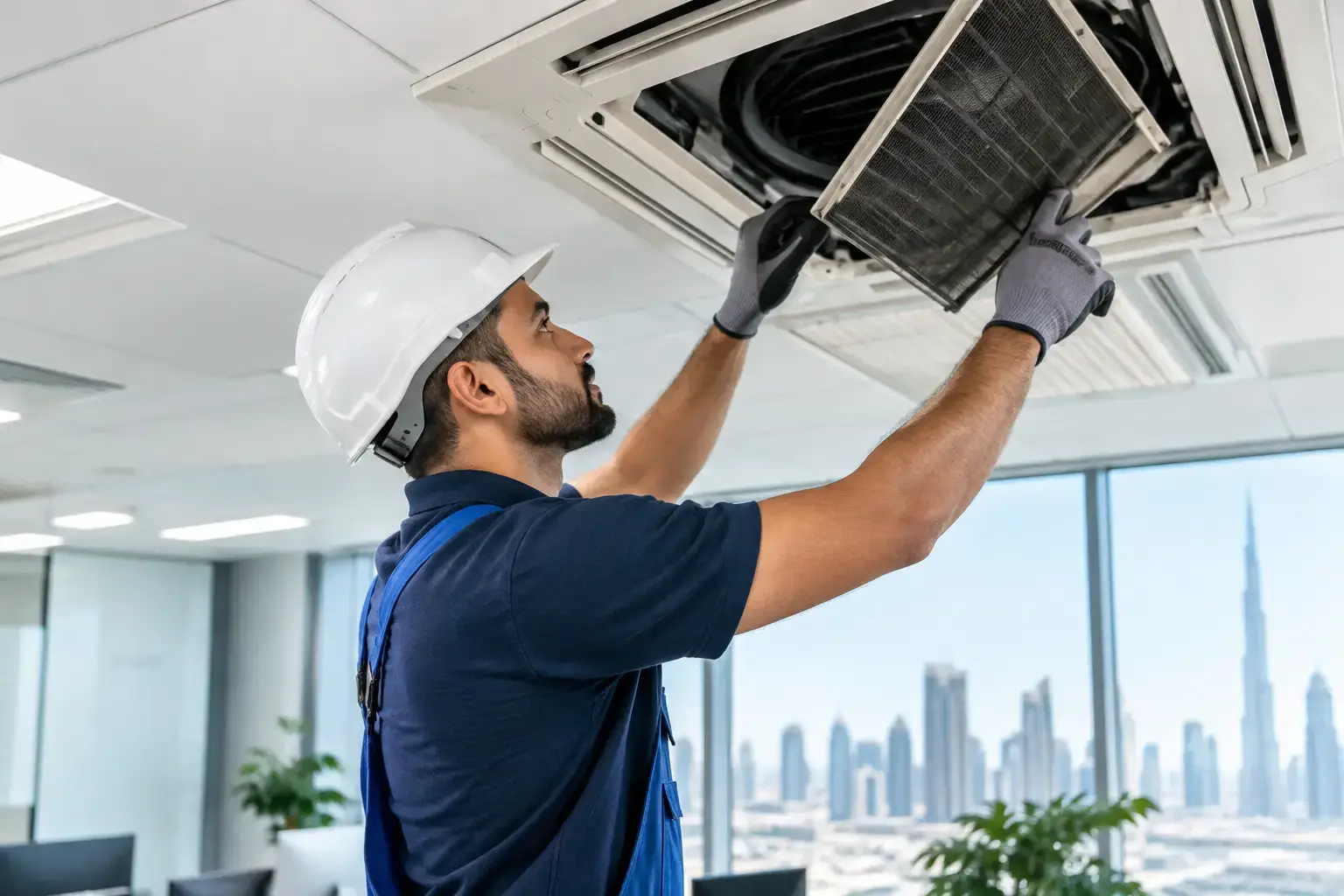
An office AC that runs all day but leaves meeting rooms warm, smells damp when it starts, or triggers repeated comfort complaints is already signaling a maintenance issue. This office HVAC maintenance guide helps Dubai office managers, facilities coordinators, and business owners prevent avoidable failures before they disrupt staff, tenants, equipment, or customers.
Dubai offices place heavy demand on HVAC systems for much of the year. Heat, airborne dust, high humidity near coastal areas, long operating hours, and frequent door traffic can all reduce performance faster than expected. A practical maintenance plan protects comfort, controls operating costs, and gives management a clearer view of when a repair is genuinely needed.
Why office HVAC maintenance needs a Dubai-specific plan
Office HVAC maintenance is not simply changing a filter when airflow feels weak. A commercial office system may include split AC units, ducted fan coil units, package units, fresh-air systems, thermostats, condensate drains, electrical isolators, and controls operating across multiple zones. One overlooked issue can affect an entire floor.
Dust is a major concern. Clogged filters and dirty coils restrict airflow, forcing the equipment to run longer to reach the thermostat setting. That extra strain can increase energy consumption and contribute to frozen coils, weak cooling, compressor faults, and premature motor wear.
Humidity creates a different risk. Air conditioners remove moisture as they cool, and that water must drain correctly. Blocked drain lines, dirty drain pans, or poor insulation can lead to leaks above ceilings, water damage, unpleasant odors, and mold concerns. Offices in Dubai Marina, Business Bay, Downtown Dubai, and other high-occupancy areas may also experience greater cooling demand from people, lighting, computers, and meeting-room equipment.
The right service frequency depends on the system type, occupancy, operating hours, indoor air-quality requirements, and condition of the building. A lightly used small office does not need the same program as a busy call center or a large open-plan workspace operating six or seven days a week.
Build an office HVAC maintenance schedule
A good schedule combines routine checks by the office team with planned technical service. Waiting until an AC stops cooling turns a manageable issue into an urgent callout and can leave employees working in uncomfortable conditions.
Monthly checks for office managers
A facilities coordinator or designated office representative can perform basic visual and operational checks without opening electrical panels or attempting technical repairs. Walk through the office and note rooms that are consistently hotter or colder than others, unusual noise from indoor units, water marks near ceilings, odors when the AC starts, and thermostat displays that are blank or inaccurate.
Check accessible return-air grilles and vents for visible dust buildup or obstruction. Furniture, filing cabinets, partitions, and stored boxes can block returns and disrupt airflow. Make sure thermostats are not directly affected by sunlight, pantry heat, printers, or constantly open doors.
Keep a simple record of complaints and observations. If the same meeting room becomes warm every afternoon, that pattern helps a technician identify whether the issue is airflow, capacity, thermostat location, duct leakage, solar load, or a control setting. Clear records reduce guesswork and help prioritize repairs.
Quarterly professional service
For many Dubai offices, quarterly preventive service is a sensible baseline. Higher-use premises, dusty locations, clinics, retail-facing offices, server rooms, or properties with recurring cooling issues may need more frequent attention.
During a professional inspection, technicians should assess filter condition, clean accessible components as required, inspect indoor and outdoor coils, confirm drainage, test electrical connections, and check thermostat operation. They should also look for vibration, damaged insulation, refrigerant-related warning signs, and weak airflow across zones.
The scope should be explained before work begins. Cleaning a filter is not the same as a full system inspection, and a chemical coil clean is not automatically required at every visit. Honest diagnostics matter: the condition of the equipment should determine the work recommended, not a fixed sales script.
Annual deeper inspection
At least once a year, schedule a more detailed review before the period of highest cooling demand. This is the right time to assess duct condition, insulation, drain-line performance, electrical safety, airflow balance, controls, and the general health of outdoor equipment.
For larger offices, annual maintenance should also review whether the current zoning still matches how the space is used. An office may have added workstations, enclosed rooms, or heat-producing equipment since the original AC design. No amount of routine cleaning will fully solve a capacity or airflow-design problem.
What a professional HVAC visit should cover
A proper visit starts with the root cause, not the most obvious symptom. If an office reports poor cooling, the technician should not assume the system needs refrigerant. Low airflow, dirty coils, a failing capacitor, a thermostat fault, blocked condensate drainage, or a control issue can produce similar complaints.
A thorough service typically includes these distinct tasks:
- Inspecting and cleaning or replacing filters based on their condition and the manufacturer’s requirements.
- Checking indoor units, blowers, coils, drain pans, and condensate lines for dirt, leaks, and restricted flow.
- Testing electrical connections, isolators, capacitors, contactors, and operating readings safely.
- Reviewing thermostat settings, zone response, airflow, and signs of duct leakage or inadequate return air.
- Inspecting outdoor condenser units for debris, coil contamination, corrosion, vibration, and restricted clearance.
For systems with a confirmed refrigerant concern, the correct approach is to identify and address the source of the issue. Refrigerant does not normally get used up. Repeated topping up without investigating for a leak can increase costs while delaying the necessary repair.
Prevent indoor air-quality problems before they spread
Air quality has a direct effect on how an office feels, even when the temperature reading looks normal. Stale air, persistent odors, visible dust, headaches, and humidity can all prompt employee complaints. These symptoms do not always mean the HVAC system is the only cause, but it should be part of the investigation.
Filter selection matters. Higher-efficiency filters can capture finer particles, but they may also increase resistance to airflow if the system was not designed for them. The best choice depends on the unit, fan capacity, occupancy, and air-quality needs. A technician can recommend an appropriate filter type rather than fitting the highest-rated option by default.
Fresh-air provisions also need attention. In tightly occupied offices, adequate ventilation helps manage CO2 levels, odors, and general comfort. If fresh-air dampers, ducts, or fans are poorly maintained, the office can feel stuffy despite cold supply air. Duct cleaning may be appropriate when inspection shows meaningful dust accumulation, contamination, or a specific indoor-air concern, but it should not be presented as a cure for every AC problem.
Reduce energy waste without sacrificing comfort
The lowest thermostat setting is rarely the fastest or most efficient way to cool an office. It often causes systems to run continuously, creates excessively cold zones, and increases complaints from staff seated near supply vents. A stable, realistic setpoint and properly functioning controls usually deliver better results.
Review operating hours against actual office use. There is little value in cooling empty areas overnight unless sensitive equipment requires it. Programmable thermostats, zone scheduling, and smart controls can reduce unnecessary run time, but they must be compatible with the existing HVAC system and installed correctly.
Simple building measures also help. Keep blinds closed on sun-exposed windows, maintain door seals, avoid blocking vents, and address heat loads from servers, printers, and pantry appliances. Where one area repeatedly overheats, the answer may be an airflow adjustment or a dedicated solution rather than lowering the temperature for the whole office.
Know when maintenance should become repair or replacement
Preventive maintenance extends equipment life, but it cannot reverse every failure. Escalate quickly when there are repeated electrical trips, burning smells, refrigerant leak indicators, major water leaks, loud mechanical noise, ice on AC components, or a significant drop in cooling capacity.
Replacement becomes worth considering when repairs are frequent, parts are no longer dependable, energy consumption is unusually high, or the system cannot meet the office’s current layout and cooling load. Age alone should not decide the outcome. A capable technician should explain the condition, repair options, expected limitations, and replacement rationale so management can make an informed decision.
For offices across Dubai, DHRS Dubai provides practical HVAC inspections, maintenance, repairs, ducting support, and smart thermostat solutions. Since 2005, the focus has been on clear diagnostics and recommending work only when it is genuinely required.
Treat HVAC maintenance as operational planning, not a reaction to the next breakdown. A consistent schedule, accurate service records, and prompt attention to small warning signs can keep the workplace cooler, cleaner, and far less disruptive when demand is at its highest.
Need Home Maintenance in Dubai?
Contact the experts at DHRS Dubai for fast, reliable service.
Get a Quote