
How to Choose a Water Filter for Dubai Homes
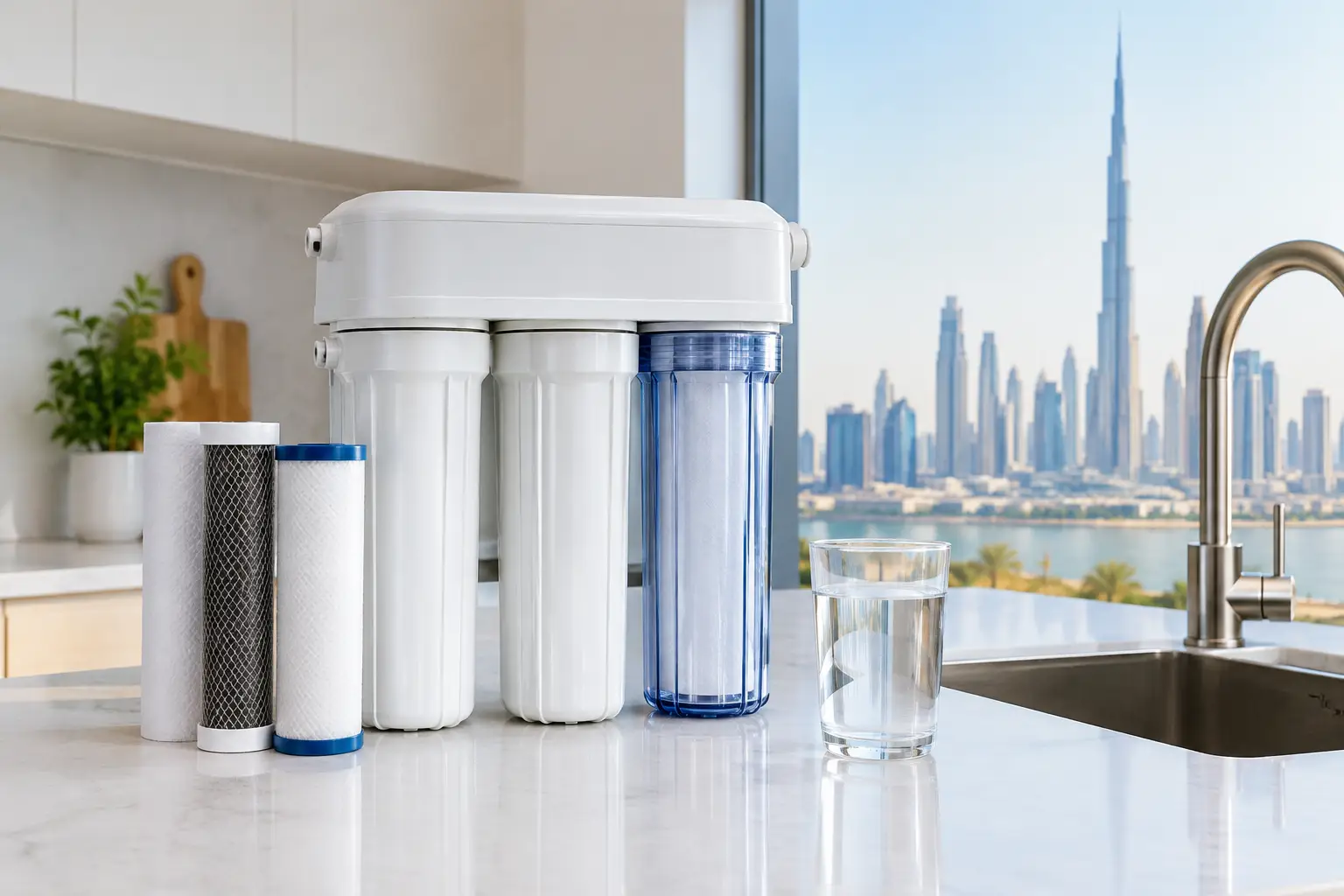
A water filter should solve a known problem, not simply add another appliance under the sink. If you are searching for how to choose water filter options for a Dubai apartment or villa, begin with the water you use, the number of people in the property, and whether you need filtered water at one tap or throughout the home. The right choice can improve drinking-water taste and convenience. The wrong one can create low pressure, frequent cartridge changes, leaks, and unnecessary expense.
Dubai’s municipal water is treated, but water quality at the point of use can also be affected by building storage tanks, pipework, fixture condition, and how long water remains in the system. That is why a practical assessment matters more than choosing the largest or most heavily advertised unit.
How to Choose a Water Filter: Start With the Water Issue
Different filters address different concerns. A sediment filter captures visible particles such as sand, rust, and debris. Carbon filtration is commonly used to reduce chlorine taste and odor and improve the water’s overall taste. Reverse osmosis, often called RO, uses a membrane to reduce a wider range of dissolved substances, although it needs adequate pressure and produces wastewater during the filtration process.
Do not assume that every home needs RO. For a household that mainly wants better-tasting drinking water, a quality carbon system may be sufficient. If there are concerns about elevated dissolved solids, unusual taste, or contaminants entering through older pipework or a poorly maintained tank, a professional water test can identify whether RO or another treatment approach is appropriate.
A test is particularly useful after moving into a property, following water tank cleaning, or when water has a metallic taste, unpleasant odor, cloudiness, or recurring sediment. It replaces guesswork with measurable information. If the issue is plumbing-related, such as corroded pipe sections or a contaminated storage tank, a filter alone may not be the complete fix.
Decide Where You Need Filtered Water
The installation point determines the type and size of filter required. Point-of-use systems filter water at one location, usually the kitchen sink. They are a sensible choice when the priority is drinking water and cooking, especially in apartments or rental properties where extensive plumbing changes may not be practical.
A countertop filter is easy to install and maintain, but it can take up workspace and may offer limited capacity. An under-sink system keeps the kitchen clear and can include a dedicated drinking-water faucet. It is usually the more convenient long-term option, provided there is enough cabinet space and access for servicing.
A whole-house system is installed where water enters the property. It can filter water used for bathing, laundry, cleaning, and kitchen use. This may suit villas with a family living full-time in the property, homes with noticeable sediment, or owners who want to protect fixtures and appliances from particles. However, whole-house filtration requires correct sizing, sufficient flow rate, proper drainage where applicable, and planned maintenance. It is not automatically better than a point-of-use system - it serves a different purpose.
For many Dubai homes, the practical setup is a whole-house sediment pre-filter paired with a separate drinking-water filter in the kitchen. This combines basic protection for the plumbing system with more targeted filtration for water that is consumed.
Check Capacity, Flow Rate, and Household Demand
A filter that works well for one person can become frustrating in a busy family home. Capacity tells you how much water a cartridge or membrane can treat before replacement. Flow rate tells you how quickly treated water can pass through the system. Both matter.
For a kitchen drinking-water unit, consider how many people regularly use it, whether the household fills bottles daily, and whether water is needed for cooking. A small unit may be acceptable in a studio apartment, while a family villa may need a larger storage tank or a higher-output RO system to avoid waiting for filtered water.
For whole-house filtration, look at peak demand. Multiple bathrooms, rain showers, dishwashers, washing machines, irrigation systems, and kitchen use can all run at once. An undersized unit may noticeably reduce pressure, especially during high-use periods. A properly sized system should maintain reasonable flow without placing unnecessary stress on the plumbing.
The installation must also match the available space. Under-sink units need room for filters, tubing, valves, and potentially a storage tank. Whole-house filters need safe access for cartridge replacement, protection from direct sun and heat where possible, and enough clearance to remove housings without dismantling nearby pipework.
Understand the Main Filter Technologies
Most domestic filtration systems use more than one stage. The order matters because each stage protects or supports the next.
A sediment stage is usually installed first. It removes larger particles and helps prevent premature blockage of carbon filters and RO membranes. In properties with tank sediment or older plumbing, this stage can require more frequent replacement than expected.
Activated carbon is commonly used next to improve taste and reduce chlorine. Carbon filters can be highly effective for their intended purpose, but they do not remove every dissolved substance. Their performance also declines as the cartridge becomes saturated, so timely replacement is essential.
Reverse osmosis systems generally include pre-filters, an RO membrane, and a post-carbon stage. They can deliver very low dissolved-solids water, but they have trade-offs. They require periodic sanitizing and filter changes, may need a booster pump where incoming pressure is inadequate, and generate reject water. In a villa or apartment where water conservation and drainage arrangements matter, those factors should be discussed before installation.
Ultraviolet, or UV, treatment may be considered where microbial control is a specific concern. UV does not remove sediment, salts, chlorine, or dissolved solids. It is normally used alongside other filtration stages and requires a clean lamp sleeve, electrical supply, and regular servicing to remain effective.
Look Beyond the Purchase Price
A low-cost filter can become expensive when replacement cartridges are difficult to source or need changing unusually often. Before selecting a model, ask what each replacement component costs, how often it is normally changed, and whether the installation includes isolation valves and fittings that make servicing straightforward.
A clear maintenance schedule should cover sediment and carbon cartridges, RO membranes if installed, system sanitizing, leak checks, and any pressure or pump components. Actual change intervals depend on water quality and household consumption, so the calendar is a guide rather than a guarantee. A sudden reduction in flow, a change in taste, or visible discoloration are reasons to inspect the system sooner.
Choose equipment with standard, readily available consumables where possible. Proprietary cartridges are not always a problem, but you should know their ongoing cost and availability before committing. For landlords and property managers, this is especially relevant: a system that tenants cannot maintain or that requires hard-to-find parts can quickly become a recurring service issue.
Make Installation Quality Part of the Decision
Water filtration is not only about the unit. Incorrect connections, poorly routed tubing, inadequate water pressure, and missing shutoff valves can turn a good product into a leak risk. Under-sink installations should be secured, accessible, and checked after fitting. Whole-house systems should be installed with correct pipe sizing, bypass options where appropriate, and access for maintenance.
In apartments, confirm whether building rules limit plumbing modifications. In villas, assess the location of the incoming supply, water tank arrangement, pump performance, and exposure to heat. A filter installed outdoors without suitable protection may have a shorter service life, while a unit tucked into an inaccessible cabinet is less likely to receive proper maintenance.
A professional inspection can also identify related work that may be more urgent than filtration, such as tank cleaning, damaged flexible hoses, low-pressure issues, or aging pipework. Since 2005, DHRS Dubai has approached property systems by identifying the root cause first, then recommending the practical repair or upgrade required.
Questions to Ask Before You Approve a System
Before proceeding, make sure you can answer these questions clearly:
- What specific water concern is this system designed to address?
- Is it for drinking water only or the whole property?
- What flow rate and capacity will it provide for my household?
- What will replacement filters, membranes, and service visits cost?
- How often will each component need attention under normal use?
- Does the installation include leak testing, isolation valves, and a clear warranty?
These questions help separate a suitable system from an over-specified one. They also make quotes easier to compare because you are evaluating the full ownership cost, not just the initial installation price.
A well-chosen water filter should be easy to live with: clean-tasting water where you need it, dependable flow, accessible service points, and a maintenance plan you can realistically follow. Start with the actual condition of the water and the property, then select the simplest system that reliably meets that need.
Need Home Maintenance in Dubai?
Contact the experts at DHRS Dubai for fast, reliable service.
Get a Quote