
Why Faucets Lose Pressure and What to Check
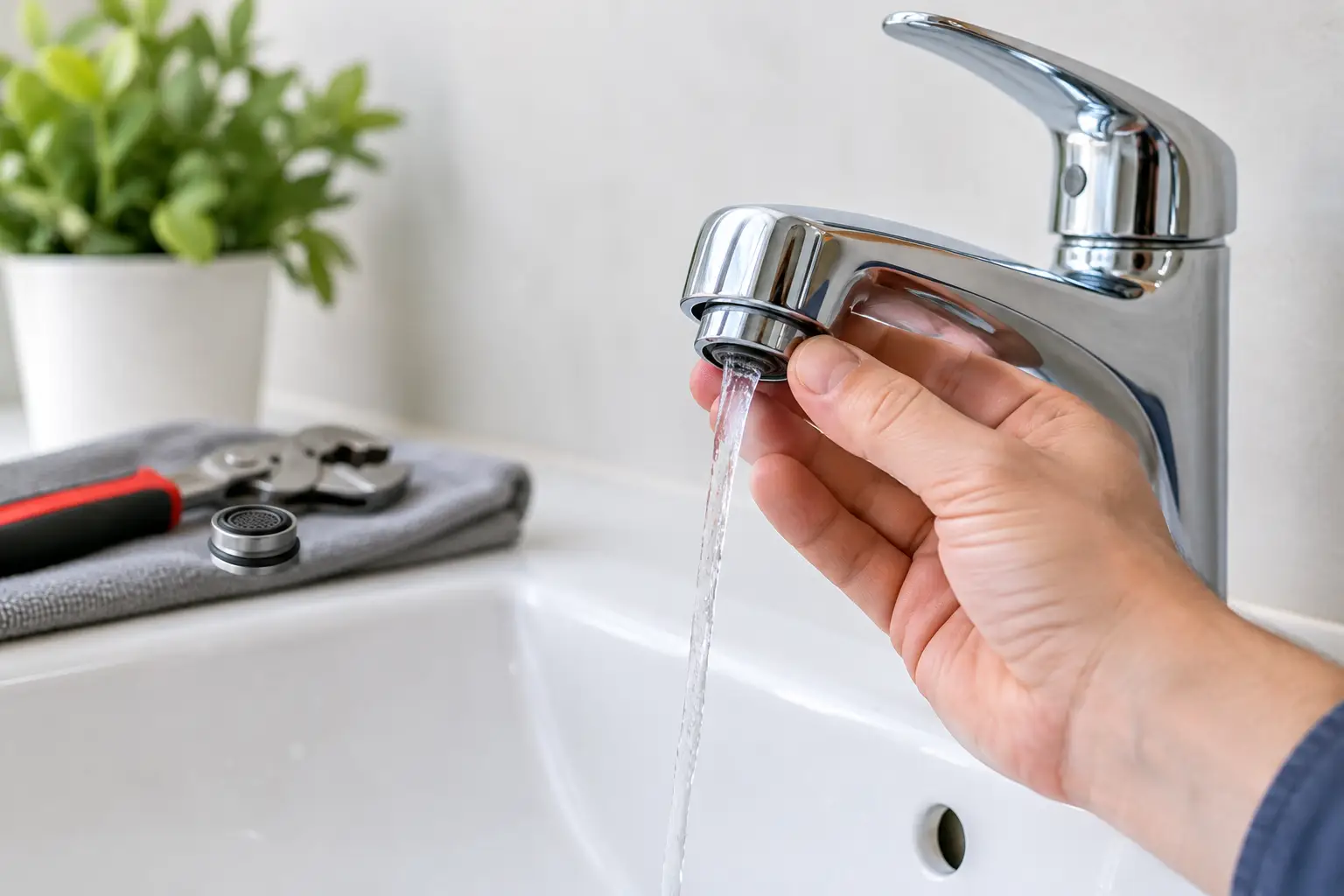
A kitchen faucet that suddenly runs weak while the rest of the property has normal flow usually has a small, local cause. That distinction is the fastest way to understand why faucets lose pressure and avoid paying for work the plumbing system does not need. A blocked aerator can often be cleaned in minutes. Low pressure throughout an apartment or villa, however, may point to a valve, filter, pump, tank, or supply issue that needs a proper inspection.
Water pressure and water flow are often described as the same problem, but they are not. Pressure is the force pushing water through the pipe. Flow is the volume that reaches the faucet. A restriction inside the fixture can reduce flow even when the property’s main water pressure is perfectly normal.
Why Faucets Lose Pressure in One Fixture
When one faucet is affected and nearby fixtures are working normally, start at the outlet. Most faucet problems are caused by buildup or debris close to where water leaves the tap.
A clogged aerator or spray head
The aerator is the small screen fitting at the end of many faucets. It mixes air into the water stream and catches particles before they reach the outlet. Over time, fine sediment, mineral deposits, and fragments from aging washers or pipework can collect in this screen.
A blocked aerator commonly causes an uneven stream, spraying to the side, or lower flow from both hot and cold water. On a pull-out kitchen faucet, the same restriction may be inside the spray head rather than a removable aerator.
If the fitting can be removed by hand, place a cloth around it to protect the finish, then unscrew it carefully. Rinse out loose debris and soak the screen in a suitable descaling solution if mineral buildup is visible. Reinstall it without overtightening. If flow returns, the faucet itself was the issue.
A blocked faucet cartridge
Modern mixer faucets control hot and cold water through an internal cartridge. Sediment can enter the cartridge and obstruct its narrow passages. This often affects one temperature more than the other. For example, cold water may run normally while hot water is weak, or flow may reduce only when the handle is moved to the mixed position.
Cartridge replacement is usually straightforward for an experienced plumber, but the correct part must match the faucet brand and model. Forcing an unfamiliar handle or using the wrong cartridge can damage the fixture body, especially on concealed or premium fittings.
Partly closed under-sink valves
Kitchen and bathroom faucets normally have small isolation valves below the counter or basin. A valve that was not fully reopened after earlier maintenance can limit flow. Internal valve components can also deteriorate with age, leaving the handle apparently open while the water path remains restricted.
Check whether both hot and cold isolation valves are fully open, but do not force a seized handle. A brittle or corroded valve can begin leaking when disturbed. If there is corrosion, moisture, or green staining around the connection, arrange a plumbing inspection rather than trying to turn it further.
A kinked flexible hose
Flexible supply hoses carry water from the isolation valves to the faucet. In tight vanity cabinets or crowded kitchen units, a hose can twist, kink, or become compressed against stored items. Pull-out faucet hoses may also snag on cleaning products, pipework, or cabinet contents and fail to retract properly.
A visible kink may be easy to correct, but replace a damaged hose. A weakened hose can split without warning and cause significant water damage inside cabinetry.
When Low Pressure Affects More Than One Faucet
If several faucets have weak flow, the restriction may be farther back in the system. Test a cold-water faucet, a hot-water faucet, and a shower in separate areas before assuming the cause. This simple comparison gives a technician useful information and helps separate a fixture fault from a wider supply problem.
Main valves and pressure-reducing valves
A partially closed main shutoff valve can affect an entire apartment, villa, office, or individual zone. This can happen after plumbing work, water-tank cleaning, or a repair where the supply was isolated and reopened incompletely.
Some properties also use pressure-reducing valves. These protect fixtures from excessive incoming pressure, but they can fail, clog, or be incorrectly adjusted. Diagnosing them requires pressure testing rather than guesswork. Raising pressure without confirming the condition of pipes, connectors, water heaters, and appliances can create leaks elsewhere.
Blocked filters or water-treatment equipment
Properties with point-of-entry filters, under-sink filtration, water softeners, or specialty drinking-water systems need regular filter changes. A filter that has reached the end of its service life can sharply reduce flow at a drinking-water tap or, if installed on the main supply, across multiple fixtures.
Bypass and isolation arrangements matter here. A qualified plumber can confirm whether the filter is the restriction without removing components unnecessarily or compromising the water-treatment setup.
Sediment in pipework or fixtures
Fine debris may appear after supply interruptions, tank work, building maintenance, or plumbing repairs. It tends to lodge first in aerators, shower heads, cartridges, solenoid valves, and appliance inlet screens. If several outlets became weak at roughly the same time, sediment is a reasonable possibility.
Older pipework can also develop internal corrosion or scale that gradually narrows the water path. This produces a slow decline in flow rather than an overnight change. Replacing only the faucet will not solve a pipe restriction upstream.
Building, tank, or booster-pump issues
In Dubai apartments, the water supply may depend on building tanks, transfer pumps, pressure zones, and booster systems. In villas, roof tanks, underground tanks, pumps, float valves, and irrigation connections can all influence household water flow. A pressure drop affecting neighbors or multiple areas of the property may be a building-management or common-system issue rather than a fault inside your unit.
The timing can offer clues. Low flow only at peak-use periods, after a tank refill, or when a booster pump cycles may indicate a shared supply issue. Report the pattern to building management or your maintenance provider with specific details: which fixtures are affected, whether hot and cold are both weak, and when the problem occurs.
A Safe Way to Narrow Down the Cause
Before dismantling anything, compare the affected faucet with another fixture. Run cold water, then hot water, and observe whether the stream changes. If only one faucet is weak on both temperatures, inspect the aerator, spray head, supply valves, and flexible hoses. If only hot water is weak at several fixtures, the issue may relate to the water heater, hot-water valves, or hot-water distribution pipework.
Do not use pins, drills, or sharp tools to enlarge aerator holes. This can damage the screen and create an uncontrolled spray pattern. Avoid chemical drain cleaners or harsh acids in faucets as well. They can damage finishes, seals, and internal components.
If you remove an aerator, keep the washer and screen parts in their original order. Take a quick photo before cleaning if the assembly has multiple pieces. After reinstalling it, run water briefly and check below the sink for drips.
Signs You Should Call a Plumber
A professional inspection is the sensible next step when low pressure is accompanied by a leak, banging pipes, rusty water, fluctuating temperature, or a sudden drop across the property. The same applies if a valve is seized, a concealed faucet is affected, or the faucet has no accessible aerator.
For landlords and property managers, recurring low flow deserves attention even if tenants can temporarily work around it. Repeated debris at aerators may indicate an upstream issue, while a failing flexible hose or isolation valve can become an emergency leak. Honest diagnostics should identify the root cause first, explain whether repair or replacement is justified, and make parts and labor clear before work begins.
DHRS Dubai technicians can inspect faucet components, valves, filters, pumps, water heaters, and connected pipework to determine where flow is being restricted. For homes in high-rise buildings and villas alike, the practical goal is not simply to make one faucet run harder. It is to restore reliable flow without placing unnecessary stress on the plumbing system.
A faucet with reduced flow is often a small maintenance issue, but the pattern matters. Check the simple, accessible causes first, note exactly where and when the pressure changes, and act quickly if there is leakage or property-wide loss of flow. Those details turn a vague plumbing complaint into a faster, more accurate repair.
Need Home Maintenance in Dubai?
Contact the experts at DHRS Dubai for fast, reliable service.
Get a Quote