
Tank Cleaning Versus Filtration Systems Compared
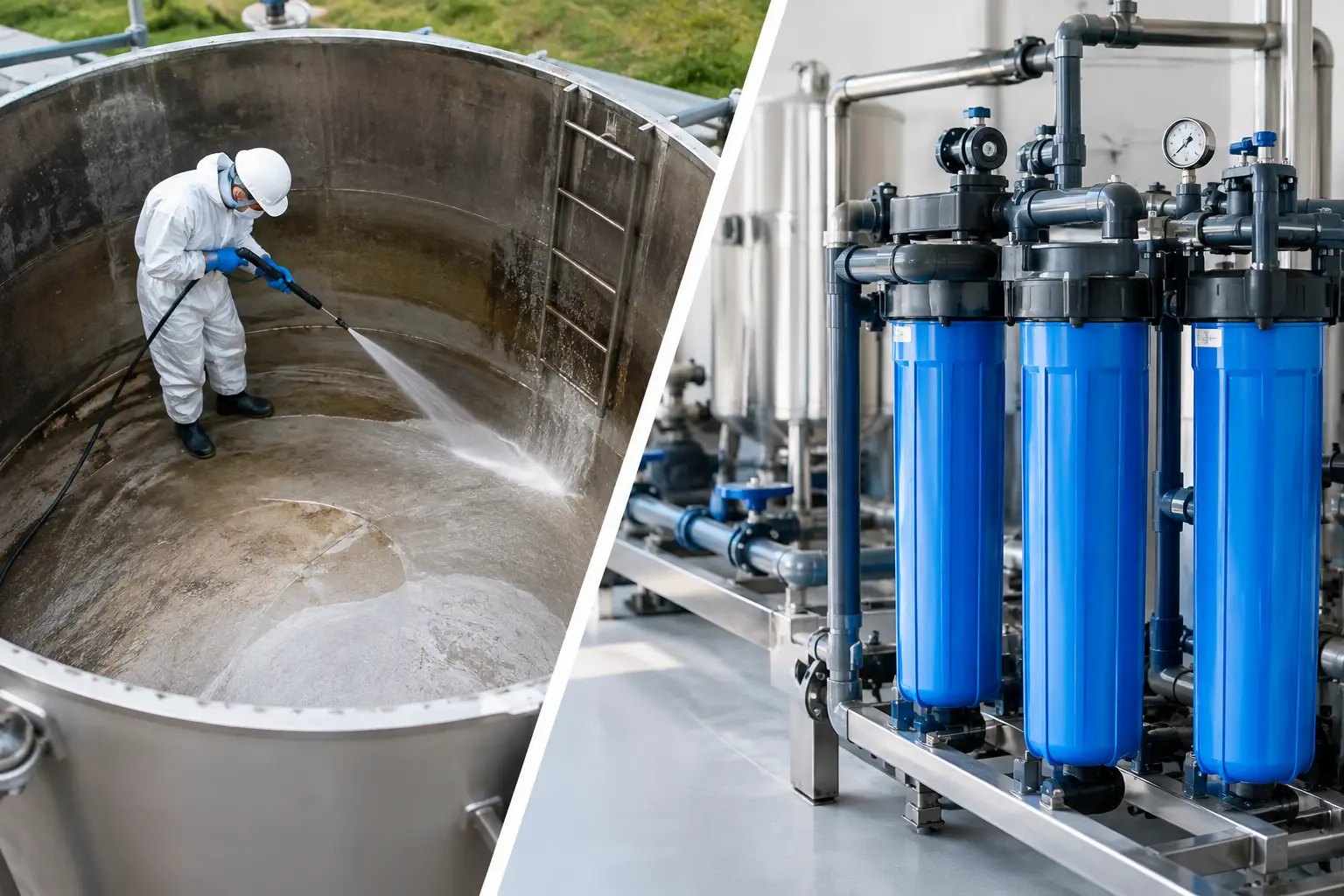
A clear glass of water from a kitchen tap can hide two very different issues: contamination or buildup inside the building’s storage tank, and particles or dissolved substances that remain in water after it leaves the tank. That is why tank cleaning versus filtration systems is not an either-or decision for many Dubai properties. They perform separate jobs, and choosing the wrong one can leave the root cause unresolved.
For villa owners, apartment residents, landlords, and facility managers, the right approach starts with where the problem is occurring. A professional inspection can identify whether the concern is tank hygiene, pipe sediment, water taste, an underperforming filter, or a combination of factors.
Tank Cleaning Versus Filtration Systems: The Core Difference
Water tank cleaning removes physical contamination from the place where water is stored. In Dubai, roof tanks and underground tanks can gradually collect sediment, dust, scale, rust particles, and organic buildup. If a tank cover is damaged, poorly sealed, or left open during maintenance work, debris and pests can also enter the system.
A proper tank-cleaning service involves more than pumping out water. Technicians inspect the tank condition, drain it safely, remove settled sediment, clean internal surfaces using suitable methods and materials, disinfect where required, and check the lid, access points, valves, and visible connections before refilling. The purpose is to restore a clean storage environment and address conditions that can allow contamination to return.
A water filtration system treats water as it flows through a filter. Depending on the system, it may reduce sediment, chlorine-related taste and odor, fine particles, selected dissolved substances, or microorganisms. Filtration is commonly installed at a single tap, such as under a kitchen sink, or at the main water entry point for broader household coverage.
The practical distinction is simple: cleaning removes buildup already inside the tank, while filtration treats water passing through the plumbing. A filter cannot vacuum sludge from the bottom of a water tank. Likewise, a freshly cleaned tank does not automatically provide the specialized treatment that a correctly selected filter can offer.
When Tank Cleaning Is the Better First Step
Tank cleaning should be the priority when there is evidence that the storage system itself needs attention. This may include visible sediment in tap water, discoloration that appears after periods of low use, unpleasant odors, debris found during a tank inspection, or a tank that has not been professionally maintained for an extended period.
It is particularly relevant for villas with dedicated tanks, properties that have been vacant, and buildings where water demand varies widely. Sediment settles when water stands still, then becomes disturbed when pumps operate or high demand pulls water through the system. Residents may notice this as particles in aerators, cloudy water at first draw, or reduced flow at fixtures.
Cleaning also makes sense after construction, plumbing modifications, tank repairs, or a compromised tank cover. Renovation dust and pipe debris can find their way into water storage more easily than many owners expect.
A cleaning service should not be treated as a cosmetic rinse. The tank needs to be inspected for cracks, loose fittings, damaged insulation, signs of leaks, and access points that do not seal properly. Without correcting those conditions, even thorough cleaning may have only a short-term benefit.
When a Filtration System Is the Better Investment
Filtration is the stronger option when water storage is clean but residents want ongoing treatment at the point of use or throughout the property. For example, a household may want improved drinking-water taste from a kitchen tap, reduced sediment reaching showers and appliances, or additional treatment for water used in a coffee machine, ice maker, or water dispenser.
The right filter depends on the actual goal. A sediment filter captures suspended particles and can protect downstream equipment. Carbon media is often selected to improve taste and odor. Reverse osmosis systems are commonly used for drinking-water applications where more intensive treatment is desired. Whole-home systems can serve multiple outlets, but they require correct sizing based on flow rate, occupancy, plumbing layout, and water pressure.
Installing the largest or most complex system is not always the best answer. An undersized whole-home filter can reduce pressure, while an unnecessarily sophisticated system can increase maintenance costs without solving the issue the customer actually has. Honest diagnostics should come before equipment selection.
Filters also need service. Cartridges have a replacement schedule, housings need inspection, and systems with pumps, membranes, or UV components require periodic maintenance. A neglected filter can restrict water flow and may no longer deliver the expected treatment performance.
Why Many Dubai Properties Need Both
In a well-maintained home, tank cleaning and filtration work together rather than compete. Cleaning controls the condition of the storage tank. Filtration provides continuing treatment after water leaves that tank. This layered approach is often practical in larger villas, homes with several occupants, rental properties, and offices where water use is frequent.
Consider a villa where residents find sand-like sediment in bathroom aerators and also want better-tasting water from the kitchen tap. Cleaning the tank and flushing affected fixtures addresses the sediment source. A kitchen filtration system can then be installed for drinking and cooking water. Adding a filter without cleaning the tank may cause cartridges to clog prematurely.
The same logic applies to a whole-home installation. If the tank contains heavy sediment, installing filtration first may place unnecessary load on the new system. Cleaning and inspecting the tank before installation gives the filter a better operating environment and can help extend its service life.
How to Choose the Right Solution
Start with the symptoms, but do not rely on symptoms alone. Cloudiness, odor, poor taste, scale, low pressure, and visible particles can have different causes. A plumber may find that low flow is due to a clogged aerator or failing pressure pump rather than a tank or filtration issue. A water heater may release sediment that affects hot-water taps only. If the problem appears at one fixture, a whole-house solution may not be necessary.
A practical assessment should consider the tank’s condition, its last cleaning date, whether the issue affects hot and cold water, which outlets are affected, the age of existing filters, and the property’s plumbing configuration. For landlords and property managers, documenting the inspection and maintenance work also supports better preventive planning between tenancies.
For tenants in an apartment, access to the main building tank may be managed by the building owner or facilities team. In that situation, a point-of-use filter may be possible inside the apartment, while tank concerns should be reported through the correct building maintenance channel. Do not arrange work on shared building infrastructure without authorization.
Maintenance That Prevents Repeat Problems
The most cost-effective approach is planned maintenance instead of waiting for visibly dirty water or a blocked filter. Storage tanks should be inspected and cleaned on a schedule appropriate to the property, tank condition, occupancy, and building requirements. Filters should be serviced according to the manufacturer’s guidance and actual water usage, not simply left in place until pressure drops.
It also helps to check tank lids and seals, clean faucet aerators when sediment appears, inspect pump performance, and address leaks promptly. A small gap in a tank cover or an overlooked plumbing repair can undermine the benefit of previous cleaning work.
For customers who need a clear recommendation, DHRS Dubai can inspect the relevant parts of the system, explain what is causing the issue, and recommend cleaning, filtration, or a combined solution only where it is genuinely required. A clean tank and properly maintained filter are not luxuries - they are practical parts of reliable property care.
If you are unsure where to begin, arrange an inspection before purchasing equipment or booking a one-off service. Finding the root cause first protects your water system, avoids unnecessary expense, and gives you a maintenance plan that fits how your property is actually used.
Need Home Maintenance in Dubai?
Contact the experts at DHRS Dubai for fast, reliable service.
Get a Quote