Solar Water Heater Repair Signs You Should Not Ignore
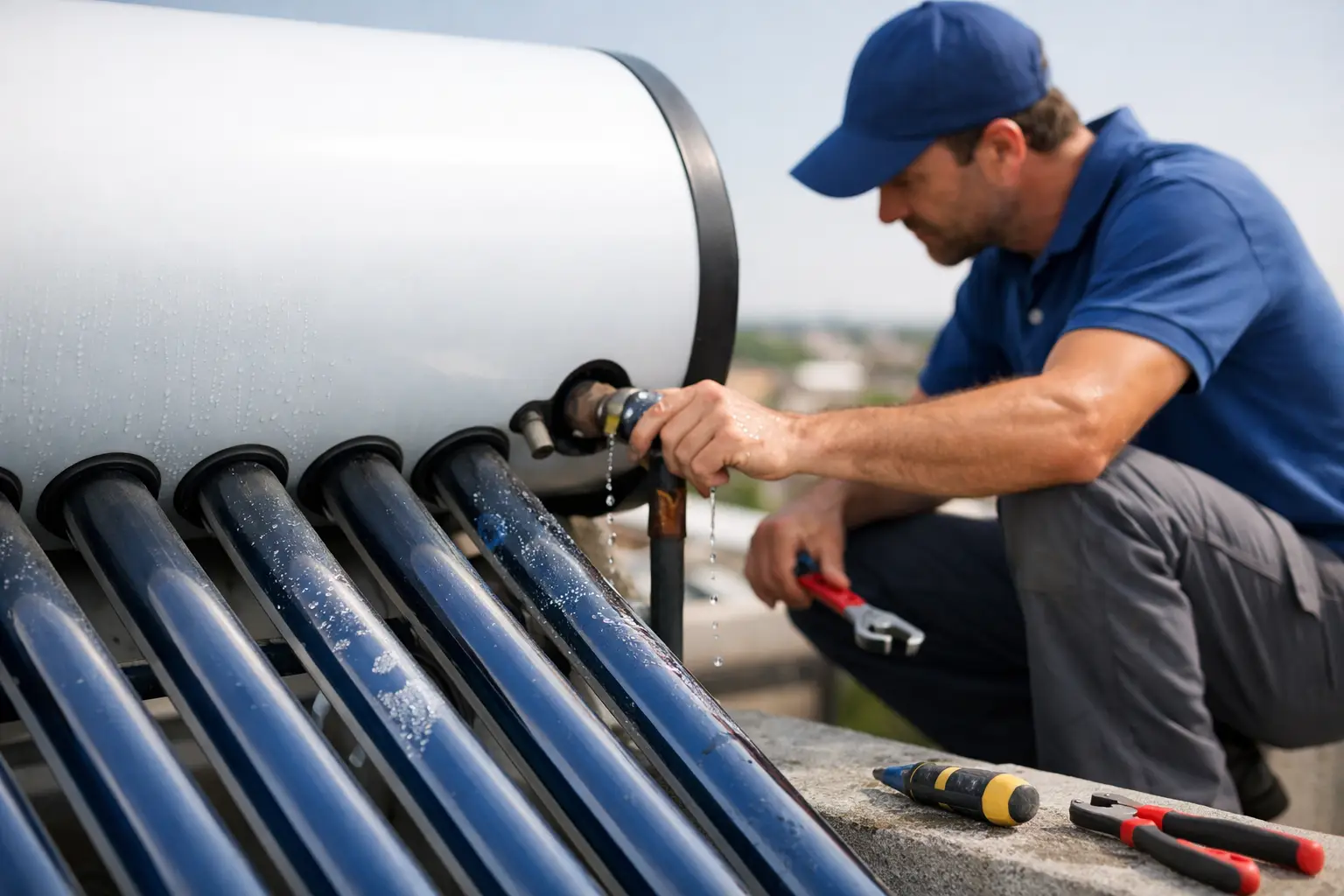
A solar water heater can appear to be working normally until the morning shower turns cold, the tank starts dripping, or hot water becomes unreliable across the property. In Dubai, solar water heater repair often becomes urgent after a leak, a failed circulation component, or a backup heating fault - but early warning signs can prevent a small repair from becoming water damage or a full system replacement.
Solar hot water systems are exposed to intense heat for much of the year. That makes them efficient, but it also puts constant demand on valves, pipes, insulation, sensors, pumps, and the storage tank. A correct diagnosis should identify the root cause, explain what has failed, and separate a repairable issue from a genuine replacement requirement.
When Solar Water Heater Repair Is Needed
The clearest sign is insufficient hot water. If the system previously supplied dependable hot water but now produces only lukewarm water, the problem may be with the solar collectors, circulation loop, mixing valve, thermostat, or electrical backup heater. The cause depends on the system design and the timing of the fault.
For example, no hot water at any time may point to a failed heating element, electrical supply issue, tripped breaker, faulty thermostat, or a major circulation problem. Hot water that improves only in the afternoon can suggest reduced solar heating performance, shaded or dirty collectors, a circulation fault, or a temperature-control issue.
A visible leak requires prompt attention. Water around the tank, on the roof, near pipe connections, or from the temperature and pressure relief valve should not be ignored. Some relief valve discharge can occur when pressure rises, but repeated or heavy discharge may indicate excessive pressure, a failed expansion vessel, incorrect settings, or a faulty valve. A technician needs to assess the complete system rather than simply replace the leaking part.
Changes in water color, odor, or flow can also indicate a problem. Rust-colored water may be linked to tank corrosion or deteriorating internal components. Reduced hot-water pressure can result from scale buildup, a partially closed valve, a blocked filter, or pipe restrictions. These issues are especially relevant in properties where water heating equipment has not been inspected for several years.
Unusual noises deserve investigation as well. Popping, rumbling, or boiling sounds can occur when mineral scale builds up around heating surfaces or when a circulation system is not operating correctly. Left unresolved, scale reduces heating efficiency and can increase stress on the tank and heating element.
Common faults in Dubai properties
Solar water heaters in villas, townhouses, and staff accommodation can develop similar faults, although the system layout varies. Pressurized systems may have issues with pumps, controllers, pressure vessels, relief valves, and sensors. Thermosiphon systems often rely on natural circulation and can be affected by pipe condition, tank performance, valves, and collector efficiency.
Dubai heat also affects external insulation and pipework over time. Damaged insulation allows heat loss and leaves pipes more exposed to weathering. UV-damaged cable protection, worn seals, and loose fittings are small defects that can lead to bigger failures if maintenance is delayed.
What a Professional Solar Water Heater Repair Visit Should Cover
A proper repair visit starts with an inspection, not an assumption. The technician should first confirm the complaint: no hot water, weak pressure, leakage, overheating, inconsistent temperature, or an electrical fault. They should then inspect the tank, collectors, accessible pipework, valves, controls, and electrical connections as appropriate.
For an electric backup system, this can include testing the power supply, isolator, thermostat, heating element, and safety devices. A failed element may be the issue, but replacing it without checking for scale, wiring damage, or thermostat failure can lead to another callout soon afterward.
The water side needs the same care. A technician should check for leaks at unions and fittings, assess pressure behavior, inspect the relief valve, and identify signs of corrosion or tank deterioration. If the system uses a pump or controller, the circulation function and sensor readings should be checked. A circulation pump that is running but not moving water effectively will not solve a solar-heating problem.
The best outcome is an informed upfront recommendation. If a valve, thermostat, element, sensor, pump, or section of pipework can be repaired or replaced safely, that is usually the sensible option. If the tank is severely corroded, leaking from its body, or no longer economically repairable, replacement may be the more reliable long-term decision.
Safe Checks Before You Book a Repair
You do not need to climb onto the roof or open electrical panels to identify a useful starting point. Check whether the issue affects every hot-water outlet or only one bathroom or kitchen. If only one fixture is affected, the fault may be in the local mixer tap, cartridge, or branch pipe rather than the water heater itself.
Look for water around the tank or along visible pipe runs, but avoid touching exposed electrical components or hot pipes. If there is active leaking, turn off the local water supply valve if you know its location and can do so safely. If water is close to electrical equipment, switch off the relevant power circuit only if it is safe and accessible, then arrange professional help.
It is also useful to note when the issue began, whether it occurs all day or only at certain times, and whether any recent plumbing, electrical, roof, or water-tank work took place. These details help narrow the diagnosis and reduce time spent on site.
Do not bypass a thermostat, cap a relief valve, or attempt to seal a pressurized leak with tape or adhesive. These actions can create a safety risk and may conceal a fault that continues to damage the system.
Repair or Replacement: Making the Practical Choice
The right choice is based on condition, not simply age. A system with a failed heating element or leaking connection may be restored with a straightforward repair. A tank with advanced corrosion, repeated leaks, poor insulation, and unreliable temperature control may cost more to keep repairing than to replace.
Replacement is also worth considering when the household's demand has changed. A villa with additional occupants, renovated bathrooms, or a new rental arrangement may need a different tank capacity or a more suitable system configuration. Installing an undersized system can leave residents with inconsistent hot water even when the equipment is technically functioning.
For landlords and property managers, reliability is often the deciding factor. Repeated tenant complaints, recurring leaks, and emergency callouts affect both operating costs and resident experience. A transparent assessment should make clear what can be repaired now, what may fail next, and whether replacement offers better value.
Preventing Repeat Solar Water Heater Problems
Preventive maintenance is less disruptive than a cold-water emergency. A scheduled inspection can identify minor leaks, worn valves, damaged insulation, loose supports, scale buildup, and declining electrical components before they cause a breakdown.
The maintenance frequency depends on the system type, water quality, age, usage level, and whether the property is occupied year-round. Villas with larger systems and multiple bathrooms may benefit from more regular checks than a lightly used apartment unit. Properties left vacant for extended periods should also be inspected before occupants return, particularly if the system has been isolated or unused.
Keep the area around the tank accessible, and avoid using it as storage. Technicians need safe access to inspect connections, safety valves, and electrical controls. If collectors are roof-mounted, access and safety requirements should always be handled by trained professionals.
At DHRS Dubai, solar water heater work is approached with honest diagnostics and practical repair recommendations. Since 2005, the focus has been on resolving the immediate fault while helping property owners understand the condition of the wider system. Whether the issue is a leaking tank, failed backup element, poor hot-water performance, or a circulation fault, timely inspection protects comfort, safety, and the property itself.
If your hot water has become unpredictable, act before the next leak or complete failure. A clear diagnosis now can often preserve the parts that are still working and give you a straightforward plan for repair or replacement.
Need Home Maintenance in Dubai?
Contact the experts at DHRS Dubai for fast, reliable service.
Get a Quote