
Smart Lock Installation Dubai for Safer Homes
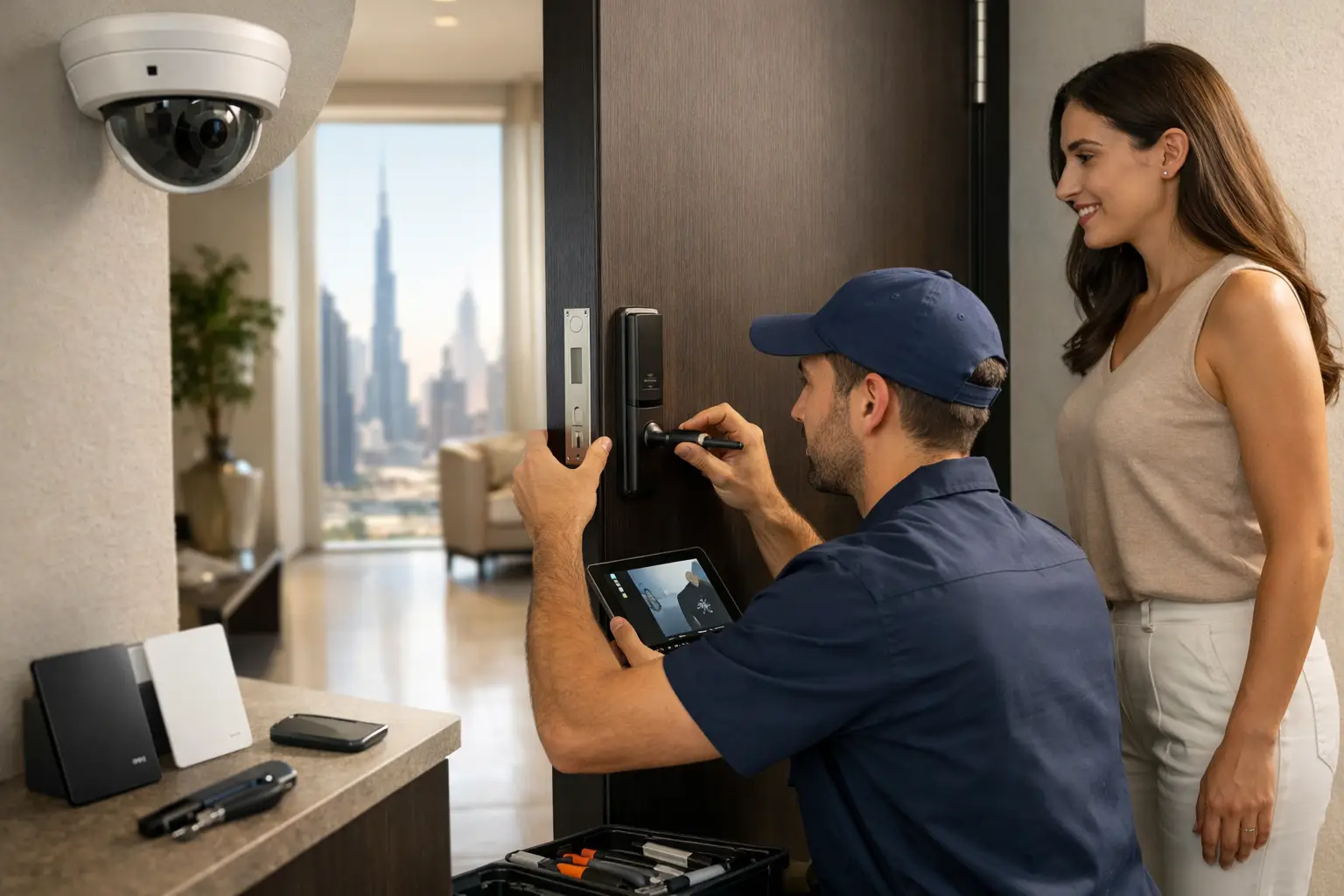
A smart lock should make arriving home easier without making your front door less secure. That depends on far more than choosing a lock with an app. Professional smart lock installation Dubai residents can rely on starts with the door itself: its material, alignment, lock case, handle configuration, and the access needs of everyone using the property.
For a Dubai apartment, villa, office, or rental property, a properly selected and fitted smart lock can replace key handovers with controlled digital access. It can also create avoidable problems when the lock is incompatible, the door is misaligned, or the mechanical backup is ignored. The right approach is an inspection first, followed by clear recommendations and careful testing.
What a Smart Lock Installation Should Include
A smart lock is not a universal replacement for every existing door lock. Before installation, a technician should identify whether the door has a standard deadbolt, mortise lock, multipoint system, euro cylinder, rim lock, or another configuration. Many villa doors and apartment entrance doors use hardware that requires a specific smart-lock model or an adapter rather than a simple swap.
The door material matters as well. Wooden doors can often be modified where necessary, while metal, aluminum, glass, and fire-rated doors require more careful planning. Drilling in the wrong place can damage the door, affect its finish, or interfere with the locking mechanism. For leased properties, tenants should also check their tenancy agreement and obtain owner or building approval when required.
A complete installation normally includes fitting the internal and external lock components, setting up the mechanical key or emergency entry method, connecting the lock to its mobile application where applicable, and testing operation from both sides of the door. The technician should also check that the latch or bolt enters the strike plate cleanly. A smart lock cannot compensate for a door that has dropped, swollen, shifted, or failed to close properly.
Choosing the Right Smart Lock for Your Door
The best lock is not necessarily the one with the longest feature list. It should suit the door, the people who use it, and how the property is managed.
For most occupied homes, convenience features such as PIN codes, fingerprint access, RFID cards, mobile app control, and temporary visitor codes can be useful. A family may prefer fingerprint entry and individual codes, while a landlord may value time-limited access for new tenants, cleaners, or maintenance teams. An office may need an audit trail that shows when authorized users entered.
However, more connected features can mean more setup and maintenance. Wi-Fi-enabled locks offer remote control without a nearby hub, but can use batteries faster than Bluetooth models. Bluetooth locks may be dependable for local access but have limited remote functions unless paired with a bridge or smart-home hub. Battery life depends on the model, usage frequency, door alignment, and network activity.
It is also sensible to choose a lock with a reliable manual backup. Batteries eventually run low, phones are misplaced, and electronic systems can occasionally need resetting. A well-planned installation keeps a practical alternative available without weakening security.
Apartment Doors and Villa Doors Have Different Requirements
Apartment entrance doors often have restricted hardware options because they may be fire-rated, managed by a building operator, or fitted with a shared access system. The door closer, frame, and existing mortise lock should all be assessed before any work begins. In some buildings, changing the external appearance of the door may require approval.
Villas generally offer more flexibility, but their entry doors can be heavier and exposed to heat, dust, and humidity. Gate access is another consideration. Some homeowners install a smart lock on the main front door while retaining traditional gate access. Others require coordinated entry systems for a pedestrian gate, front door, and service entrance. The correct solution depends on daily routines and the level of access control required.
Why Door Alignment Matters More Than Most Owners Expect
A common issue after a smart lock is fitted is not electronic at all. If the bolt rubs against the strike plate or the door needs to be pushed, lifted, or pulled to lock, the motor works harder each time it operates. That can lead to noisy locking, failed locking attempts, increased battery consumption, and premature wear.
Dubai properties can experience minor movement and material expansion, particularly with exterior doors exposed to sun and temperature changes. Hinges loosen, frames settle, weather seals add resistance, and strike plates move slightly out of position. These small issues are easy to overlook with a manual key because the user naturally applies pressure to the door. A motorized lock has less tolerance for that resistance.
Before fitting a smart lock, the door should open and close smoothly, and the existing lock should operate without force. If adjustments are needed, it is better to correct the hinge, latch, strike plate, or frame issue first. This is part of an honest installation, not an unnecessary extra repair.
Smart Lock Installation Dubai Property Managers Can Control
For landlords and property managers, smart locks can reduce the repeated expense and uncertainty of key collection, copying, and rekeying. Access codes can be changed between tenancies, issued temporarily to contractors, and removed when work is complete. This is especially useful for furnished apartments, short-term rentals where permitted, offices, and properties managed from outside the UAE.
Access control should still be managed carefully. Avoid sharing one general code with every person who enters the property. Individual or purpose-specific codes are easier to remove and provide better accountability. Keep records of administrative credentials, recovery codes, mechanical keys, and app ownership in a secure place that the property owner can access.
Where a property is handed over to a tenant, explain the basics: how to change authorized user codes, how to recognize a low-battery warning, what to do if the app is unavailable, and who is authorized to alter settings. Clear handover avoids a lockout situation caused by an app reset or an account transferred without permission.
Installation Mistakes That Create Security Problems
A smart lock should not leave the door weaker than before. Poor installations can create gaps around the cylinder, use incorrect screws, damage the door structure, or leave the strike plate insufficiently secured. Some locks are intended for internal doors only and are not appropriate for a main entrance exposed to weather and higher security demands.
Another mistake is installing a compatible-looking lock without confirming the backset, door thickness, handing, and clearance for handles or decorative panels. A lock may physically fit but still bind against the handle, fail to fully engage, or obstruct the mechanical keyway.
Network setup deserves attention too. Remote features should be protected with a strong account password and, where offered, two-factor authentication. Remove old users when a tenant moves out or an employee leaves. Smart access is only helpful when permissions remain under the owner's control.
Testing Before the Technician Leaves
Installation is not complete when the lock powers on. It should be tested repeatedly with the door open and closed. The bolt must extend and retract freely, the latch must engage correctly, and the door should remain secure when pulled from outside.
Each planned entry method should then be checked: PIN, fingerprint, card, app, mechanical key, and any temporary code function the property will use. The installer should confirm battery status, explain replacement procedures, and show the customer how to restore access if a phone is changed or the lock needs to be reset.
For connected locks, test the real conditions around the door. Thick concrete walls, metal doors, and distance from the router can affect Wi-Fi or hub communication. A lock that works during setup beside the router may not maintain the same connection at the entrance door.
Ongoing Care for Smart Locks
Smart locks need simple preventive care. Replace batteries promptly when the device gives a low-power warning, rather than waiting for them to fail. Use the battery type specified by the manufacturer, and avoid mixing old and new batteries. Check the door alignment if the lock starts making repeated attempts or becomes noticeably louder.
Keep the exterior keypad, fingerprint sensor, and keyway clean. Do not spray oil or general lubricant into electronic components. If the mechanical cylinder needs attention, use a suitable lock product and have a technician inspect persistent stiffness. Firmware updates can improve reliability or security, but they should be applied carefully when the lock has adequate battery power and stable connectivity.
DHRS Dubai has supported property maintenance needs since 2005, including practical smart-home upgrades for apartments, villas, offices, and managed properties. A proper assessment helps ensure the lock suits the door, the access plan, and the people who will depend on it every day.
A smart lock should give you confidence at the door, not another system to troubleshoot. Start with a compatible product, a correctly aligned door, and an installation that is tested under normal daily use.
Need Home Maintenance in Dubai?
Contact the experts at DHRS Dubai for fast, reliable service.
Get a Quote