
How to Fix AC Leaks Before They Damage Your Home
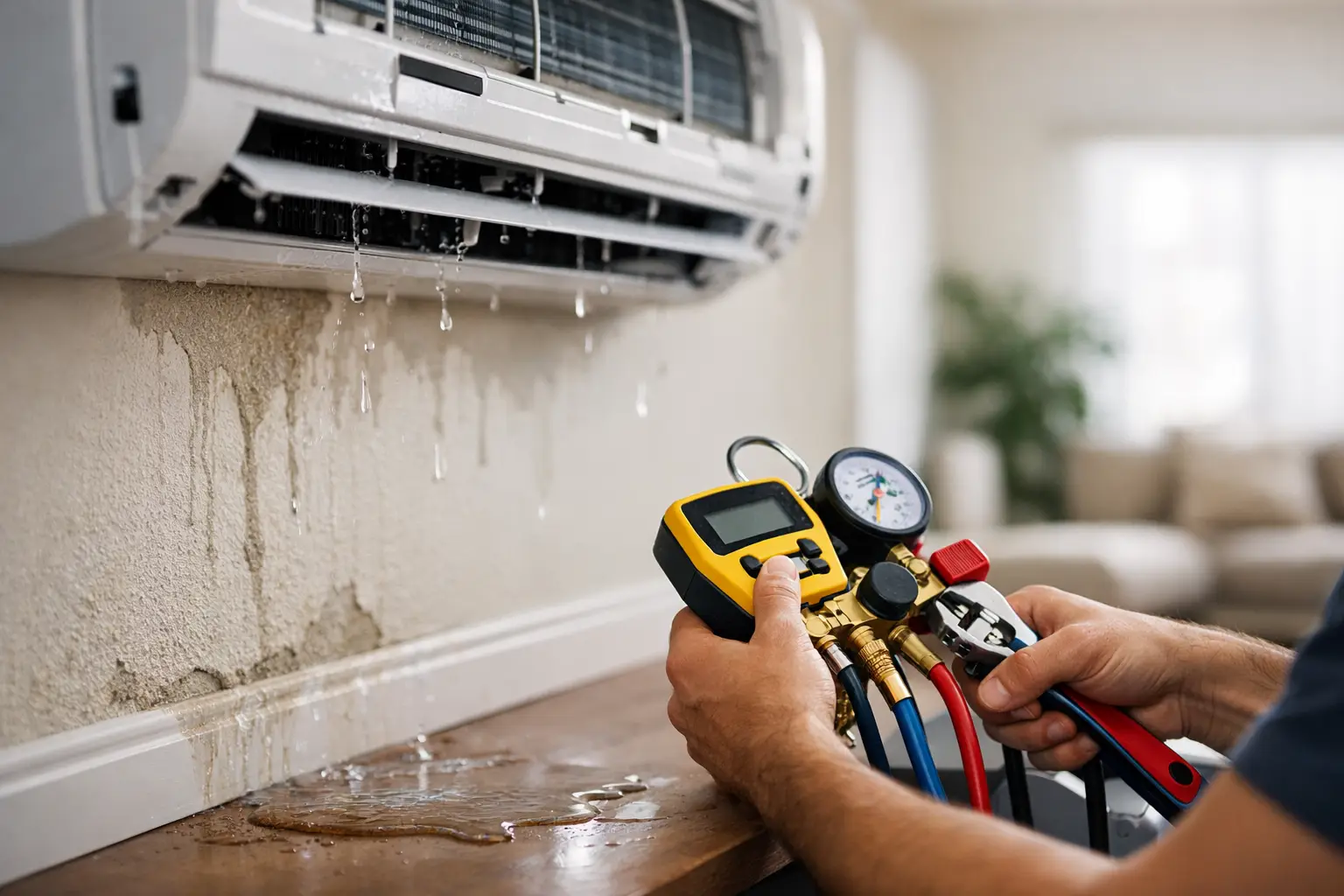
A pool of water beneath an indoor AC unit is not a problem to ignore, especially in Dubai where air conditioners run hard for much of the year. Knowing how to fix AC leaks starts with protecting your property, then identifying whether the water is coming from a blocked drain, frozen coil, damaged insulation, or another fault. A quick response can prevent stained ceilings, damaged gypsum, swollen flooring, mold growth, and complaints from neighbors below.
First, make the area safe
Turn the AC off at the thermostat or controller. If water is near a wall socket, electrical connection, false ceiling light, or the indoor unit itself, switch off the relevant circuit only if it is safe to do so. Keep towels, a bucket, or a shallow tray under the drip point to limit damage while you arrange an inspection.
Do not remove the indoor unit cover or attempt to access electrical components while the system has power. Water from an AC is often simple condensation, but the reason it is escaping the drainage system still needs to be addressed.
If water is coming through a ceiling rather than directly from the AC unit, do not assume the air conditioner is the cause. It could be a plumbing leak, a leaking roof drain, or water from an upstairs property. This situation needs prompt diagnosis because the repair approach is completely different.
Why an AC unit leaks water indoors
Your AC removes humidity from indoor air as it cools. That moisture condenses on the evaporator coil and normally flows into a drain pan, through a drain line, and out to a suitable discharge point. An indoor leak happens when that route is blocked, damaged, incorrectly installed, or overwhelmed.
A clogged condensate drain line
This is one of the most common causes of indoor AC leaks in apartments, villas, and offices. Dust, slime, algae, and debris can build up in the drain pipe. The water then backs up into the drain pan and overflows through the indoor unit.
A partly clogged line can be deceptive. The system may drain normally on a mild day, then leak after several hours of heavy cooling when condensation volume increases. In Dubai, this often appears during the hottest months when AC systems are under continuous load.
A dirty filter or frozen evaporator coil
A heavily blocked air filter restricts airflow across the evaporator coil. The coil can become too cold, freeze over, and later release a large amount of water as the ice melts. A dirty coil, weak blower, low refrigerant level, or an airflow problem can create the same cycle.
If you see ice on refrigerant pipes, reduced cooling, weak airflow, or water leaking after the AC has been turned off, do not keep restarting the system. Switch it off and allow it to thaw. Repeated operation can damage the compressor and turns a manageable repair into a more expensive one.
Damaged drain pan, pump, or pipework
Some AC systems use a condensate pump to move water where a gravity drain is not possible. A failed pump, blocked pump reservoir, loose drain connection, cracked drain pan, or poorly sloped pipe can all cause overflow.
This is particularly relevant for concealed ducted units above false ceilings. The leak may show up several feet away from the actual unit, making a professional inspection more useful than guessing from the wet patch alone.
Condensation on uninsulated pipes
Cold refrigerant lines and drain pipes need proper insulation. If insulation is torn, missing, compressed, or poorly sealed, humid air can condense on the outside of the pipe and drip into ceilings, walls, or cabinets. The AC may still cool well, which is why this fault is sometimes missed.
How to fix AC leaks: safe checks you can make
Homeowners and tenants can carry out a few basic checks without dismantling the system. These steps may resolve a simple maintenance issue, but they are not a substitute for repairing damaged components or handling refrigerant faults.
Start by checking the air filter. Remove it according to the unit instructions and inspect it under good light. If it is visibly gray, oily, or clogged with dust, wash a reusable filter gently and allow it to dry fully before reinstalling it. Replace disposable filters with the correct type and size. Never operate the system without a filter.
Next, check whether the outdoor drain outlet is flowing while the AC is running in cooling mode. A steady drip is generally normal. No drainage, combined with water from the indoor unit, points toward a blocked line or pump issue. Do not push wires, rods, or sharp tools into the drain pipe. They can puncture a hidden pipe, disconnect a fitting, or compact the blockage deeper inside.
If the indoor unit has recently started leaking and the filter was dirty, clean the filter, keep the system off long enough for any ice to melt, and then run it under observation. If leaking returns, arrange service rather than repeatedly trying to clear the fault yourself.
Avoid pouring harsh drain cleaners, bleach, or acidic products into an AC drain system. These products can damage components, create fumes, and may not remove the buildup causing the blockage. A technician can flush and clear the line using the appropriate equipment, confirm proper pipe fall, and test the drainage under load.
When a leak needs professional AC repair
Call a qualified AC technician promptly when water is entering a false ceiling, leaking near electricity, affecting walls or flooring, or returning after a basic filter clean. You should also arrange service if the unit is not cooling properly, freezes up, makes unusual noises, gives off a musty odor, or trips the circuit breaker.
A proper inspection should focus on the root cause, not simply removing the visible water. The technician should check the drain pan and line, condensate pump operation where fitted, filter and coil condition, blower airflow, pipe insulation, refrigerant pressures when symptoms justify testing, and the condition of electrical connections.
Refrigerant requires special attention. Refrigerant itself does not usually drip indoors like water. However, a refrigerant leak can lower coil temperature, cause icing, and eventually lead to water overflow when the ice melts. Topping up refrigerant without locating and repairing the leak is not a lasting repair. The system needs leak detection, repair where practical, and correct charging according to manufacturer requirements.
For landlords and property managers, document the leak with photos before repairs begin, particularly where ceilings, paint, joinery, or tenant belongings may be affected. This helps coordinate AC repair and any follow-on restoration work without uncertainty about the source or extent of damage.
Preventing future AC water leaks
Most condensate leaks are preventable with routine maintenance. AC servicing should include filter cleaning or replacement, drain-line cleaning, coil inspection, drain-pan checks, and confirmation that water is draining correctly. The right interval depends on occupancy, pets, construction dust, system run time, and whether the property uses wall-mounted split units or concealed ducted AC.
In a continuously occupied Dubai home, basic filter checks every month are sensible. Scheduled professional maintenance before peak summer demand gives technicians time to identify weak pumps, insulation issues, dirty coils, and drainage restrictions before they create a ceiling leak.
Keep supply and return air grilles clear of furniture and avoid closing too many vents in a ducted system. Restricted airflow contributes to frozen coils and uneven cooling. If you notice recurring musty smells, slow drainage, or water marks around access panels, book an inspection early rather than waiting for a visible overflow.
DHRS Dubai has supported residential and commercial property maintenance since 2005, with technicians who diagnose AC leaks carefully and explain the recommended repair before work proceeds. Whether the issue is a blocked drain, a frozen coil, or concealed pipe condensation, the goal is to stop the leak and reduce the chance of it returning.
A dry floor today does not always mean the problem has gone away. If your AC has leaked more than once, treating the cause now is the simplest way to protect your cooling system and your property.
Need Home Maintenance in Dubai?
Contact the experts at DHRS Dubai for fast, reliable service.
Get a Quote