
Essential AC Maintenance Checklist for Dubai
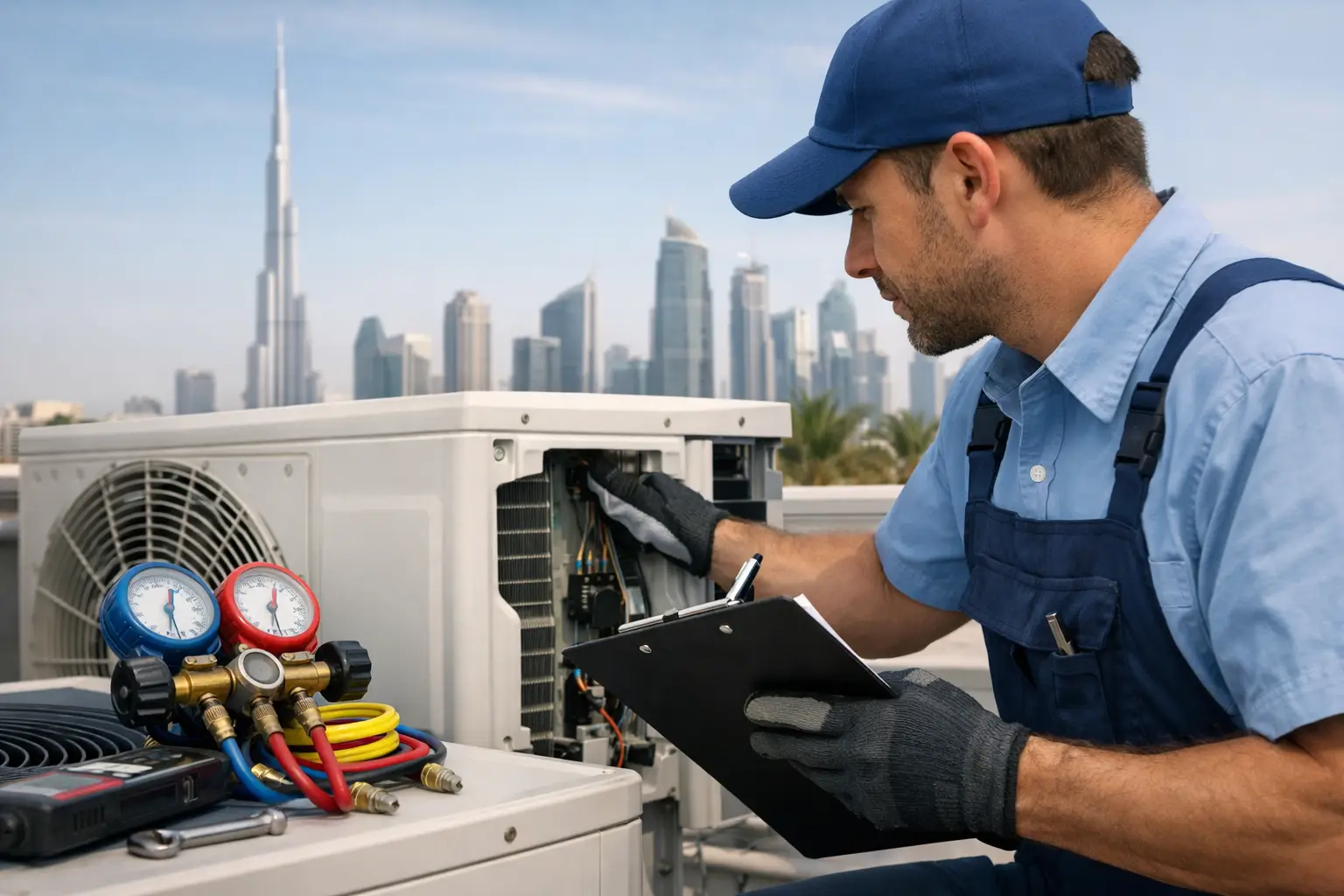
Dubai AC systems rarely get a true off-season. A unit that cools a villa through long summer afternoons or serves an occupied office all day can lose efficiency gradually, then fail when demand is highest. This essential AC maintenance checklist helps homeowners, tenants, landlords, and facilities teams spot what needs routine attention and what should be left to a qualified HVAC technician.
Preventive service is usually less disruptive than an emergency repair. It can also help identify restricted airflow, drainage problems, electrical wear, and refrigerant-related faults before they affect comfort, energy use, or the condition of ceilings and walls.
Essential AC Maintenance Checklist: What to Do Regularly
Some checks are safe and practical for residents or site staff. Others require tools, electrical isolation, and HVAC experience. The aim is not to dismantle the system yourself. It is to keep the equipment clean, notice changes early, and arrange professional inspection before a minor fault becomes a no-cooling callout.
Check and clean air filters
Dirty filters are one of the most common causes of weak airflow and poor cooling performance. In Dubai, dust can build up quickly, particularly in villas, properties near construction activity, and homes where doors or windows are opened often.
Check return-air filters every month during heavy AC use. Washable filters should be cleaned according to the manufacturer’s instructions, allowed to dry completely, and refitted correctly. Disposable filters should be replaced with the correct size and rating.
A higher-grade filter may capture finer particles, but it can also restrict airflow if the system was not designed for it. If you are considering an upgrade because of dust or allergies, ask a technician to confirm that it suits your fan capacity and duct system.
Keep supply and return vents clear
Walk through the property and look at each vent and grille. Furniture, curtains, rugs, storage boxes, and decorative covers can reduce circulation, even when the AC unit itself is working properly. Return-air grilles need particular attention because they supply air back to the system.
Vacuum visible dust from grilles using a soft brush attachment. Do not push objects into ducts or remove duct sections without a reason. If certain rooms remain warmer than others after filters and vents are checked, the cause may be balancing, duct leakage, insulation gaps, or an incorrectly sized system rather than a simple blockage.
Watch the thermostat and cooling cycle
Set the thermostat to a realistic temperature and see how the system responds. For many occupied homes, a setting around 73-75°F provides a sensible balance between comfort and energy use, although the right setting depends on the property, insulation, occupancy, and personal preference.
Warning signs include a thermostat that does not respond, frequent short cycling, a unit that runs continuously without reaching the set temperature, or a large difference between displayed and actual room temperature. Replace thermostat batteries where applicable, but leave wiring faults, smart thermostat compatibility issues, and control-board diagnosis to a professional.
Look for drainage warning signs
Every cooling AC produces condensation. That water must leave through a clear drain line. In Dubai apartments and villas, a blocked condensate drain can lead to water dripping from indoor units, ceiling stains, musty odors, wall damage, and, in severe cases, damage to finishes or furnishings.
Check around indoor units for drips, dampness, discoloration, or an unusual smell. A small amount of water outside at the drain outlet can be normal, but water inside the property is not. Turn the system off if active leaking is occurring near electrical components and arrange an inspection promptly.
Professional AC Maintenance Tasks That Matter
A proper service visit should go beyond spraying fragrance into vents or giving the indoor unit a quick wipe. The technician should inspect the system condition, identify the root cause of any concern, and explain any recommended repairs or parts before work proceeds.
A professional AC maintenance visit commonly includes the following:
- Cleaning or assessing indoor evaporator coils, blower components, filters, and accessible drain pans.
- Clearing and testing condensate drain lines and checking the drain pump where installed.
- Inspecting outdoor condenser coils, fan operation, insulation on refrigerant lines, and physical damage around the unit.
- Testing electrical connections, capacitors, contactors, isolators, operating pressures, and temperature performance.
- Checking for unusual vibration, airflow restrictions, duct issues, refrigerant leaks, and signs of compressor stress.
- Reviewing thermostat operation and system controls, including compatible smart thermostat settings where relevant.
Not every unit needs the same level of cleaning or repair. A well-maintained apartment split AC and a large villa system with multiple fan coil units have different requirements. Good maintenance is based on inspection findings, not a one-size-fits-all package or automatic recommendation to replace equipment.
How Often Should AC Maintenance Be Scheduled?
For most Dubai residences, professional AC maintenance twice a year is a practical baseline: once before the highest-demand period and once later in the year to check system performance, drainage, and cleanliness. Properties with pets, frequent occupancy, heavy dust exposure, or residents sensitive to indoor air quality may benefit from more frequent filter checks and targeted cleaning.
Landlords should schedule inspections between tenancies when possible. This allows enough time to address drainage, thermostat, duct, or cooling issues before a new tenant moves in. For offices, retail spaces, and other commercial properties, maintenance frequency should reflect operating hours, equipment load, and the number of separate AC zones.
If your AC is supplied through a central district cooling arrangement, the in-property fan coil units, filters, thermostats, drains, and ductwork still need attention. Building-side cooling infrastructure and in-unit maintenance are related but not always handled by the same party.
Warning Signs That Should Not Wait for Routine Service
A maintenance appointment is appropriate for normal upkeep. Some symptoms call for faster action because continued operation may increase damage or create an electrical or water-related risk.
Book professional AC diagnosis if you notice any of these issues:
- Warm air or noticeably weaker airflow from one or more rooms.
- Water leaking from an indoor unit, ceiling, or AC drain area.
- Burning smells, repeated tripping of a breaker, or buzzing from electrical components.
- Loud grinding, rattling, or persistent vibration from indoor or outdoor equipment.
- Ice on refrigerant pipes, indoor coils, or the outdoor unit.
- A sudden rise in electricity consumption without a clear change in use.
Do not keep resetting breakers or operating a unit that is leaking heavily, producing a burning odor, or making severe mechanical noise. Switching it off and arranging an informed inspection is usually the safer and less expensive decision.
Simple Habits That Reduce AC Strain
Maintenance works best alongside everyday operating habits. Keep doors and windows closed while cooling is running, use curtains or blinds on sun-facing glass, and avoid setting the thermostat extremely low in an attempt to cool a room faster. An AC system cools at its designed rate; a lower setting generally makes it run longer, not faster.
For vacant properties, use a sensible temperature setting rather than switching climate control off for long periods during humid weather. The best approach depends on the property’s ventilation, furnishing, occupancy schedule, and building rules. Property managers should also keep maintenance records, including reported faults, filter changes, repairs, and equipment age.
Since 2005, DHRS Dubai has helped residents and property managers with practical AC inspections, maintenance, repair, and clear recommendations when replacement is genuinely required. A scheduled visit before peak demand gives you time to make decisions calmly, rather than dealing with an uncomfortable breakdown when every hour of cooling matters.
Need Home Maintenance in Dubai?
Contact the experts at DHRS Dubai for fast, reliable service.
Get a Quote