
Best Water Filtration Systems for Dubai Homes
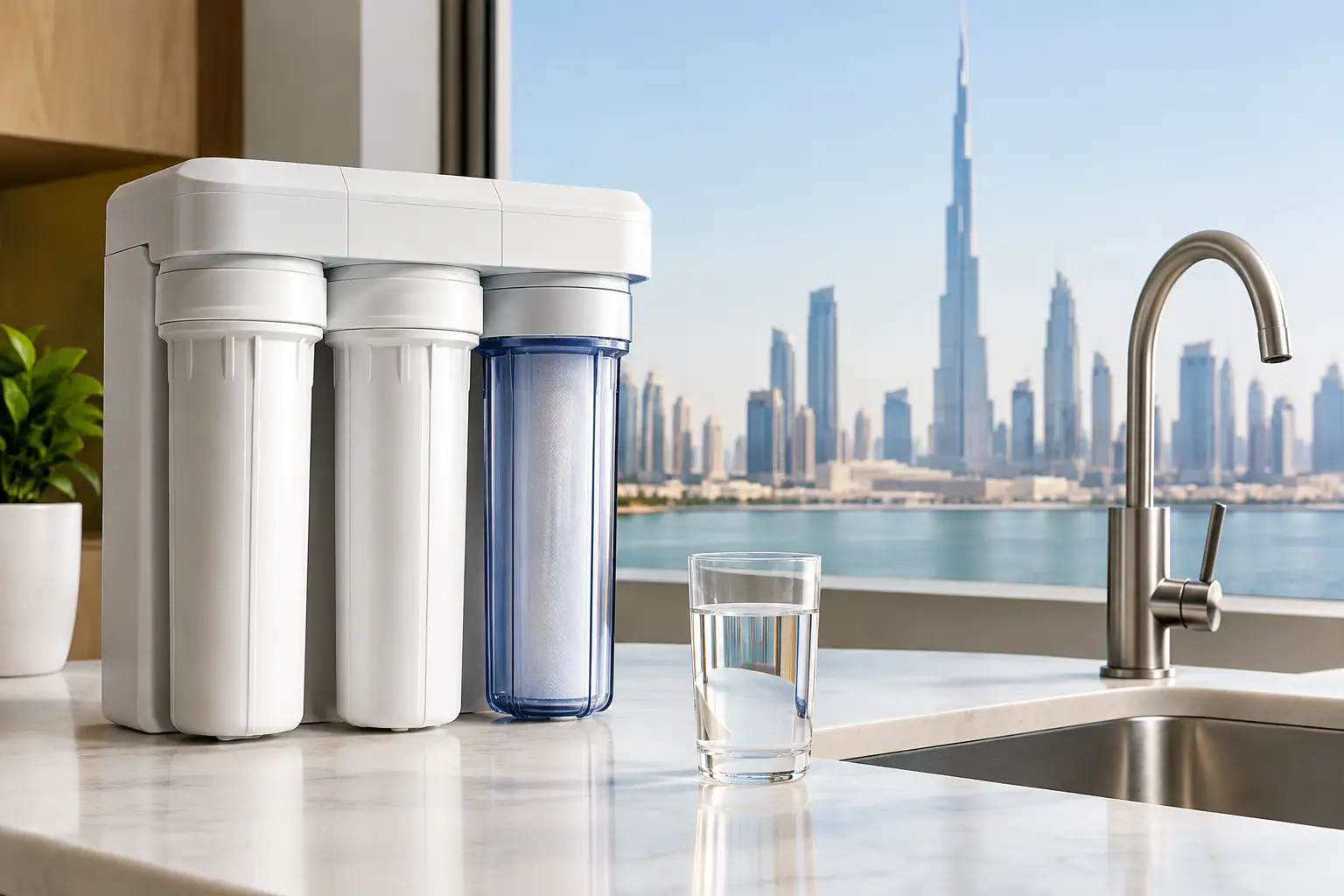
A glass of water can look completely clear while carrying the taste of chlorine, sediment from a building tank, or traces picked up from aging internal pipes. That is why choosing the best water filtration systems for a Dubai property starts with the water source, plumbing layout, and the result you want - not with the most expensive unit on the market.
For many apartments, a compact drinking-water filter is the sensible choice. For villas with private storage tanks, multiple bathrooms, and high water use, a properly sized whole-house system can offer better protection for fixtures, appliances, and daily use. The right setup depends on practical conditions inside the property.
What Should a Water Filter Solve?
Dubai's supplied water is treated, but water quality at the tap can be affected after it reaches a building or villa. Storage tanks, sediment, scale buildup, pipe condition, and local plumbing maintenance all influence what residents notice. Common concerns include chlorine taste, fine particles, unpleasant odor, limescale, and water that leaves spots on glassware or shower screens.
A filtration system should be selected for a defined purpose. If the main concern is drinking and cooking water, treating every liter used for showers and laundry may not be necessary. If sediment is repeatedly blocking aerators, reducing shower pressure, or affecting washing machines and water heaters, filtration at the incoming supply is usually more appropriate.
Before recommending equipment, a technician should inspect the installation point, water pressure, pipe size, available cabinet or utility-room space, and whether the property has a water tank. This prevents a common problem: fitting a good filter in the wrong location, then expecting it to solve issues elsewhere in the plumbing system.
Best Water Filtration Systems by Property Need
Under-sink reverse osmosis systems
Reverse osmosis, often called RO, is one of the most effective options for drinking water. It normally uses several stages of filtration, including sediment and carbon filters, followed by a membrane that reduces a broad range of dissolved substances. A separate faucet is installed at the kitchen sink, and some systems include a storage tank or tankless design.
This is often the best option for apartments, tenants with permission for a reversible installation, and households that want better drinking and cooking water without modifying the entire plumbing system. It can substantially improve taste and reduce the need for bottled water.
The trade-off is that RO systems require regular filter replacement, adequate inlet pressure, and a drain connection. They also produce some reject water during filtration. A quality installation should include clean tubing routes, a properly secured faucet, shutoff valves, and enough clearance to service cartridges later.
Countertop and faucet-mounted filters
Countertop units and faucet-mounted filters are simple, lower-cost choices for a small household or temporary accommodation. Most rely on activated carbon to improve taste and reduce chlorine-related odor. They are easy to replace and do not require permanent drilling in many cases.
Their limits matter. These filters generally have a smaller capacity, slower flow, and more limited treatment capability than an RO system. They are useful where the goal is better-tasting drinking water, but they are not a substitute for dealing with tank sediment, hard-water scale, or a plumbing contamination concern.
Whole-house sediment and carbon filtration
A whole-house filter is installed on the incoming cold-water line so that water is treated before it reaches bathrooms, kitchens, appliances, and water heaters. In Dubai villas, this commonly means placing the system after the tank and booster pump, where it can protect the property's internal distribution lines.
A sediment pre-filter captures sand, rust, and suspended particles. A carbon stage can reduce chlorine odor and improve the general quality of water used throughout the home. This combination is practical when residents notice particles in tap water, frequent clogged tap aerators, or unpleasant odor across more than one outlet.
Sizing is critical. A small filter housing may work at one sink but cause a noticeable pressure drop when several showers, taps, or appliances run at once. Villas need a system sized for peak demand, pipe diameter, and the number of occupants. The installation also needs bypass valves and pressure gauges so filters can be serviced without leaving the entire property without water.
Water softeners and anti-scale systems
Hard-water minerals can leave white marks on shower glass, reduce the efficiency of water heaters, and create scale on taps, kettles, and heating elements. A conventional water softener uses resin and salt to reduce hardness minerals. It is most suitable where testing confirms high hardness and the owner wants to protect expensive fixtures, boilers, water heaters, and appliances.
An anti-scale device is different. Depending on the technology, it may alter how scale forms rather than remove hardness minerals from the water. These systems can be useful where space, drainage, or salt handling makes a traditional softener impractical, but expectations should be realistic. They may reduce scale adhesion, not produce the same result as softened water.
For drinking water, many homeowners pair a whole-house sediment or anti-scale setup with a separate under-sink RO unit. That approach treats the right water for the right job instead of over-engineering the entire property.
How to Choose the Right System
The most effective decision comes from looking at the property as a complete water system. Consider these five practical questions before buying equipment:
- Is the concern limited to drinking water, or does it affect showers, appliances, and taps throughout the property?
- Does the home use a storage tank, and when was that tank last professionally cleaned?
- Are there visible particles, low flow, chlorine odor, scale, or a combination of these issues?
- How many bathrooms and occupants create peak water demand?
- Is there enough room for filter housings, a drain connection, isolation valves, and future servicing?
Water testing can also be worthwhile if there is a persistent odor, unusual color, visible sediment after tank cleaning, or concern about pipe condition. A test helps distinguish between a taste issue, a sediment problem, and a condition that needs plumbing repair rather than filtration alone.
Installation Details That Affect Performance
A filter system is only as reliable as its installation. Whole-house units should be mounted securely, protected from direct heat and physical damage, and installed with accessible shutoff valves. The technician should confirm water flow direction, inspect for leaks under working pressure, and explain the expected pressure drop before leaving.
For villas, the location relative to the water tank and pump matters. Installing a fine filter before a tank may leave sediment already inside the tank untreated. Installing a restrictive cartridge after a booster pump without proper sizing can affect pressure at upper-floor bathrooms. There is no universal placement that suits every property.
Under-sink RO systems need similar care. Poorly fitted drain saddles, loose connections, and inaccessible cartridges create avoidable leaks and maintenance headaches. The faucet, tubing, and filter assembly should be neat, secure, and easy to isolate.
Maintenance Is Part of the System
Filters do not work indefinitely. Sediment cartridges often need replacement more frequently in properties with tanks or recurring particles, while carbon filters and RO membranes have different service intervals based on water quality and household use. The correct schedule should follow the system manufacturer's guidance and actual site conditions, not a guess.
Signs that service is due include reduced water flow, a return of chlorine taste or odor, discolored cartridges, leaks around housings, and a change in RO water production. Waiting until flow stops completely can place extra strain on pumps, fittings, and filter housings.
Tank cleaning and filtration also work together. A new filter cannot compensate for a poorly maintained water tank, and tank cleaning alone will not stop scale or improve drinking-water taste. For homeowners and property managers, combining tank hygiene, correct filtration, and periodic plumbing inspection gives a more dependable result.
DHRS Dubai can inspect the water supply path, identify the likely root cause of the issue, and recommend a system that matches the property rather than pushing unnecessary equipment. Whether the need is a kitchen RO unit, whole-house sediment filtration, or a scale-control solution, clear sizing and honest maintenance guidance make the investment worthwhile.
The best next step is to start with the water problem you can see, taste, or measure, then install only the filtration needed to solve it. A well-chosen system should make daily water use cleaner, simpler, and easier to maintain for years.
Need Home Maintenance in Dubai?
Contact the experts at DHRS Dubai for fast, reliable service.
Get a Quote