
AC Installation in Dubai: What to Check First
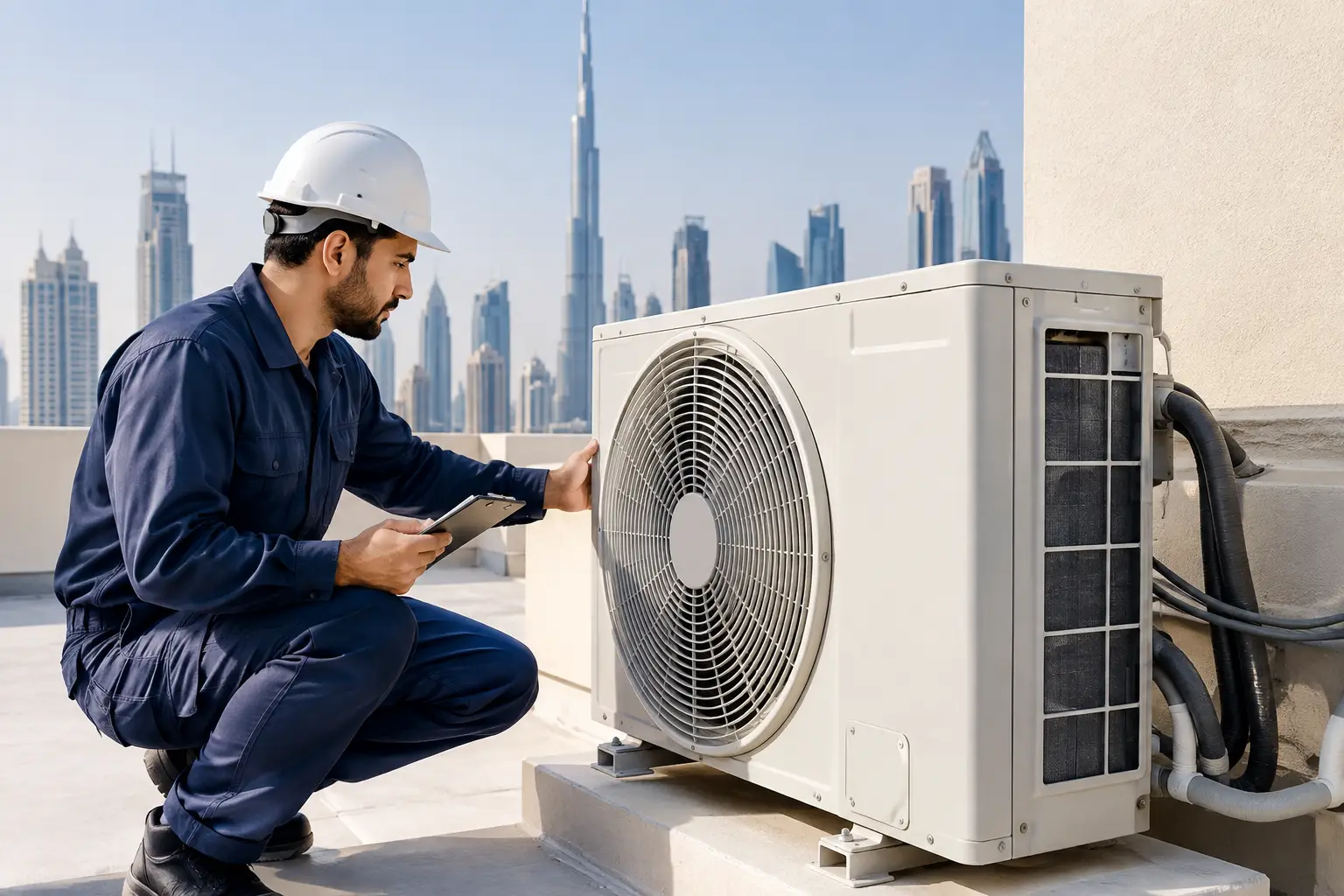
A new air conditioner can look like a simple replacement until the first peak-summer week exposes an undersized unit, leaking duct, weak drain line, or electrical issue. Professional AC installation is not just about mounting equipment and turning it on. It is about matching the system to the property, protecting the building, and confirming that every part works as intended before the technician leaves.
For Dubai apartments, villas, offices, and retail spaces, installation decisions affect comfort, energy use, indoor humidity, and the lifespan of the equipment. A correctly selected and commissioned system is less likely to run continuously, struggle in hot rooms, or create repeated maintenance calls.
Start With the Right AC Capacity
The most common installation mistake is choosing capacity by room size alone. Square footage matters, but it does not tell the whole story in Dubai. A top-floor apartment with west-facing glass, a villa living room with double-height ceilings, and a shaded bedroom of the same size can have very different cooling loads.
A proper assessment should account for sun exposure, ceiling height, insulation, window area, occupancy, appliances, room layout, and whether cooled air escapes through open stairwells or poorly sealed doors. For a ducted system, technicians should also consider the number and position of supply grilles, return-air paths, and the ductwork condition.
Bigger is not automatically better. An oversized AC may cool a room quickly but cycle on and off too often. That can waste energy, increase wear on components, and leave humidity control inconsistent. An undersized unit may run for long periods without reaching the selected temperature. The right capacity is the one that handles the actual heat load without excessive cycling.
Replacement Is Not Always Like-for-Like
If an existing unit is being replaced, its capacity is a useful reference but not a final answer. The previous system may have been incorrectly sized from the start, or the space may have changed after renovations, new glazing, room partitions, or additional heat-producing equipment.
Before recommending a replacement, a technician should inspect why the old AC was replaced. A failed compressor, repeated refrigerant leaks, poor airflow, or drainage problems can point to issues outside the unit itself. Replacing equipment without correcting the root cause can recreate the same problem with a new system.
Inspect Ducts, Drains, and Electrical Connections
An AC system depends on more than its indoor and outdoor units. Ducting, copper piping, insulation, condensate drainage, controls, and power supply all need to be suitable for the equipment being installed.
In central AC and ducted split systems, damaged or poorly insulated ducts allow cooled air to escape before it reaches the room. Loose connections, crushed flexible ducts, dirty return-air sections, and incorrectly balanced grilles can all reduce performance. In some cases, duct repair or modification is more valuable than increasing the AC capacity.
Drainage deserves the same attention. Air conditioners remove moisture from indoor air, and that water must flow safely through a correctly sloped, properly connected drain line. A blocked, disconnected, or poorly installed drain can cause ceiling stains, water damage, odors, and mold growth. Where a condensate pump is required, it should be tested under operating conditions.
Electrical work must match the manufacturer’s requirements and the property’s existing load. The installation may require an appropriate isolator, correctly rated breaker, secure cable connections, and safe earthing. This is particularly relevant when upgrading to a higher-capacity unit or installing multiple systems in a villa or commercial space. Electrical shortcuts can create safety risks and can also damage expensive equipment.
What a Professional AC Installation Should Include
A reliable installation follows a process, not a quick fit-and-leave approach. The exact scope depends on whether the job involves a split AC, package unit, ducted system, cassette, or VRF setup, but the fundamentals remain similar.
First comes site inspection and equipment confirmation. The technician should verify the selected model, capacity, installation location, access requirements, pipe route, drain route, and electrical connection before work begins. If additional materials or modifications are necessary, you should be informed upfront rather than surprised after the work is underway.
The outdoor unit needs a stable base, safe clearance for airflow, and a location that remains accessible for future maintenance. It should not discharge hot air into a confined space or sit where vibration can disturb occupants. In apartments, building rules and balcony access requirements may affect placement.
Copper refrigerant lines must be routed carefully, insulated fully, pressure-tested, and vacuumed before refrigerant is released or added. Vacuuming is not an optional detail. It removes air and moisture from the lines, which helps prevent poor cooling, internal corrosion, and premature compressor problems.
The final stage is commissioning. This means testing the system rather than simply confirming that cold air is coming out. A thorough check includes airflow, supply-air temperature, thermostat response, drain operation, refrigerant performance, electrical readings, abnormal vibration, and noise. The technician should also confirm that panels are secure and that the work area is left clean.
Choose the Right System for the Property
There is no single best AC type for every Dubai property. The right option depends on the building design, available services, budget, and how each room is used.
Wall-mounted split AC units can suit individual rooms, small offices, converted spaces, and apartments where independent room control is useful. They are often practical when ductwork is not available, although visible indoor units and pipe routing need careful planning.
Ducted split systems can provide a cleaner appearance and distribute air through ceiling grilles. They work well in many villas and larger apartments but rely heavily on proper duct design, return-air provision, and access for maintenance.
VRF and multi-split systems can be suitable for larger properties that need zoning across multiple rooms. They can offer flexibility and efficiency, but the design, controls, refrigerant piping, and installation quality are more complex. They are not a good place to cut corners.
For landlords and property managers, standardizing compatible equipment across multiple units can simplify future servicing and spare-parts planning. For owner-occupiers, it may be worth prioritizing controls, low operating noise, and service accessibility over the lowest initial equipment price.
Plan for Maintenance Before Installation Is Finished
A new system still needs routine care. Filters collect dust quickly, coils need cleaning, drains need inspection, and electrical connections should be checked periodically. If the system cannot be accessed safely, routine maintenance becomes harder, slower, and more expensive.
Ask where filters will be removed, how the fan coil will be serviced, whether there is ceiling access for concealed units, and how outdoor equipment can be reached. In villas, it is also sensible to identify which thermostat controls each zone and label isolators clearly. These small details save time during an urgent fault call.
Smart thermostat upgrades can also be considered during installation, provided they are compatible with the HVAC controls. They can improve scheduling and visibility, but compatibility must be confirmed first. A thermostat that does not support the system’s fan speeds, cooling stages, or control voltage can create new operating problems rather than solve old ones.
Questions to Ask Before Approving the Work
Before booking AC installation, ask what capacity calculation or site assessment supports the equipment recommendation. Confirm whether the quote includes the unit, copper piping, insulation, brackets or base, electrical materials, drain work, testing, and commissioning. If duct modifications are needed, ask exactly what will change and why.
It is also reasonable to ask how refrigerant leaks will be tested, whether the line set will be vacuumed, and what workmanship coverage applies. Clear answers are a strong sign that the provider is focused on reliable operation, not simply completing the fastest installation possible.
Since 2005, DHRS Dubai has approached AC work with practical inspections, honest diagnostics, and clear communication about materials and required repairs. Whether the job is a single bedroom split unit or a larger ducted installation, the goal should be the same: cooling that performs reliably when the heat is at its highest.
A well-installed AC is largely unnoticed - it cools evenly, drains correctly, responds to its controls, and remains serviceable year after year. Taking the time to assess the full system before installation is what makes that quiet reliability possible.
Need Home Maintenance in Dubai?
Contact the experts at DHRS Dubai for fast, reliable service.
Get a Quote